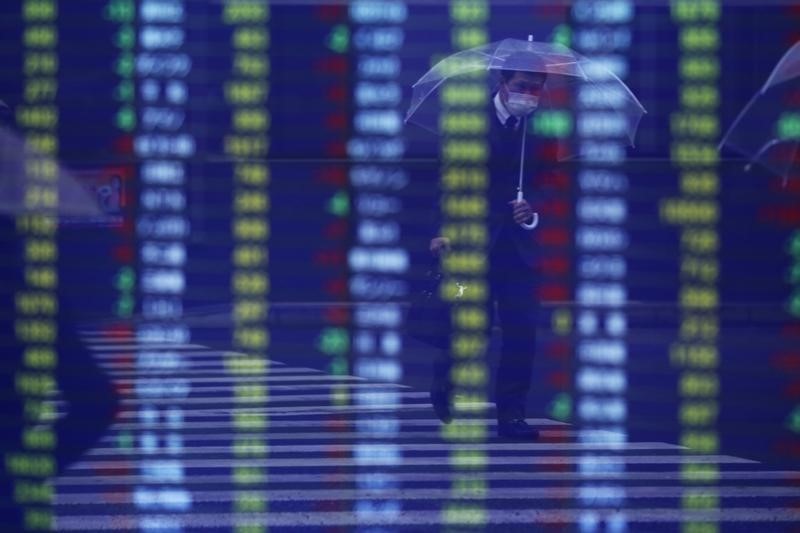
Asian markets were mixed ahead of the Fed’s two-day meeting, with the central bank widely expected to leave rates unchanged and provide no immediate policy shift. Japan’s Nikkei 225 rose 0.6% and the TOPIX gained 0.75% as chip and industrial stocks advanced on AI-driven demand, while Singapore’s Straits Times hit a record high after non-oil exports jumped at the fastest pace in over 20 years. Hong Kong’s Hang Seng fell 0.75%, and SoftBank dropped as much as 5% on concerns over OpenAI-related costs; broader attention also turned to the U.S.-Iran memorandum due Friday.
The market is signaling a classic late-cycle factor rotation rather than a clean risk-on move: capital is being pulled from long-duration growth into sectors with near-term cash flow visibility and leverage to nominal activity. That usually happens when investors want to de-risk rate sensitivity without fully exiting equities, which means the first leg of the move can persist for days to a few weeks even if the macro backdrop does not materially improve. The key second-order effect is that crowded AI leadership becomes more vulnerable to even modest disappointment in capex, margins, or guidance because positioning is now doing part of the work for the move.
The more interesting setup is that the AI trade is splitting into winners and toll-takers. Hardware, networking, and industrial beneficiaries can keep outperforming as long as data-center spending stays intact, but software and model-layer names with heavy burn are exposed to a credibility reset if the market starts demanding a clearer path to unit economics. That creates a window for relative-value trades: the market may still pay up for the picks-and-shovels layer while discounting the speculative application stack, especially if rate expectations stay sticky.
On the macro side, the combination of central-bank caution and better hard data in export-sensitive economies supports a pro-cyclical tilt, but only selectively. Any surprise hawkishness or a higher-for-longer message would pressure duration assets again, while a geopolitical de-escalation that normalizes energy flows would be a tailwind for transports, airlines, chemicals, and Asian industrials. The contrarian risk is that investors are underestimating how quickly this rotation can reverse if the Fed sounds less patient than expected or if tech earnings again prove that AI demand is more concentrated than the market assumes.
AI-powered research, real-time alerts, and portfolio analytics for institutional investors.
Request DemoOverall Sentiment
neutral
Sentiment Score
0.05
