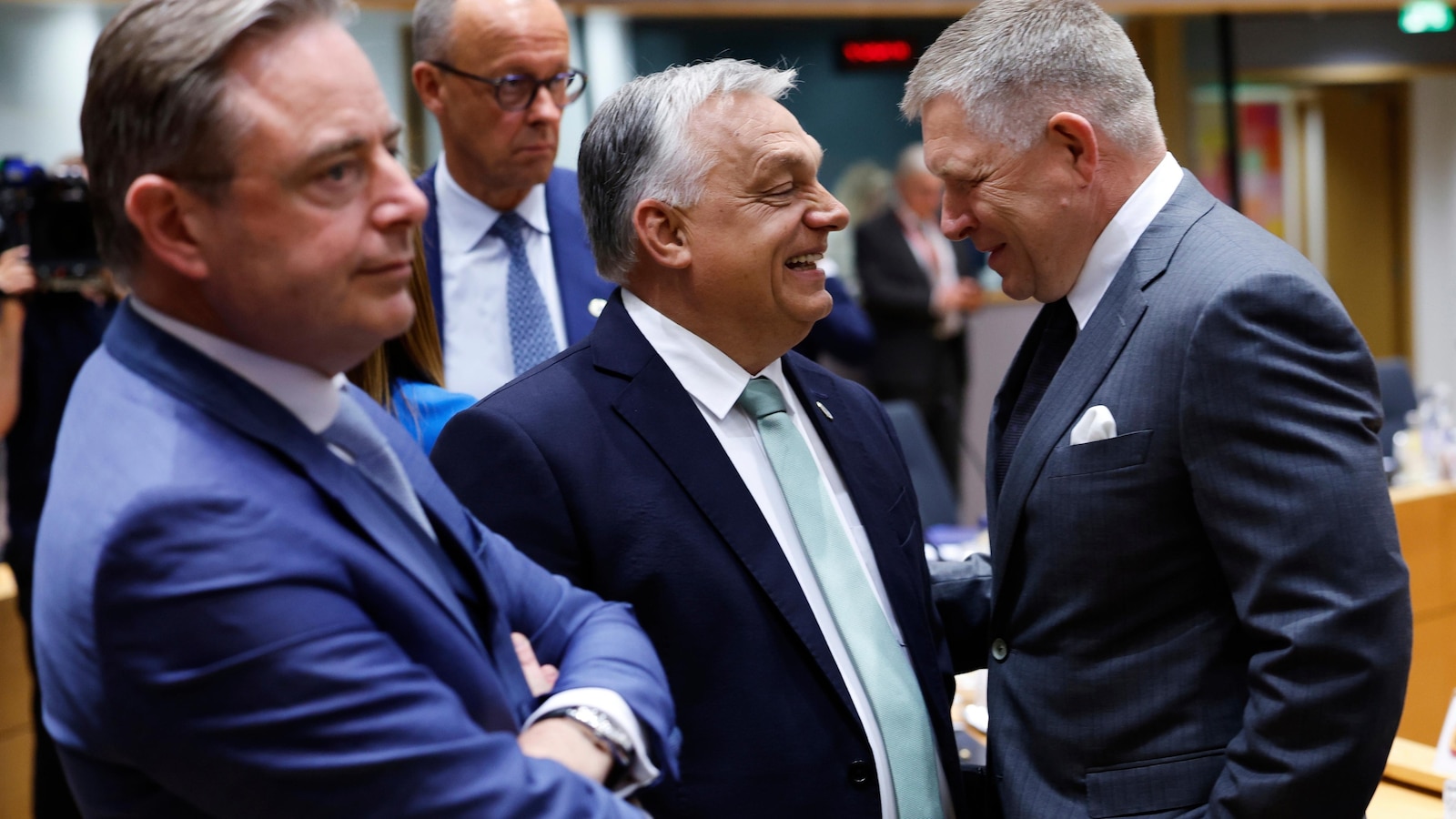
Belgium's prime minister Bart De Wever is resisting an EU plan to use frozen Russian assets held at Euroclear—about €193 billion as of September, roughly a third of Belgium's GDP—to fund Ukraine, citing risks of legal and retaliatory actions that could disproportionately hit Belgium. With Belgium fiscally strained and its governing coalition recently fragile, De Wever is pushing for collective EU exposure rather than unilateral Belgian risk, complicating a plan that Kyiv needs early next year; no blocking minority has formed but the standoff risks legal fights at Euroclear and longer-term damage to EU decision-making. Investors should monitor potential litigation, political fragmentation within the EU, and any operational risks at Euroclear that could affect European financial stability and sovereign risk perceptions.
Market structure: The immediate winners are European defense primes (RHM.DE, HO.PA, BA.L) and cybersecurity vendors (PANW, CRWD) because political friction increases EU military funding and heightens retaliation/cyber risk; losers are Belgian sovereign debt and domestic financials where settlement risk concentrates around Euroclear operations. Pricing power will shift toward custodial risk insurers and specialist clearing providers if Euroclear is legally challenged; expect higher fees for cross‑border settlement and a re‑pricing of Belgian counterparty risk over 3–12 months.
Risk assessment: Tail risks include Russian legal claims or non‑kinetic retaliation (cyberattacks, asset freezes) that could trigger a sudden 30–100bp widening in BE10Y vs Bund within days and intermittent settlement halts at Euroclear for up to weeks. Over the next 0–3 months watch BE10Y‑Bund spread and Euroclear litigation filings; medium term (3–12 months) credit rating pressure on Belgium could raise borrowing costs by €0.5–2bn/year if spreads stay elevated.
Trade implications: Tactical plays include buying protection on Belgian sovereign exposure (5y CDS or BE10Y put via futures if spreads >+50bp) while initiating 2–3% long positions in defense (RHM.DE, HO.PA, BA.L) and 1–2% long in PANW/CRWD for cyber; pair long defense vs short Euro STOXX Banks (SX7P) for 3–12 months. Use options: buy 3–6 month EURUSD puts (0.5–1% notional) if BE10Y‑Bund >50bp and consider call spreads on RHM.DE (6–9 month) to cap premium.
Contrarian angles: Market consensus expects limited contagion — that underestimates operational concentration at Euroclear; a protracted legal fight could force clients to re‑custody assets, benefiting competing custodians and boosting fees for 12–36 months. The knee‑jerk move is to short EUR; instead a pair trade long Euro defense names and long short‑dated sovereign CDS offers asymmetric payoff if political compromise removes the need to seize assets.
AI-powered research, real-time alerts, and portfolio analytics for institutional investors.
Request DemoOverall Sentiment
moderately negative
Sentiment Score
-0.45
