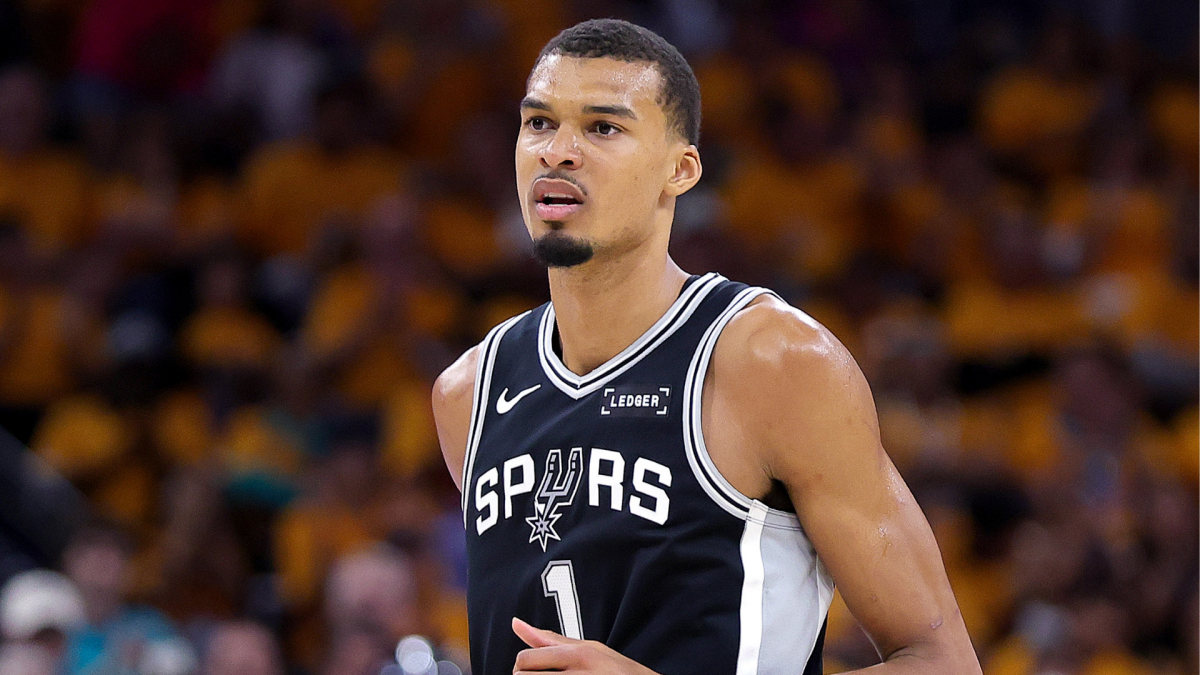
The article analyzes Victor Wembanyama’s production in the Spurs’ Western Conference Finals series, noting he is averaging 29 points, 15 rebounds, four assists and three blocks on 54/43/88 shooting, but emphasizing his impact is heavily dependent on where he catches the ball. San Antonio is +21 with Wembanyama on the court and -38 when he sits, underscoring his elite value even in a 2-1 series deficit. The piece argues the Spurs need more paint usage and fewer perimeter possessions to maximize his advantage against Oklahoma City’s physical frontcourt.
The market takeaway is not about one player’s box score; it is about the leverage that one elite hub has when the supporting ecosystem is thin. In series like this, the offense that can repeatedly force high-value touches at the rim usually dictates the next game’s volatility, while the side that wins bench minutes and physicality controls the series state. That makes this a classic “single-point-of-failure” setup: if the Spurs cannot convert their star’s minutes into a dominant margin, the matchup math compounds quickly and the series tilts hard to the deeper, more stable side.
Second-order, this is a conditioning and scheme quality problem as much as a talent problem. Physical opponents can mute an advantages-based star by moving the possession start point farther from the basket and by taxing him into late-game perimeter possessions; once that happens, shot quality degrades and turnover/efficiency gaps widen. The non-obvious edge is that the coaching response matters almost as much as player usage: the team that can manufacture deep catches, early seals, and quick-hitting rolls before the defense loads up can flip a neutral star into a series-breaking engine over a 2-4 game horizon.
The contrarian read is that the crowd may be over-weighting surface scoring and under-weighting where those points are generated. If the physical opponent is allowed to keep forcing the star into low-leverage perimeter creation, the apparent “good” offensive output can mask a negative portfolio of possessions, especially when the bench gap is this large. But if the offense adjusts toward repeatable paint touches, the downside for the underdog closes fast because the entire matchup is built on thin margin and one team’s ability to solve a solvable problem.
AI-powered research, real-time alerts, and portfolio analytics for institutional investors.
Request DemoOverall Sentiment
neutral
Sentiment Score
0.05
