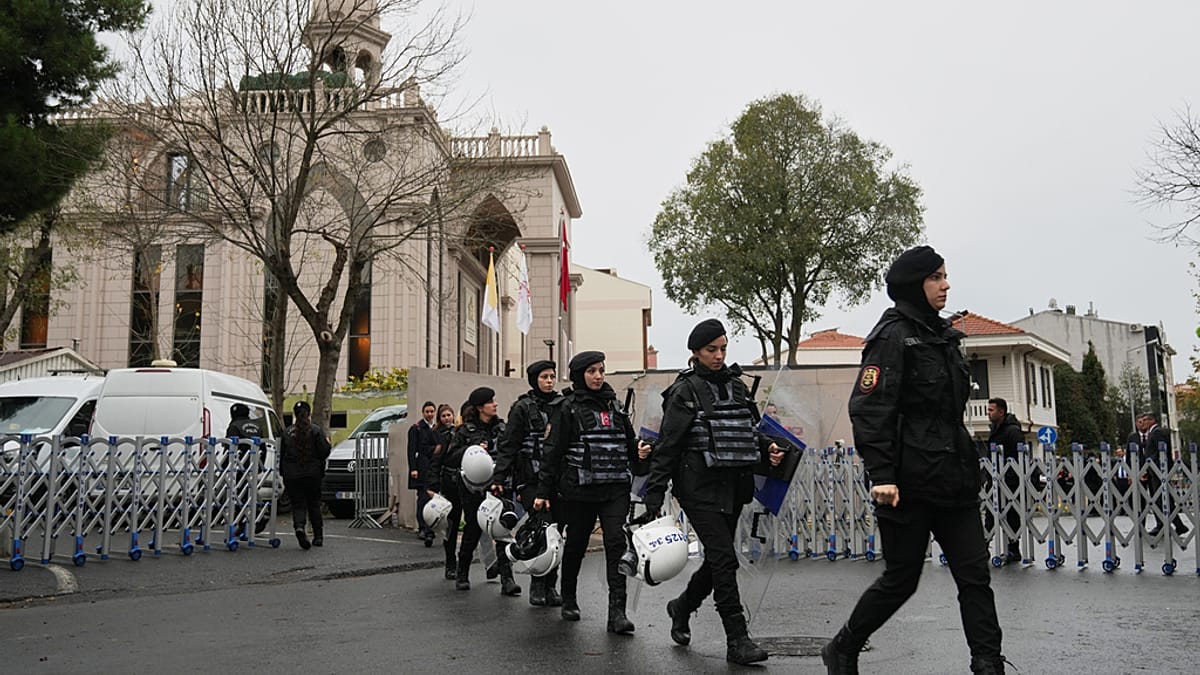
Turkish intelligence captured Mehmet Gören (codename 'Yahya'), a senior ISIS-K operative reportedly tasked with suicide attacks in Turkey, Europe, Pakistan and Afghanistan, after apprehension in the Afghanistan-Pakistan border region; the operation uncovered recruitment networks and coincided with Ankara warnings of potential New Year's Eve attacks on crowded venues. Ankara prosecutors also issued detention warrants for 10 suspects in an IS financing probe alleging cash transfers to fighters and families in Syria via bank accounts, exposing a local funding cell. Near-term implications include risk-off pressure on Turkish consumer-facing sectors (retail, travel, leisure) and potential local sovereign/credit sensitivity, while the arrests could reduce the group's operational capability over the medium term.
Market structure: Immediate winners are defense and homeland-security suppliers (large primes and counter‑drone/surveillance vendors) as governments re‑prioritize asymmetric‑threat procurement; losers are Turkey‑exposed travel, retail real‑estate (malls) and local banks that rely on tourism cashflows. Competitive dynamics favor large, prime contractors with existing classified programs (faster award cadence, price in 5–15% near‑term revenue bump for niche suppliers) while small regional security vendors win ad‑hoc contracts but face margin pressure from price competition.
Risk assessment: Tail risks include a successful mass‑casualty attack (low prob. but high impact) that would trigger 10–25% short‑term tourism revenue declines and a sovereign‑risk leg‑down in Turkish local assets; immediate (days) risk is headline‑driven volatility, short‑term (weeks/months) is tourism season downticks, long‑term (quarters/years) is potential permanent reallocation of government budgets toward defense. Hidden dependencies: NATO/Turkey diplomatic posture, refugee flows and banking sector FX mismatches can amplify contagion; catalysts to watch are travel advisories, further arrests, and regional cross‑border operations.
Trade implications: Reduce directional Turkey/EM tourism exposure and buy protection while establishing selective long positions in defense/security equities via 3–9 month call spreads; rotate 1–3% portfolio weight into GLD as a tail hedge and increase cash/overnight liquidity for 7–21 day windows around major holidays. Options: buy 1–3 month puts on Turkey ETF (TUR) or 10% OTM puts on European travel/hospitality names and buy 3–6 month call spreads on LMT/NOC sized to 1–2% each.
Contrarian angles: The market may overprice persistent insecurity—if Ankara’s intelligence operations continue to dismantle networks, tourism and TRY could snap back quickly; consider small dip buys if TUR falls >15% or USD/TRY spikes >10% within 30 days. Conversely, defense upside is conditional on actual budget increases—if no new procurement is funded in 2025, defense multiples could mean‑revert, so trim winners on a 8–15% rally or after confirmed contract announcements.
AI-powered research, real-time alerts, and portfolio analytics for institutional investors.
Request DemoOverall Sentiment
strongly negative
Sentiment Score
-0.60
