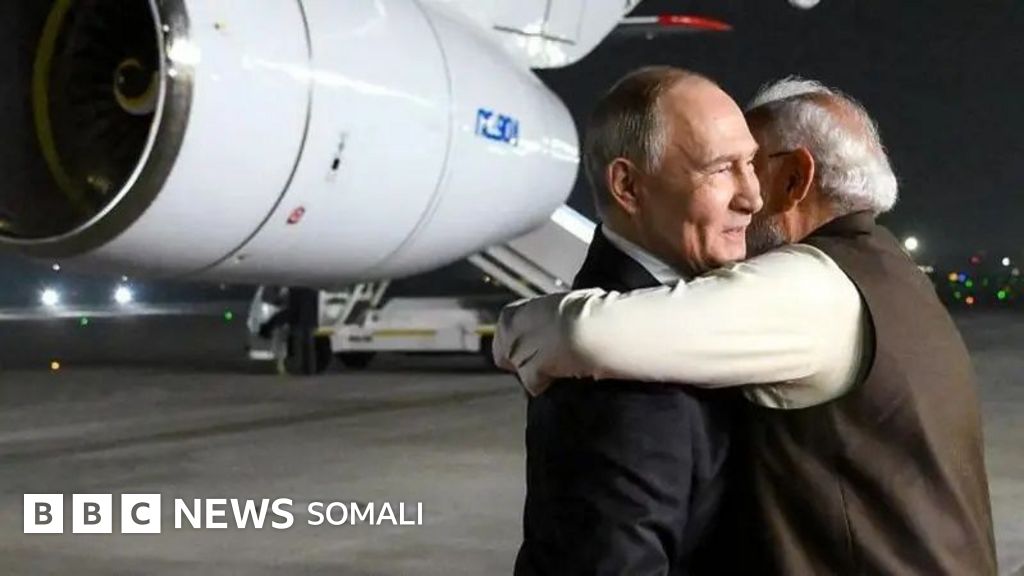
Russian President Vladimir Putin's two-day visit to India aims to cement trade and defense ties amid heightened US pressure and ongoing Russia-Ukraine conflict; bilateral trade reached $68.72 billion by end-March 2025 while India’s economy grows above 8% and serves a market of roughly 1.5 billion people. Key commercial drivers include a surge in India’s purchases of discounted Russian crude (from ~2.5% pre-invasion to about 35%) and prospective arms deals (S-500, Su-57) even as sanctions and parts shortages delay S-400 deliveries to 2026; the visit tests Modi’s strategic autonomy and could shift energy and defense supply dynamics regionally.
Market structure: A renewed Russia–India tilt is a net positive for Asian crude flows and Indian refiners that can process heavy/differently priced Russian grades (e.g., Reliance, Indian Oil). Expect upward pressure on Urals differentials to Brent in the 3–12 month window and incremental shipping/insurance revenues for tankers; European refiners lose margin if Russian barrels permanently reroute to Asia. Risk assessment: Near-term (days) volatility centers on headlines from the visit; short-term (weeks–months) risks include U.S. tariff escalation or secondary sanctions if India resumes large Russian purchases, and long-term (quarters–years) execution risk from Russian parts shortages delaying defense deliveries (S-400/S-500 timelines slipping to 2026). Tail scenarios: U.S. tariff package or insurance bans would sharply reprice Indian energy/importer flows and could widen Brent–Urals spreads by $5–$12/bbl. Trade implications: Tactical opportunities include taking directional oil exposure (Brent) via 3–6 month call spreads to express a supply-risk premium, and secular exposure to Indian refiners and domestic defense/industrial beneficiaries (Reliance Industries RELIANCE.NS, IOC.NS, Bharat Electronics/BEL.NS) while hedging policy risk. Also consider 6–18 month call spreads on Western defense primes (LMT, BA) anticipating Indian diversification away from Russian systems over multiple years. Contrarian angles: The market underestimates India’s political need to preserve Western ties — full-scale resumption of Russian crude purchases is unlikely without measurable U.S. concession; energy upside may be capped. Conversely, European refiners may be too complacent; a persistent reroute of 0.5–1.0 mbpd to Asia would reallocate ~$5–$20bn/yr of refining margin globally and create multi-quarter winners and losers.
AI-powered research, real-time alerts, and portfolio analytics for institutional investors.
Request DemoOverall Sentiment
neutral
Sentiment Score
0.05
