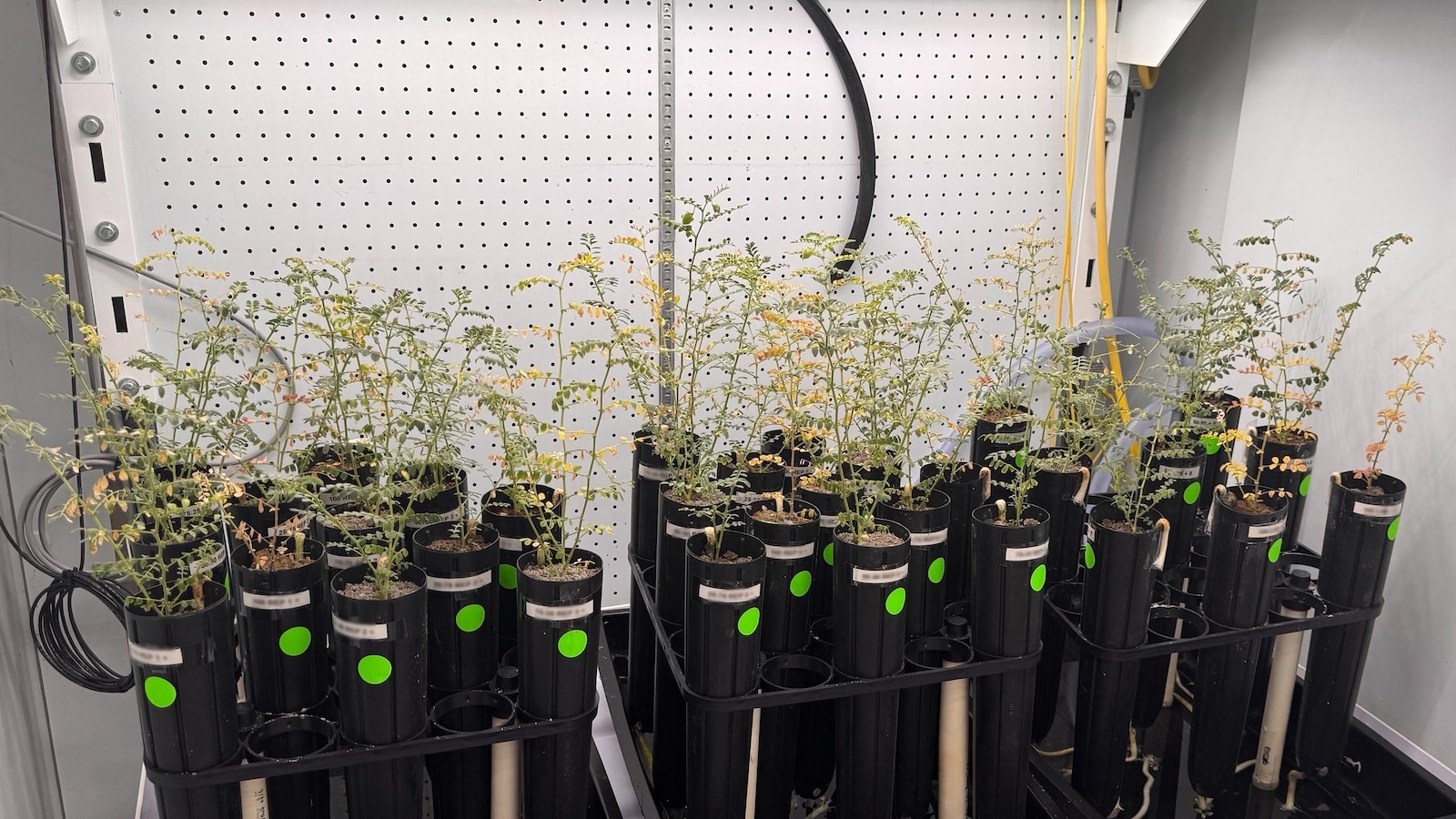
Researchers successfully cultivated chickpeas in 100% simulated lunar regolith by amending the simulant with arbuscular mycorrhizal fungi and vermicompost, which significantly increased plant reproduction; the simulant is reported to be 99% compositionally accurate to the planned Artemis IV landing-site soil. The finding points toward a practicable path for in-situ lunar agriculture and informs NASA logistical reuse strategies, with follow-on work focused on multigenerational soil sustainability and seed nutrient/metal accumulation testing, though the development is unlikely to have immediate market impact.
Market structure: Near-term winners are established aerospace/defense primes (LMT, NOC, BA) and specialized satellite/infrastructure suppliers (MAXR, ARKX ETF) because lunar agriculture strengthens the case for sustained NASA/DoD capex; secondary beneficiaries include fertilizers/organic-waste players (NTR, MOS, WM) as municipal and closed-loop waste technologies gain commercial demand. Losers are speculative consumer-space equities (SPCE) and early-stage ag‑tech start-ups lacking government partnerships; pricing power shifts toward incumbents with certified spaceflight credentials and regulatory clearances.
Risk assessment: Tail risks include planetary-protection/regulatory bans on introducing Earth microbes to the Moon, or discovery that crops bioaccumulate toxic metals (a binary fail) — any of which could wipe out the nascent commercial runway. Time horizons: market reaction is negligible in days, funding/certification updates will drive moves in 3–12 months, and real commercial upside is 3–10 years; monitor NASA appropriations cycles (next 12 months) and seed metal analyses due within 6–12 months.
Trade implications: Tactical allocations favor 12–36 month exposure to defense primes and space ETFs while underweighting speculative tourism names; options (9–18 month call spreads on LMT/NOC) cap cost and provide leveraged upside ahead of Artemis milestones. Entry: scale into positions over 3 months; exit/trim triggers: Artemis slip >12 months or NASA budget cut >10%.
Contrarian angles: Consensus underestimates terrestrial monetization of vermicompost and microbiome IP — WM and niche microbial-biotech licensors could add 2–5% revenue by 2028. The market may be underpricing S&P‑grade contractor resilience (buyable on schedule-driven dips) and overpricing consumer-space upside; unintended consequences include stricter contamination rules that raise compliance costs for early movers.
AI-powered research, real-time alerts, and portfolio analytics for institutional investors.
Request TrialOverall Sentiment
mildly positive
Sentiment Score
0.25
