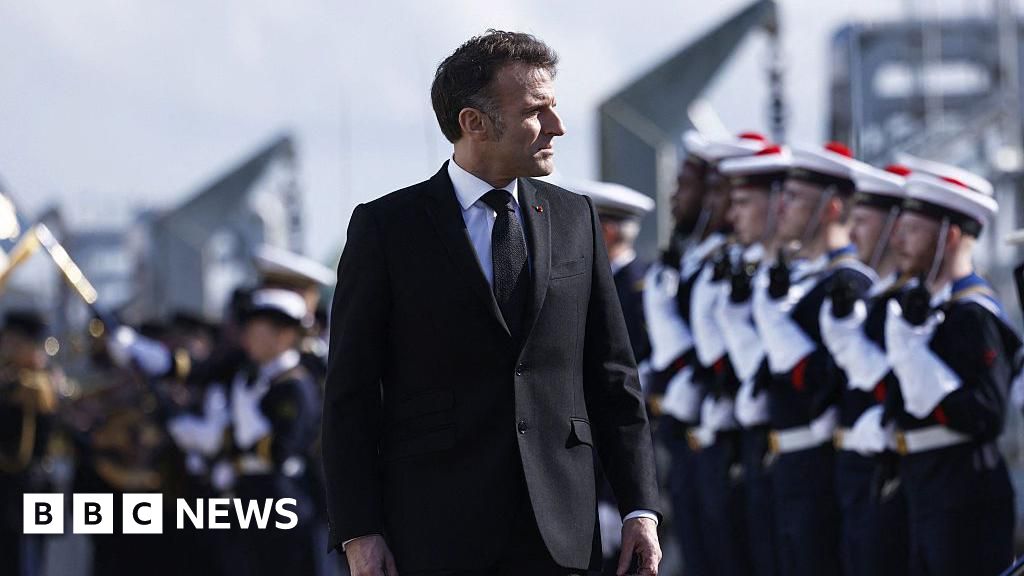
France announced a major shift in its nuclear posture, increasing its warhead stockpile from around 300, ceasing disclosure of warhead numbers, and planning a new nuclear-armed submarine, The Invincible, for 2036. President Emmanuel Macron unveiled an “advanced deterrence” framework to extend exercises and basing of French air-launched nuclear forces with eight European partners (UK, Germany, Poland, Netherlands, Belgium, Greece, Sweden and Denmark), while retaining sole French presidential authority to use nuclear weapons; France and Germany also signed a text to deepen cooperation on deterrence and conventional capacities. The move raises regional security tensions, increases demand visibility for European defence capabilities and exercises, and signals a durable, more assertive French role in European strategic defence planning.
Market structure: Direct winners are European and US defence primes and specialised suppliers — think Rheinmetall (RHM.DE), Thales (HO.PA), Safran (SAF.PA), Airbus Defence (AIR.PA) and US primes Lockheed (LMT), RTX (RTX) — plus space/sensor companies (Hensoldt HAG.DE, Airbus DS). Supply-demand will tighten for shipyards, precision electronics, missiles and skilled labour; expect 10–30% lift in multi-year order books but 6–18 month delivery bottlenecks that raise pricing power for established players. Cross-asset: near-term safe-haven flows (gold, USD) and higher implied vol for defence names; higher European fiscal deficits imply modest upward pressure on sovereign yields (Germany/France) over 12–36 months.
Risk assessment: Tail risks include military escalation or targeted sanctions disrupting supply chains, electoral backlash in Germany/Netherlands reversing commitments, and export-control fragmentation that delays contract conversion; probability non-negligible (10–20%) over 2 years with high severity. Time horizons: immediate (days) = headline-driven equity pops; short-term (weeks–months) = MoUs, exercise schedules and initial contract awards; long-term (years to 2036+) = capex cycles (submarine build, missile programs) that drive earnings. Hidden dependencies: EU/German parliamentary approvals, industrial-capacity limits, rare-earth/titanium supply; catalysts include EU budget votes, NATO summits and bilateral procurement announcements.
Trade implications: Tactical long bias to large-cap defence primes with balance-sheet strength and Euro exposure: overweight RHM.DE (industrial backlog), HAG.DE (air-defence sensors) and selective US primes (RTX, LMT) to hedge currency risk; consider size 1–3% per name, target +20–40% in 6–12 months, stop 10–12%. Relative trades: long Rheinmetall (RHM.DE) vs short European airlines (ICAG/AF.PA) given crowding-out of civil aero budgets. Options: buy 9–15 month call spreads on RTX and RHM.DE to express upside while capping premium outlay.
Contrarian angles: Consensus underrates execution risk and timeline — the Invincible launch in 2036 is symbolic; real revenue ramps take 2–6 years, so immediate rallies may be overdone for small contractors without backlog. Conversely, market may underprice specialised suppliers (Hensoldt, rare-earth miners) that face acute capacity shortages — look for sub-annual procurement awards and supplier consolidation. Historical parallel: post‑2014 Ukraine saw multi-year order conversion with volatile margins; beware mid-cap margin compression from cost inflation and export restrictions.
AI-powered research, real-time alerts, and portfolio analytics for institutional investors.
Request TrialOverall Sentiment
mildly negative
Sentiment Score
-0.30
