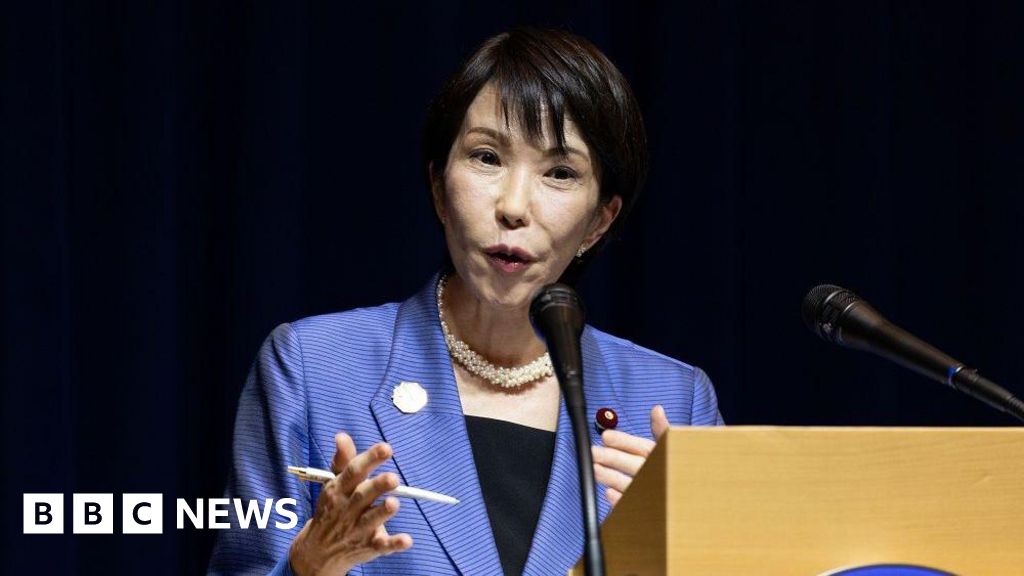
Japanese Prime Minister Sanae Takaichi's recent remarks, suggesting Japan's self-defense forces could respond to a Chinese attack on Taiwan, have significantly escalated tensions with Beijing. This stance marks a notable departure from Japan's traditional strategic ambiguity on Taiwan, prompting strong condemnation from China, including a controversial threat from a Chinese diplomat, and reciprocal protests between the two nations. The incident underscores growing geopolitical risks in the Indo-Pacific, driven by Japan's more hawkish defense posture under Takaichi and China's firm claims over Taiwan, signaling potential for increased regional instability that institutional investors should monitor closely.
Japanese Prime Minister Sanae Takaichi's recent statement, suggesting Japan's self-defense forces could respond to a Chinese attack on Taiwan as a "survival-threatening situation," marks a significant shift in Japan's foreign policy. This departure from traditional strategic ambiguity has immediately escalated geopolitical tensions with China, drawing strong condemnation from Beijing and reciprocal diplomatic protests. The incident highlights a more assertive Japanese defense posture under Takaichi, a known hawk on China.
China's foreign ministry described Takaichi's remarks as "egregious" and a "gross interference in China's internal affairs," reiterating its "one-China principle" and refusal to tolerate foreign interference regarding Taiwan. A Chinese diplomat's controversial threat further underscored Beijing's fury, reflecting deep historical animosity between the two nations. This escalation follows previous instances where Japanese officials' comments on Taiwan drew sharp rebukes from China.
The incident signals a heightened risk of regional instability in the Indo-Pacific, driven by Japan's increased defense spending and closer ties with the US, alongside China's unwavering claim over Taiwan. The "strongly negative" sentiment and "high" market impact score associated with this development indicate significant investor concern regarding potential geopolitical disruptions. This situation could influence defense sector investments and supply chain resilience in the region.
AI-powered research, real-time alerts, and portfolio analytics for institutional investors.
Overall Sentiment
strongly negative
Sentiment Score
-0.70
