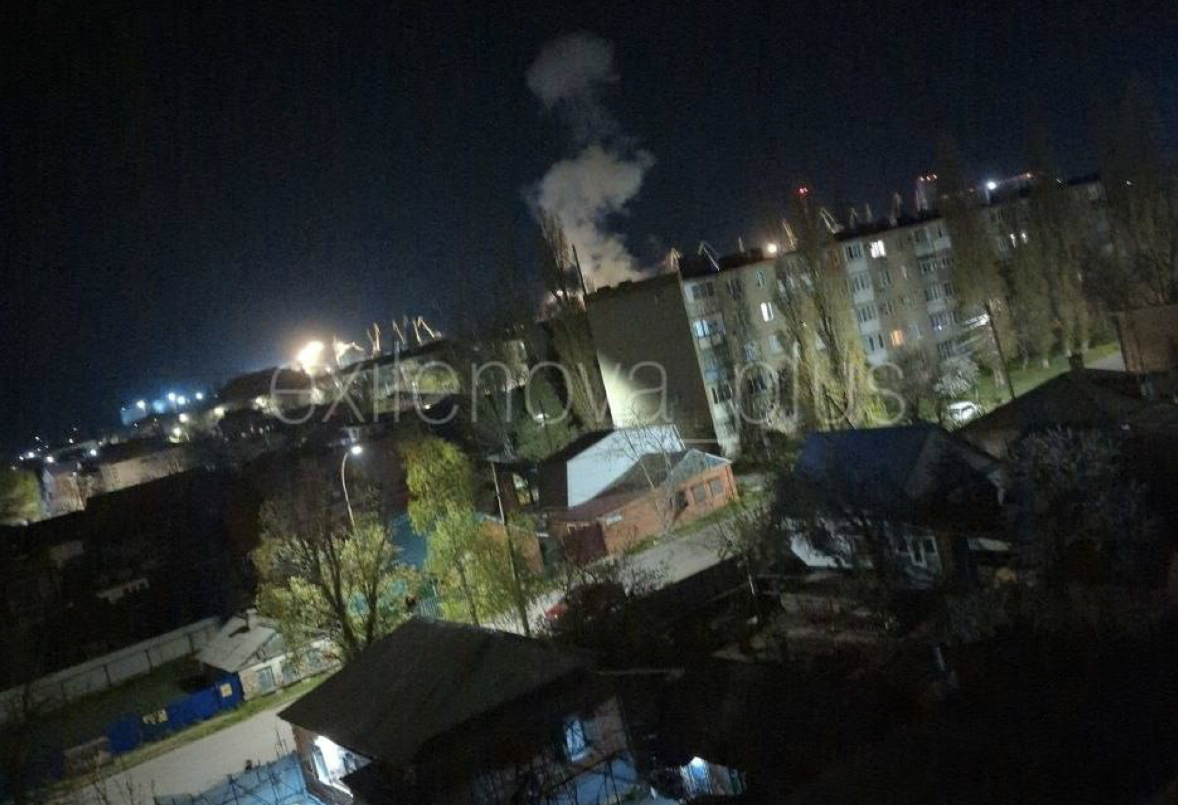
Ukrainian drones reportedly struck a seaport in Yeysk, Russia's Krasnodar Krai overnight on April 19, with smoke seen rising and local authorities saying drone debris damaged three homes. The report adds to a series of attacks on Russian and occupied-territory energy and industrial infrastructure, including an April 16 strike on an oil refinery in Tuapse and an April 14 substation strike in occupied Zaporizhzhia Oblast. The immediate market relevance is centered on geopolitical risk and potential disruption to Russian energy infrastructure.
The market implication is not the headline blast radius; it is the cumulative degradation of Russia’s logistics insurance premium across the Azov/Black Sea hinterland. Even when physical damage is limited, repeated drone penetration forces rerouting, higher air-defense spend, and longer downtimes for port-adjacent energy assets, which gradually raises export friction and widens the discount on Russian crude/products versus seaborne benchmarks.
Second-order, the more important channel is not just supply loss but operational uncertainty. Every additional strike increases the probability of precautionary shutdowns, delayed loading windows, and broader maritime risk pricing for shippers and traders touching the region; that can tighten regional product balances even without a large headline outage. Over weeks, this tends to support European diesel and aviation cracks more than outright Brent, because the market is more sensitive to refined-product logistics than to marginal crude disruption.
The contrarian setup is that the macro market may be underpricing persistence but overpricing immediacy. Single-site strikes rarely produce durable global price spikes unless they coincide with a broader export interruption, so front-month oil can fade quickly once the event risk premium is absorbed. The better expression is not a naked Brent long, but a relative-value trade on product scarcity and shipping risk, where repeated drone activity compounds into a slow-burn bottleneck rather than a one-day shock.
Key reversal risk: if Russia hardens air defenses or disperses storage and loading operations, the marginal damage from each attack falls and the market stops paying for the narrative. On a 1-3 month horizon, the largest catalyst would be a confirmed hit that interrupts a major fuel or crude export corridor for several days; absent that, the trade is mostly a volatility event, not a trend change.
AI-powered research, real-time alerts, and portfolio analytics for institutional investors.
Request TrialOverall Sentiment
mildly negative
Sentiment Score
-0.25
