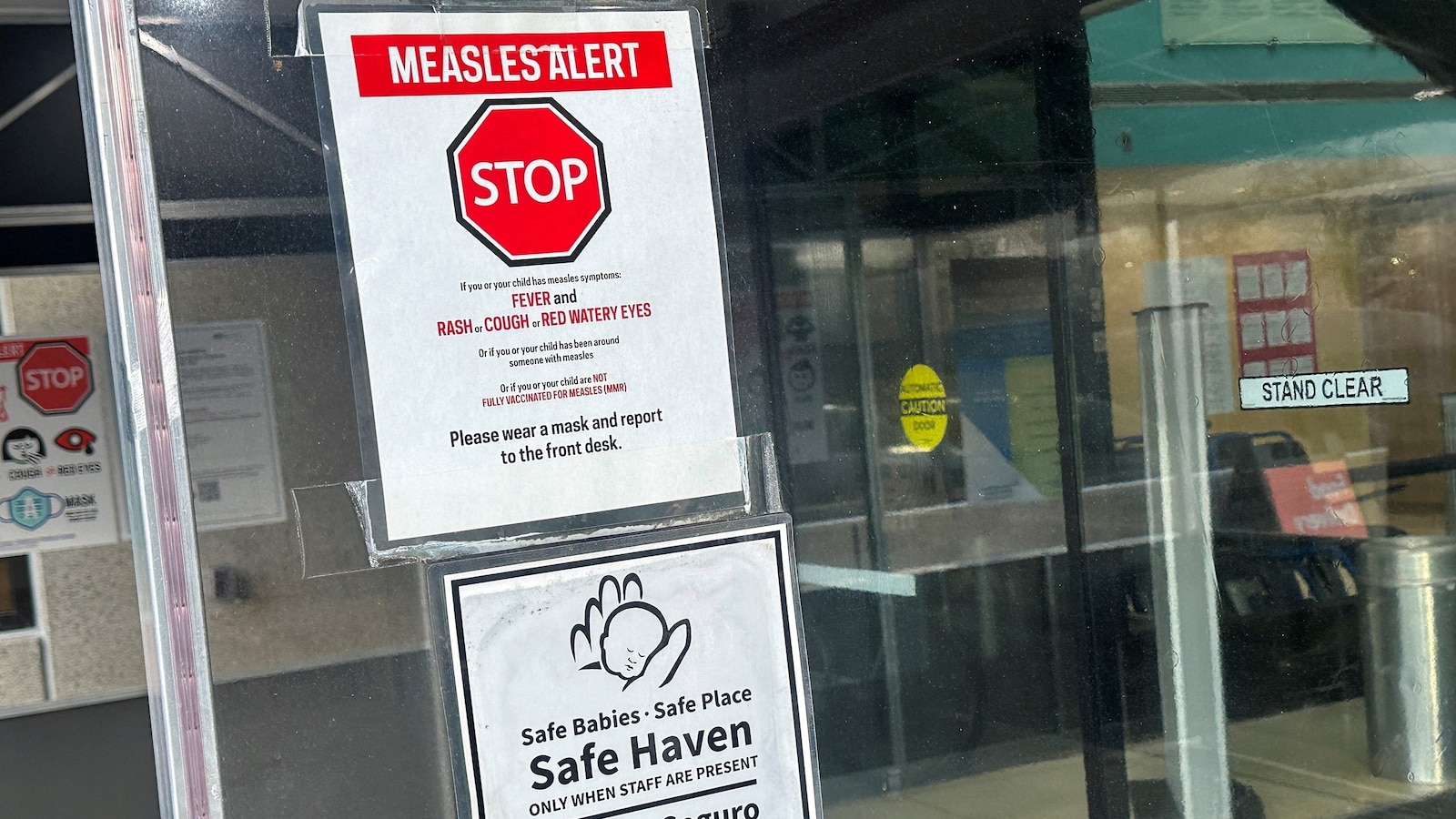
South Carolina reported 99 new measles cases, bringing the statewide total to 310 with roughly 200 people currently in quarantine and concentrations around Spartanburg County. State health officials issued a Jan. 7 alert urging masks and rapid isolation of suspected cases; public health experts warn one measles case can produce up to 20 infections among unvaccinated contacts. The CDC recommends two MMR doses (93% efficacy for one dose, 97% for two), but kindergarten MMR coverage fell to 92.5% in 2024-25 from 95.2% in 2019-20, underscoring reduced herd immunity risks that could increase local healthcare strain and public-health interventions.
Market structure: Short, localized measles outbreaks principally boost demand for MMR vaccine supply, lab diagnostics, and public-health services. Primary commercial beneficiaries are Merck (MRK — sole major U.S. supplier of MMR historically) and diagnostic/lab operators (DGX, LH, ABT, QDEL) via increased testing and catch‑up vaccination clinics; regional leisure/retail in Spartanburg faces transient revenue drag. Pricing power for vaccine makers is limited (procurement + public programs), so revenue lift is likely volume-driven over 1–6 months rather than large margin expansion.
Risk assessment: Tail risks include broader multistate spread or federal emergency declarations that could trigger accelerated procurement and inventory drawdowns (high impact, low probability). Timeline: immediate (days) = increased clinic throughput and quarantine costs; short (weeks–months) = vaccine orders, logistics strain, lab volumes; long (quarters) = revenue recognition and potential government contract awards. Hidden dependencies: lot-release testing, raw-material constraints, and state-level school exclusion policies; catalysts are CDC/state mandates, school exclusion notices, or litigation affecting supply chains.
Trade implications: Direct plays — small, tactical long exposure to MRK (capture volume), and to DGX/LH/ABT for testing; use options to cap cost and target a 3–6 month window. Pair trade — long diagnostics (LH) / short regional leisure ETF or small-cap retail exposure to isolate health-demand vs consumer cyclical weakness. Entry: act within 7–14 days; exit on confirmed multi-state spread, official federal procurement, or after 90 days if no material revenue signals.
Contrarian angles: Consensus may overstate bilateral upside to large pharma because U.S. MMR coverage is ~92.5% (only ~2–3 pts below pre‑pandemic), so demand is finite and backlog could normalize in 1–3 months. Past measles upticks (2019) led to policy debate but muted lasting revenue for big pharma; risks include politicized mandates reducing voluntary uptake or short-term oversupply pressure once emergency demand fades.
AI-powered research, real-time alerts, and portfolio analytics for institutional investors.
Request DemoOverall Sentiment
mildly negative
Sentiment Score
-0.25
