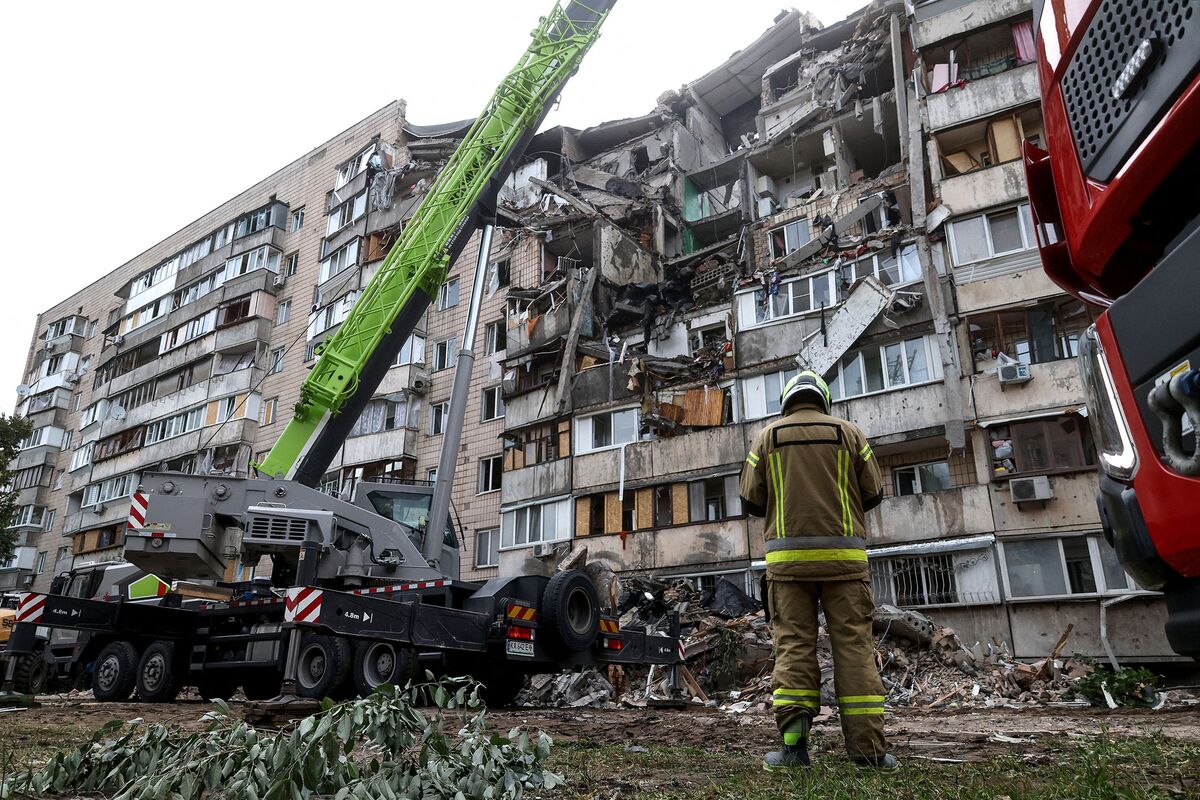
Russian strikes hit Kyiv overnight on the eve of the NATO summit, killing 11 people and injuring 46, with damage reported across four districts and multiple residential buildings. The timing suggests the odds of renewed peace talks remain remote, reinforcing a higher geopolitical risk premium. This is likely to be market-relevant via defense/risk-off sentiment and potential spillovers to energy pricing.
This is primarily a duration extension of the war, not a standalone macro shock. The near-term market read-through is a modest risk-off bid into defense and away from Europe-facing cyclicals, but the bigger mechanism is budget reallocation: every visible escalation makes NATO procurement less discretionary and more urgent, which supports air defense, munitions, ISR, and electronic warfare over the next 1-3 quarters.
The second-order losers are less the obvious Ukraine-exposed assets and more the firms that need stable European power and logistics assumptions. A prolonged conflict keeps a ceiling on continental capex, widens the discount rate applied to European industrial earnings, and preserves a bid for energy-security themes even without a direct supply interruption. If the attack raises the odds of Black Sea, rail, or grid disruptions, the spillover into freight, insurance, and fertilizer/commodity flows could matter more than the immediate headlines.
Contrarian view: the market may be overpricing the geopolitical headline relative to actual portfolio impact. Unless this escalates into a tangible infrastructure or energy-transit event, the trade is likely better expressed as a relative-value defense overweight than a broad de-risking bet. The thesis is falsified if the summit produces no incremental spending language, if ceasefire channels reopen within weeks, or if European gas and Brent fail to sustain any risk premium after the first 24-72 hours.
AI-powered research, real-time alerts, and portfolio analytics for institutional investors.
Request DemoOverall Sentiment
strongly negative
Sentiment Score
-0.70
