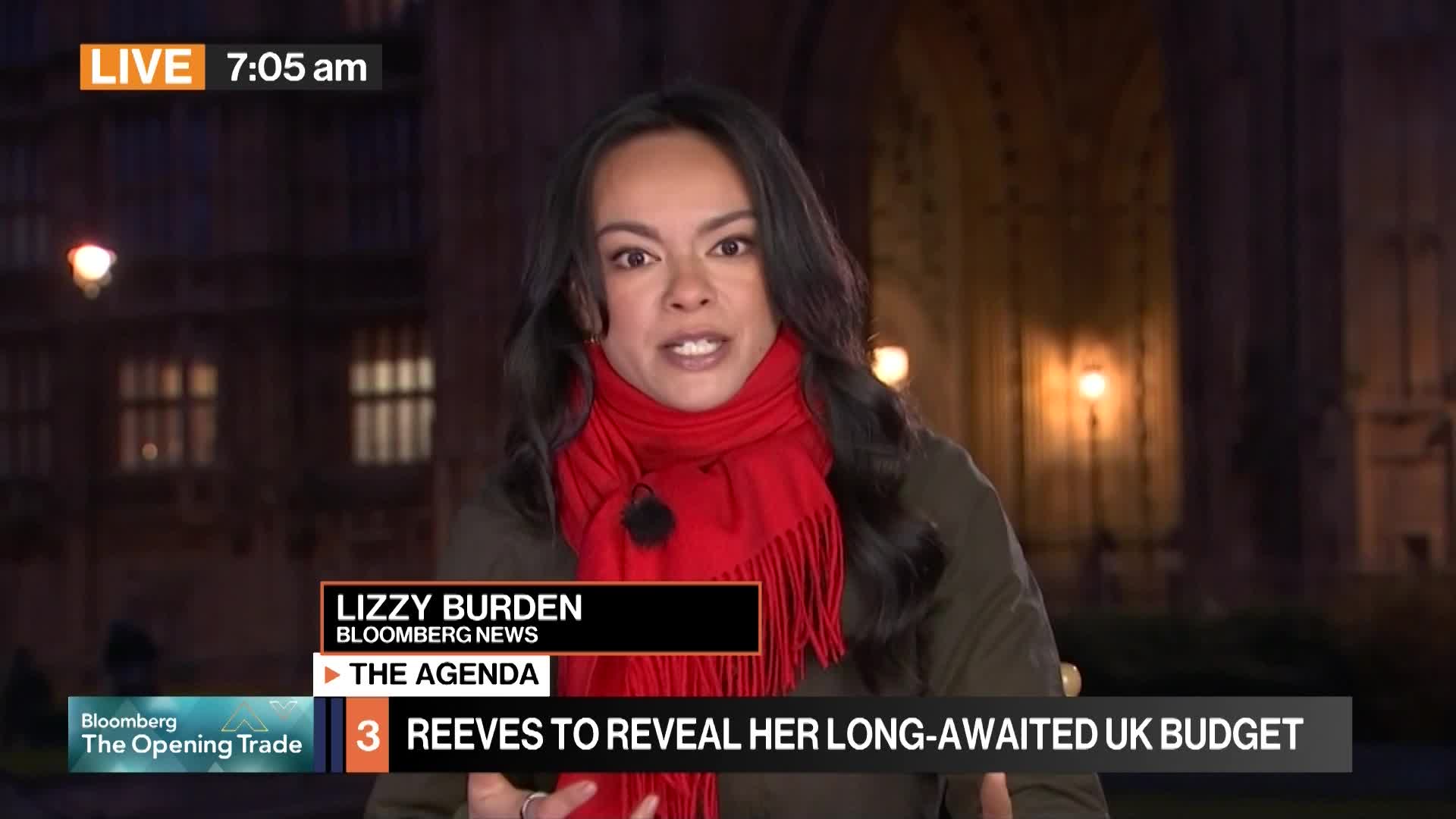
Chancellor Rachel Reeves is set to unveil a tax‑heavy UK budget that is widely expected to include measures such as freezing personal tax thresholds (a stealth tax) and other tax rises, with officials reportedly targeting roughly £15 billion of fiscal headroom relative to fiscal rules. Markets are on edge—bond vigilantes and the left of the Labour Party constrain policy choices—while sterling has shown significant volatility and traders are positioning for a weaker pound; a successful political and fiscal balancing act could trigger a relief rally, but failure risks material market moves in bonds and FX.
Market structure: A tax-heavy UK budget that freezes personal thresholds is a modest fiscal tightening in headline terms but a stealth tax increase in real-terms wages — winners are large exporters and multinational FTSE 100 names (GBP tailwind to earnings), losers are domestically exposed retailers, consumer finance and pensioner savers. Gilt markets and GBP are the primary price-discovery mechanisms: weaker credibility or <£15bn fiscal headroom will push 10y gilt yields sharply up (>25–50bp) and GBP down 3–6% as leveraged positions unwind.
Risk assessment: Tail risks include a Truss-style gilt shock if markets judge the plan incoherent (low-probability but high-impact — 50–200bp move in UK yields within days). Immediate horizon (hours–days): volatility spike in GBP/gilts around release; short-term (weeks): position repricing as OBR numbers land; long-term (quarters): slower GDP/earnings growth if progressive bracket creep persists. Hidden dependency: market reaction depends on technicals (gilts dealer balance sheets, BoE backstop language) rather than headlines.
Trade implications: Expect cross-asset flows — buy volatility in GBP and gilt spreads, rotate from FTSE 250/domestic cyclicals into FTSE 100/commodity exporters; consider short-term FX puts and relative value pairs (UKX vs FTMC). Use options to define risk: 1–3 month tenor is optimal; catalysts to watch: OBR score, gilt auction coverage, BoE minutes within 7–30 days.
Contrarian angle: Consensus prices a persistent sterling rout — that is overdone if Reeves signals credible £15bn+ headroom and tight fiscal rules; a clean, credible package could spark a snap GBP/gilt rally of 3–4%/20–40bp respectively, creating a short-volatility opportunity into Q1 2026. Historical parallel: 2010 austerity repricing vs 2022 policy shock — credibility matters more than headline size.
AI-powered research, real-time alerts, and portfolio analytics for institutional investors.
Request DemoOverall Sentiment
moderately negative
Sentiment Score
-0.45
