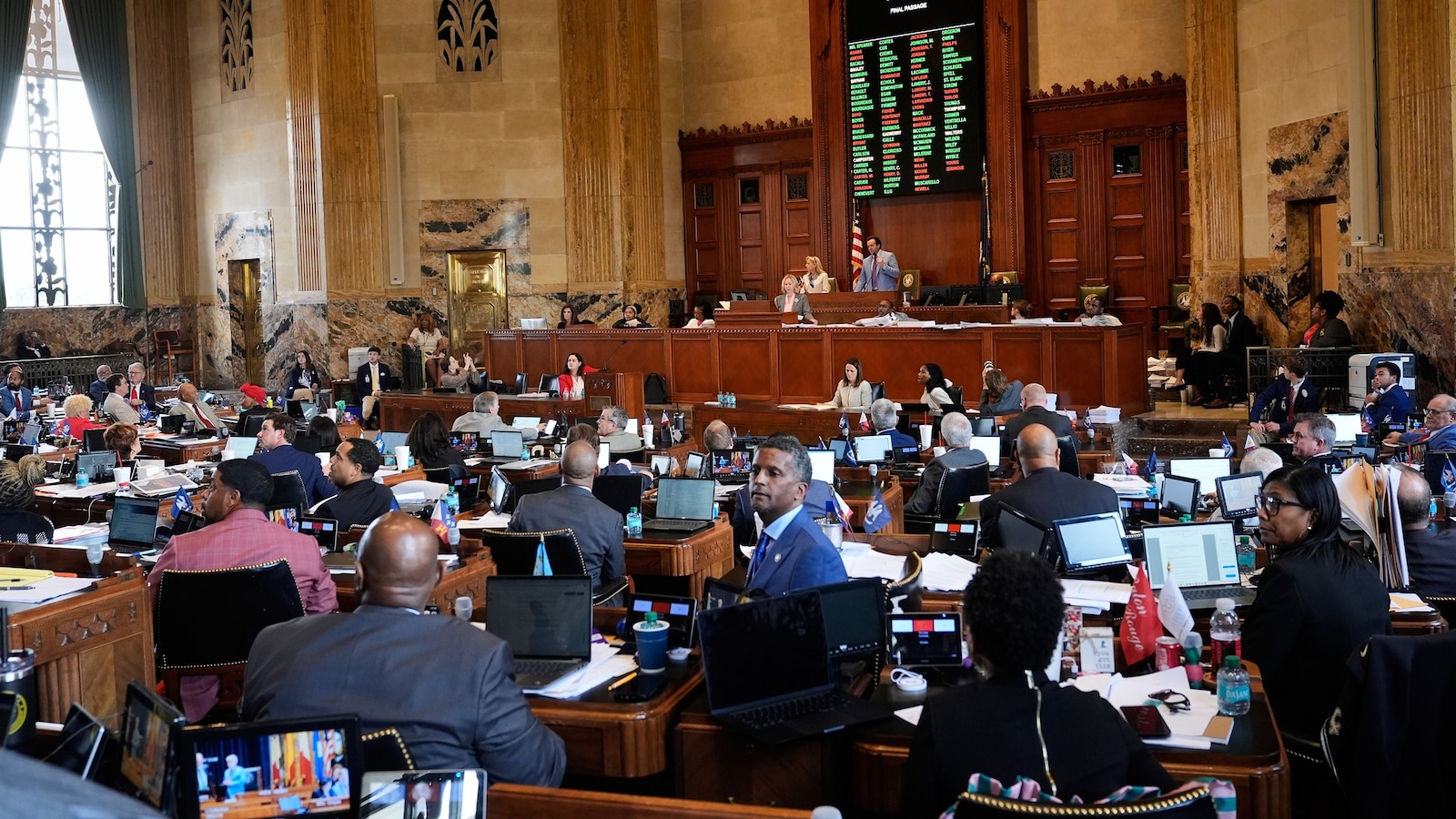
Louisiana lawmakers approved a new congressional map on Friday that could help Republicans flip one of the state's two Democratic-held U.S. House seats in the 2026 midterms. The article provides no vote totals, legal changes, or financial market implications beyond the redistricting outcome. This is a routine political development with minimal direct market impact.
This is less a one-off redistricting headline than a durable probability shift in the House map. The second-order effect is that one side is trying to lock in structural seat advantage before the next census cycle, which raises the expected value of incumbency protection and campaign spending in similarly contested states. The immediate market read-through is limited, but the broader signal is that election-law volatility is now being used as a deliberate policy tool, which should widen dispersion in local media, political consulting, and regulatory-adjacent names over the next 6-12 months.
The key tradeable dynamic is that district maps alter not just House control odds, but the incentive set for donor networks, PAC allocations, and federal grant positioning. If the map becomes durable, it can shift committee power and appropriations leverage in ways that matter for Louisiana-centric industries over a 2-year horizon: energy, ports, defense subcontractors, and Gulf infrastructure may see a slightly higher expected value of favorable treatment, while higher political uncertainty can keep capex decisions deferred until the map is litigated or politically stabilized. The legal overhang is the real catalyst risk; if courts intervene, the market will quickly reprice this as noise rather than regime change.
Consensus is likely overfocusing on the seat count and underweighting the downstream fundraising and turnout mechanics. Redistricting that improves one party's odds often also changes campaign intensity, which can increase local ad spend and digital turnout operations regardless of final outcome. That creates a short-duration opportunity in media inventory demand around contested geographies, but the bigger contrarian angle is that the move may be partially reversed if litigation or federal scrutiny delays implementation, making the market's current confidence in the map's durability too high.
AI-powered research, real-time alerts, and portfolio analytics for institutional investors.
Request DemoOverall Sentiment
neutral
Sentiment Score
0.00
