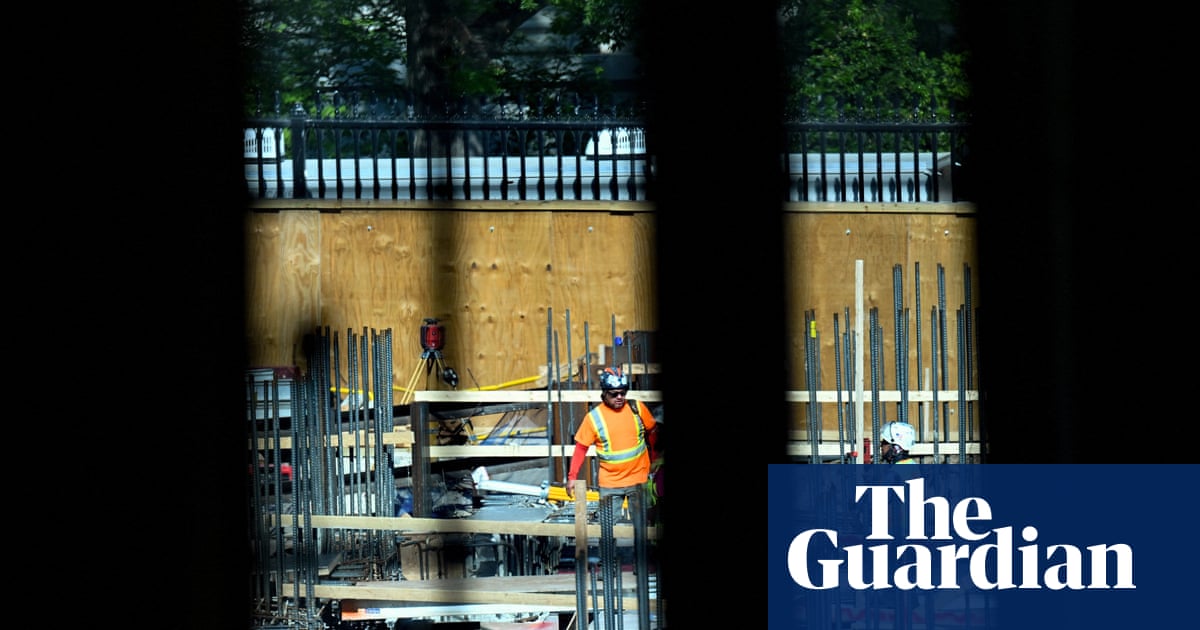
Senate Republicans proposed a $1bn funding allocation for White House security adjustments tied to the East Wing modernization project, which includes the site of Trump’s planned $400m ballroom. The measure would bar spending on non-security elements and is part of a broader GOP bill to fund ICE and deportation efforts, drawing sharp Democratic criticism. The White House said the funds would help harden the White House complex, while the ballroom construction itself remains privately funded and is being challenged in court.
The market read is less about the headline number and more about the signaling function: this creates a plausible federal funding path for security-adjacent capex tied to the White House complex, which lowers the probability that the project stays purely a private-donor story. That matters for the named vendors because any security hardening, systems integration, and perimeter work tends to favor large prime contractors and software-heavy incumbents with federal compliance footprints, not one-off construction firms. The second-order beneficiary is the “security stack” around the project: physical access control, surveillance, secure communications, identity, and analytics are all higher-margin than concrete-and-steel spend.
The most interesting dynamic is reputational optionality versus execution risk. If the funding language survives, it effectively validates a federal security rationale that could later be broadened to other federal facility upgrades, creating a template for recurring budget lines. But the legal challenge is the gating item: if courts or appropriators narrow the scope, the trade becomes a short-duration sentiment pop rather than a real revenue bridge, and any enthusiasm in the donor-linked names is likely to fade within weeks.
From a contrarian perspective, the consensus may be underestimating how little of this is actually monetizable for the donor names in the near term. Even if the proposal passes, procurement cycles for Secret Service-related work are slow, and the economic benefit is likely dispersed across contractors already priced for federal spending resilience. The bigger risk/reward may sit in legislative optics: a high-profile vote on a politically charged project can increase volatility in the defense-tech and large-cap internet names on both sides of the aisle, especially if the funding package becomes a campaign issue into the next few months.
AI-powered research, real-time alerts, and portfolio analytics for institutional investors.
Request DemoOverall Sentiment
neutral
Sentiment Score
-0.05
Ticker Sentiment
