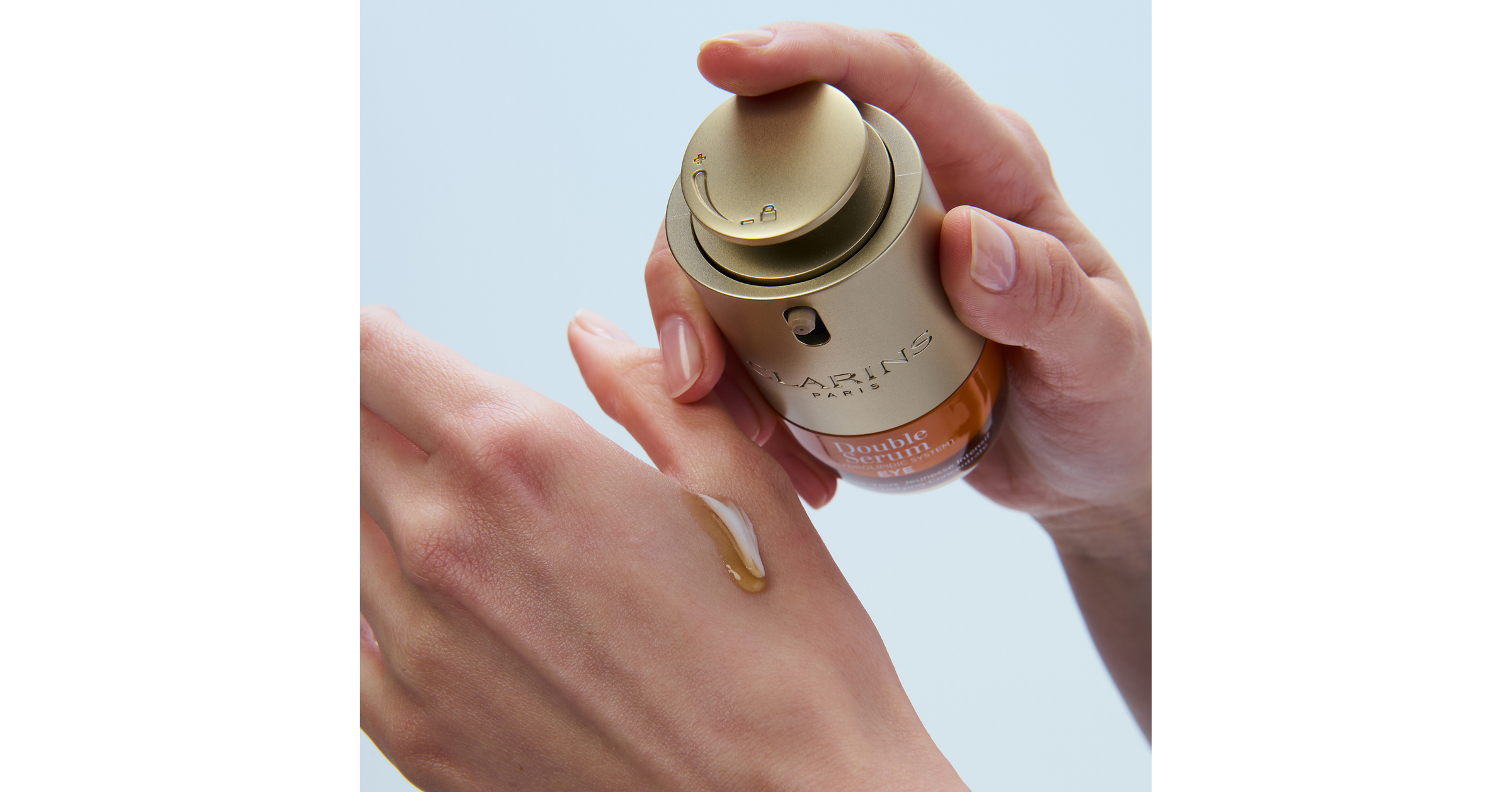
Clarins launched its new generation Double Serum Eye, citing that 85% of visible eye aging is driven by lifestyle/environmental factors and reporting one-week user results of -27% dark circles, -25% puffiness, and -23% wrinkles. The product is positioned as a dual anti-aging approach using an updated biomimetic 2/3 serum + 1/3 emulsion formula, with 96% natural-origin ingredients and a precision wheel dosing bottle. The release also emphasizes ESG/traceability via a blockchain-powered T.R.U.S.T. platform and recyclable/recycled packaging, with rollout planned for August on Clarins.com and nationwide retailers.
This reads as category signaling, not a standalone earnings catalyst. In prestige skincare, the economic value is in repeat purchase and shelf defense, so a launch like this mainly pressures incumbents to spend more on claims, sampling, and retailer support to protect share. That tends to favor the brands with the best distribution and loyalty ecosystems, and it usually hurts the middle tier of prestige names first.
Near term, the only actionable catalyst is August sell-through and whether the launch lifts basket size in specialty beauty versus department store counters. If it works, the second-order effect is not that Clarins suddenly grows fast; it is that competing eye-care franchises at EL and COTY face a higher promotional hurdle, which can compress margin before it shows up in revenue. TGT is only a loose read-through: beauty traffic may improve, but the premium SKU mix is too small to matter financially.
The contrarian view is that “epigenetics” is mostly a marketing wrapper unless it converts into replenishment and repeat-rate data. Without that, this is brand maintenance in a slow-moving category, and the market should not ascribe much share-shift or valuation impact. Falsifiers would be strong retailer reorder data, unchanged promo intensity at EL/ULTA, or management commentary showing skincare demand remains flat despite the new science narrative.
AI-powered research, real-time alerts, and portfolio analytics for institutional investors.
Overall Sentiment
mildly positive
Sentiment Score
0.15
Ticker Sentiment
