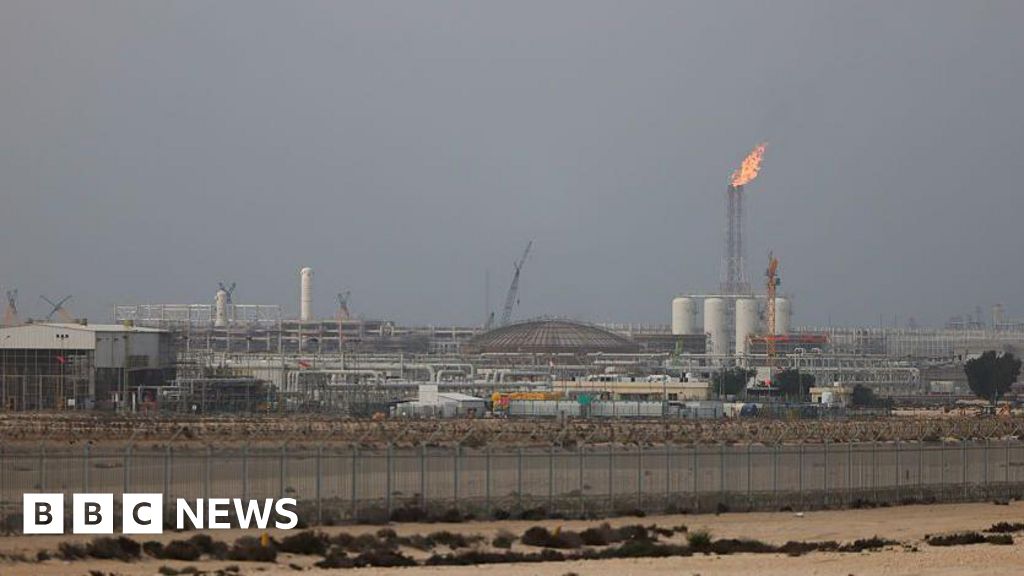
Oil prices jumped to nearly $110/barrel after an alleged Israeli strike on Iran's South Pars gas field and Iran's retaliatory missile strikes on Qatar's Ras Laffan LNG complex, which QatarEnergy said sustained 'extensive damage' though personnel were accounted for. U.S. President Trump said the U.S. 'knew nothing' of the strike but threatened severe retaliation if Qatar's LNG is attacked again, signaling elevated risk of broader regional escalation and sustained disruption to gas/LNG flows and oil shipping through the Strait of Hormuz.
The immediate market response will be driven by a supply-chain shock to seaborne LNG flows and regional oil logistics rather than a pure oil production outage. Removing even a small single-digit to low-double-digit percent of export-processing capacity creates a tight prompt market for JKM/TTF out to 3 months, increases delivered cost volatility, and magnifies the value of flexible cargoes and spare tanker capacity by amplifying the arbitrage from Henry Hub to Asia/Europe.
Second-order winners will be cargo owners and LNG carriers with optionality (short-notice liftings and available tonnage) and the US LNG complex that can reallocate volumes; losers include fixed long-term offtakers, regional utilities with limited alternative supply, and insurers/charterers facing expanded war-risk premiums. Expect charter rates to gap higher as rerouted voyages add 7–14 days round-trip and as owners demand war-risk premia; insurance rate hikes will increase landed cost and could trigger force-majeure disputes, pressuring credit lines of midstream counterparties within 30–90 days.
Tail risk is a rapid escalation that closes Hormuz-style choke points or brings in third-party strikes — that shifts the problem from price volatility to systemic supply shortages and could keep spot energy prices structurally higher for 6–18 months. Reversal catalysts include rapid repairs, diplomatic de-escalation, emergency commercial releases or strategic stock / swap arrangements; the market already prices a material chance of persistent elevated spreads, so timing and convexity of exposure matter more than directional conviction.
AI-powered research, real-time alerts, and portfolio analytics for institutional investors.
Overall Sentiment
strongly negative
Sentiment Score
-0.70
