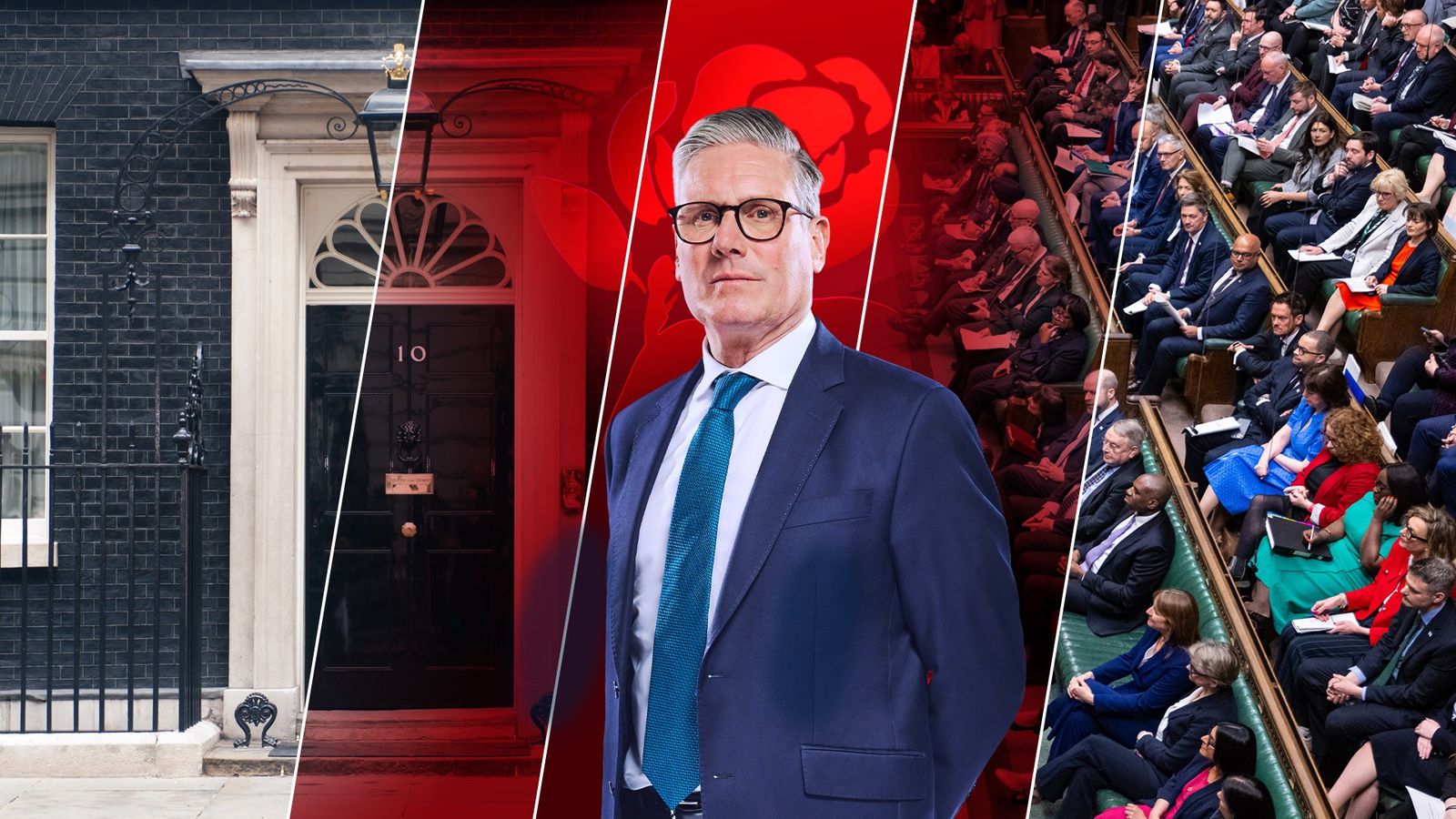
Sir Keir Starmer is facing growing internal pressure after Labour lost nearly 1,500 councillors in England and control of the Welsh Senedd, with at least two prominent figures urging him to step down or set a departure timetable. Catherine West is pushing the cabinet to choose a new leader, while Josh Simons wants a defined exit plan; a leadership challenge would require backing from 20% of Labour MPs, or 80 MPs. The article is politically significant but has limited direct market impact beyond UK policy uncertainty.
The immediate market read-through is not about policy, it is about governing capacity. A leadership wobble at this stage raises the probability of delayed fiscal decisions, slower cabinet coordination, and a higher premium on any UK risk asset that depends on a credible multi-quarter policy path. That tends to show up first in sterling vol, domestic cyclicals, and the lower-quality end of UK midcaps, where earnings sensitivity to consumer confidence is highest.
The bigger second-order effect is that a weak incumbent becomes a catalyst for policy drift, not just personnel change. If internal pressure keeps building into the King's Speech window, investors should expect more headline whipsaw around planning, housing, labor, and tax—areas that matter disproportionately for domestically oriented equities and the real estate complex. The market typically underprices the timing risk: even if leadership survives, a damaged mandate can freeze investment decisions for months.
There is also a coalition dynamic to watch. Rising internal dissent can improve the odds of an early reset, which the market may initially dislike but later view as pro-stability if it reduces the probability of a prolonged intra-party siege. In that sense, the base case is not a clean selloff but a volatility regime shift: lower conviction in UK beta, higher dispersion across sectors, and a stronger bid for defensives and exporters with non-UK earnings. The contrarian angle is that the worst political headlines may be near-term noise if they force a faster repositioning that restores credibility before summer policy deadlines.
AI-powered research, real-time alerts, and portfolio analytics for institutional investors.
Request DemoOverall Sentiment
moderately negative
Sentiment Score
-0.35
