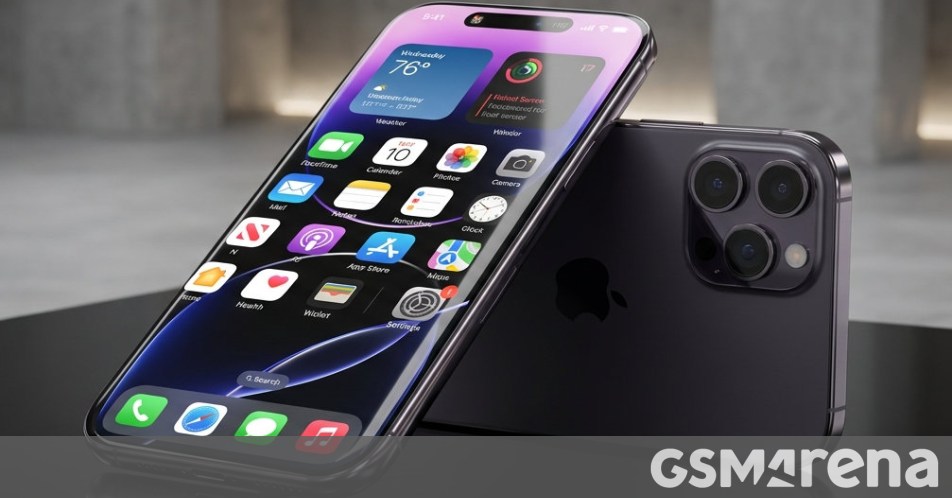
Apple's iPhone 19 Pro and iPhone 19 Pro Max prototypes are rumored to be testing quad-curved displays, with the design potentially extending to Apple's 2027 Pro lineup. The article also suggests Apple may rename the 20th-anniversary iPhone family, but no decision has been confirmed. This is early-stage product speculation with limited near-term market impact.
This reads less like a near-term catalyst for AAPL and more like an early signal that the company is preparing a larger design reset into the 20th-anniversary cycle. The market usually underprices how much a visible industrial-design change can re-accelerate replacement demand after a mature product line hits saturation; even a modest uplift in upgrade intent can matter when iPhone units are already a huge base. The more important second-order effect is that a premium form-factor shift tends to re-open pricing power at the top end, where mix matters more than unit growth.
The supply-chain implication is that any move toward complex curved glass, display lamination, and tighter tolerances should disproportionately benefit component vendors with high yield and packaging know-how, while increasing execution risk for assemblers and glass/display suppliers with lower process control. It also creates a read-through for Android flagships: once Apple legitimizes a design, competitors often rush to copy it, but that usually compresses differentiation and forces them to absorb higher bill-of-materials costs before end-demand is proven. In that setup, the most fragile names are mid-tier handset OEMs that chase the aesthetic without Apple’s ecosystem lock-in.
The contrarian angle is that a design rumor two years early is not a fundamental buy signal; if anything, it can be a reminder that the stock is already trading on long-duration optionality. The real catalyst window is not today but the 2026-2027 build cycle, when capex, supplier qualification, and component ordering become visible. Until then, the main risk is that the feature gets delayed, watered down, or reframed as an incremental refresh rather than a true supercycle trigger.
For AAPL, the best setup is to treat this as medium-dated optionality rather than chase common stock on a rumor. The payoff is asymmetric if the market starts pricing a 2027 replacement cycle, but the bleed is real if execution slips or consumer response is muted. The cleaner expression is via supplier exposure and relative value, not outright directional heroics.
AI-powered research, real-time alerts, and portfolio analytics for institutional investors.
Request DemoOverall Sentiment
neutral
Sentiment Score
0.05
Ticker Sentiment
