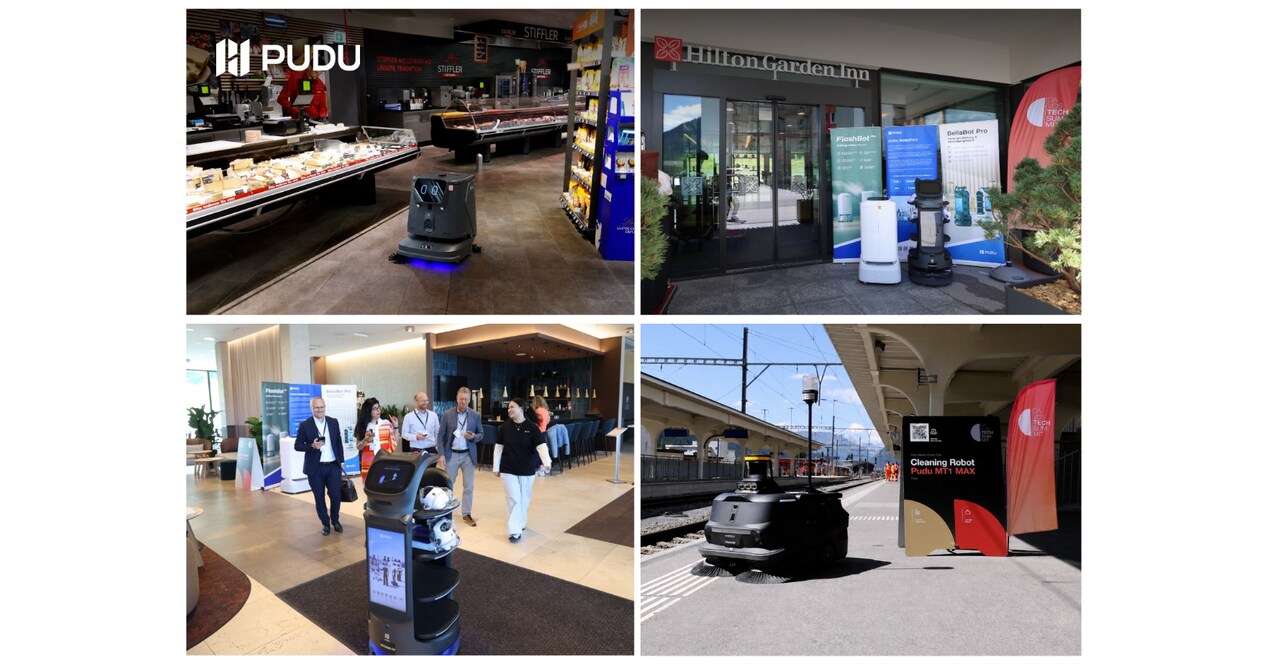
Pudu Robotics showcased “physical AI” at Davos Tech Summit 2026 via Robot City, deploying four robots across three live locations (SPAR, Hilton Davos, and the Davos train-station plaza) to perform autonomous cleaning and delivery tasks using LiDAR/AI perception. The company claims >130,000 robots delivered to date across 85 countries/regions, with international markets contributing >80% of revenue. In June 2026, Pudu and regional partner Robobee announced an alliance with Swiss retailer Denner to deploy 200 PUDU CC1 cleaning robots, supporting greater human-robot operational efficiency.
This reads more like a commercialization checkpoint than a fresh demand shock. The investable angle is not the demo itself, but whether embodied-AI deployments are moving from pilot budgets to multi-site rollouts with measurable payback; that is when value shifts from one-time hardware sales to recurring software, fleet management, maintenance, and integration revenue. Over 6-18 months, the clearest pressure point is labor-heavy outsourced services: ABM and ARMK have the most to lose if cleaning/food-service automation becomes a standard procurement line item rather than a novelty.
Near term, the market will likely overreact to the optics while underpricing the operating friction. The key catalyst is whether the retail rollout converts into repeat orders and whether uptime, building integration, and service costs stay low enough to preserve a 2-4 year payback window; if not, deployments will remain episodic. For hotel and grocery operators like HLT, MAR, KR, and COST, the upside is modest margin relief, but only if robots reduce variable labor without forcing higher capex, maintenance, or vendor lock-in.
The contrarian read is that consensus may be too bullish on immediate revenue impact and too bearish on adoption durability. The bottleneck is not robot capability, it is integration: elevators, site permissions, weather robustness, and compliance create a long sales cycle and favor vendors with local service density. If we do not see repeatable fleet expansion or reorder cadence over the next 1-2 quarters, this should be treated as a marketing-led proof of concept, not a structural inflection.
AI-powered research, real-time alerts, and portfolio analytics for institutional investors.
Overall Sentiment
mildly positive
Sentiment Score
0.18
