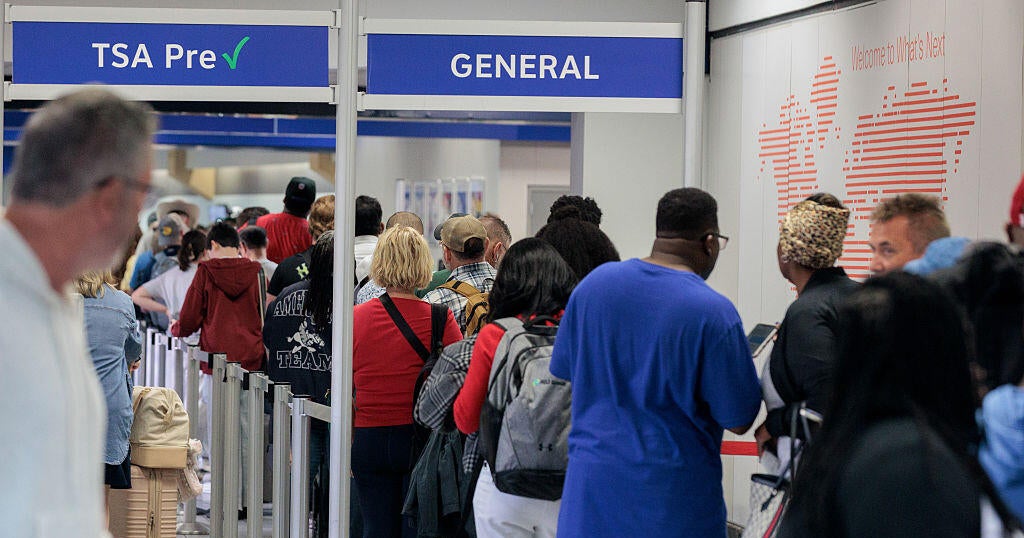
TSA data show 366 officers have left since the partial government shutdown began more than a month ago, and pay distribution for officers (base range $34,454–$55,486) has been disrupted since Feb. 14; many missed paychecks and recent payments were as low as 0–25% two weeks ago. A proposed Shutdown Fairness Act to pay essential workers, introduced Oct. 15, 2025, failed in the Senate 54–45 (reconsideration Nov. 7), leaving TSOs reliant on donations and gift cards that union reps say are inadequate relative to needs of ~$3k–$4k per household. The situation is creating morale and staffing pressure at airports and has drawn public political confrontation between lawmakers, but it is unlikely to move financial markets materially.
Operational fragility at checkpoint-level cascades quickly into airline economics because screening throughput is a control variable for aircraft utilization. Even a small, sustained reduction in screening capacity at major hubs forces carriers to widen turnarounds or cancel flights to preserve on-time metrics — that eats at ASM productivity and yields disproportionately hurts ultra‑lean, point‑to‑point business models that operate at sub‑2% schedule slack.
The most durable winners are vendors who can be paid out of capital or reallocated O&M budgets: automated screening hardware and systems integrators, plus prime defense contractors that can deliver turnkey checkpoint modernization and sustainment. Airport authorities and concessionaires face a bifurcated outcome — weaker short‑term traffic and spend but an accelerated capex wave in 12–24 months as operators push to reduce labor dependency, creating a multi‑year procurement pipeline for tech and systems firms.
Key catalysts and time horizons: a near‑term legislative stopgap or retroactive pay bill (days–weeks) will materially reduce volatility and likely be priced within 48–96 hours; absent legislative action, attrition and operational degradation become self‑reinforcing over 1–3 months and can force expedited contracting decisions. Tail risk is an incident that forces immediate federal funding reallocation (very fast), which would sharply re‑rate defense/security suppliers. Contrarian read: much of the market reaction will be knee‑jerk and transient because retroactive payroll and temporary contracting are politically palatable — the long‑run structural change is automation, not permanent privatization, which favors a concentrated set of equipment/software vendors rather than broad travel/airline exposure.
AI-powered research, real-time alerts, and portfolio analytics for institutional investors.
Request DemoOverall Sentiment
moderately negative
Sentiment Score
-0.60
