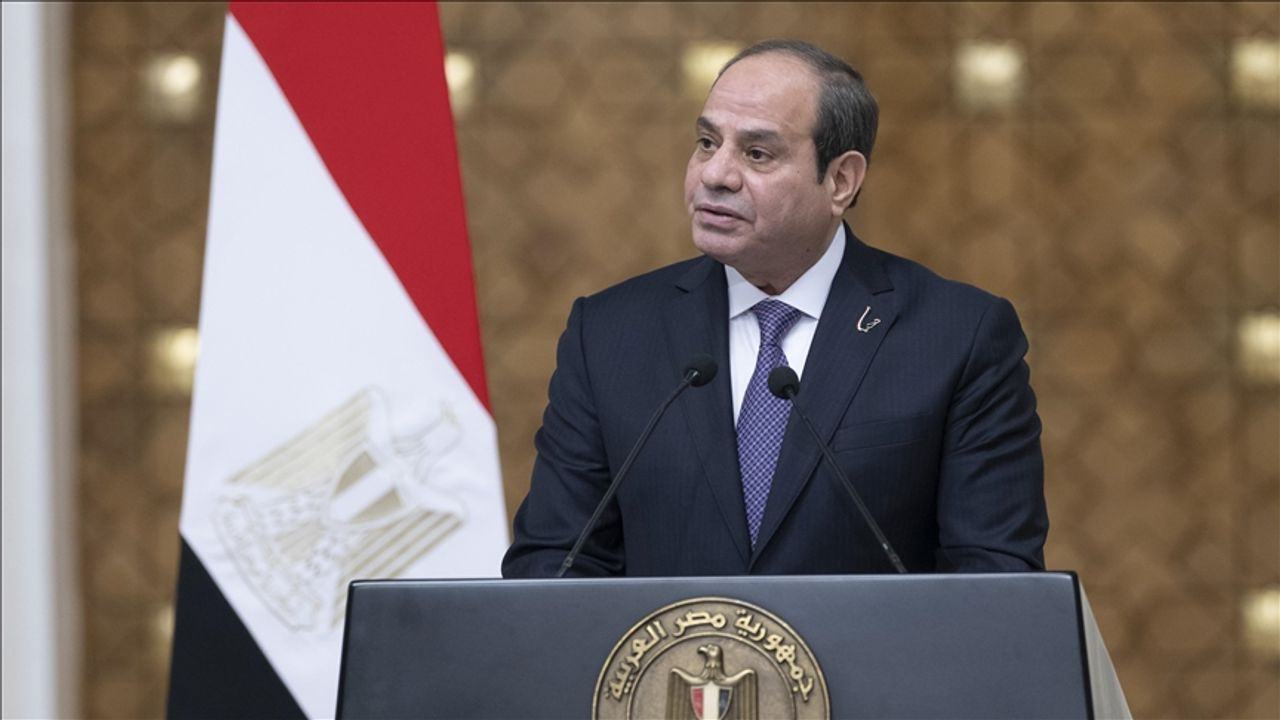
Egyptian President Abdel Fattah el Sisi warned that deliberate efforts are being made to redraw the Middle East map and urged full implementation of the Gaza ceasefire’s second phase, including unhindered aid flows and immediate reconstruction. He also rejected any displacement of Palestinians, while noting Israel has violated the truce by restricting aid, limiting Rafah access, and delaying withdrawal. The remarks underscore elevated geopolitical risk across the region and ongoing uncertainty around Gaza’s humanitarian and security situation.
The market implication is not a direct asset-price shock so much as a rising probability of a regionalization regime: higher security premia on shipping, reconstruction, and EM risk budgets, with second-order pressure on countries that sit on the logistical perimeter of Gaza. The most investable channel is not Israel/Gaza exposure per se, but whether the rhetoric hardens into constraints on Egypt’s Suez-linked trade, Red Sea routing, and border-adjacent infrastructure timelines, which would feed through to freight, insurance, and imported inflation within days to weeks.
The bigger medium-term risk is that reconstruction becomes a hostage to diplomacy, keeping the enclave in a low-equilibrium state that suppresses cross-border commerce and delays normalization benefits for Egypt, Jordan, and select GCC contractors. That matters because the market typically prices ceasefire headlines as binary, but the real driver is whether aid flow and reconstruction capex actually translate into procurement, labor mobility, and transit volumes over the next 3-12 months. If those channels remain blocked, the opportunity cost shows up in weaker EM sentiment, wider sovereign spreads, and lower visibility for regional infrastructure cash flows.
Contrarian read: consensus may be treating this as another geopolitical headline that fades, but repeated language around map-redrawing increases the tail risk of policy responses that are not priced in until they hit flows. The underappreciated upside is for defense, surveillance, and maritime security beneficiaries globally, not just in-region, because the probability distribution of “contained conflict” is worsening even if spot headline intensity does not immediately escalate. Any move that improves border access or launches credible reconstruction would likely trigger a sharp but temporary relief rally in Egypt-linked proxies and regional freight names.
AI-powered research, real-time alerts, and portfolio analytics for institutional investors.
Request DemoOverall Sentiment
strongly negative
Sentiment Score
-0.65
