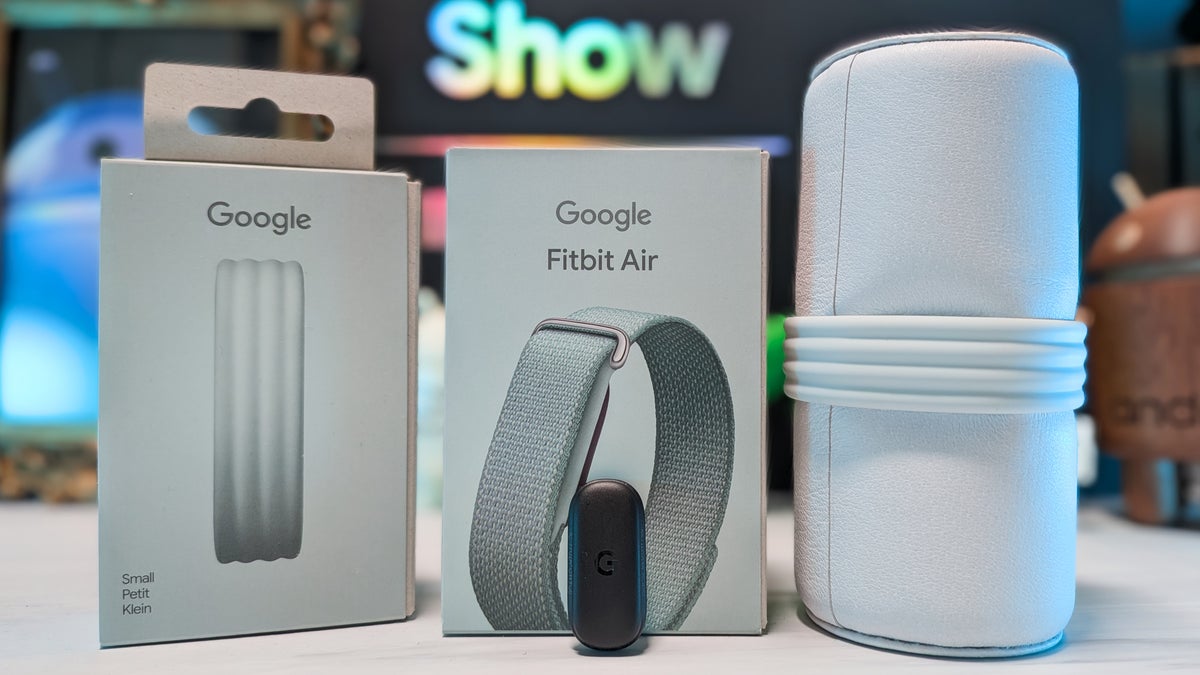
Google launched the $99.99 screenless Fitbit Air, a new wearable that claims up to 7 days of battery life and delivered close to 8 days in testing, with 5 minutes of charging taking the battery from 10% to 34%. The device emphasizes passive health tracking, including 24/7 heart rate, sleep, irregular rhythm alerts, and Gemini-powered coaching, while core tracking features remain free without the $9.99 monthly subscription. The review is generally positive, though it notes usability friction in workout logging and a pending priority toggle for users wearing a Pixel Watch alongside the Air.
The market takeaway is not the device itself; it’s the behavioral wedge Google is trying to open. A screenless tracker reduces attention friction, which should improve adherence and raise the probability that users stay inside the Google Health ecosystem longer than they would with a conventional wearable. That matters because the monetization lever is not $99 hardware, but the conversion path from free passive tracking into AI-assisted coaching and, eventually, broader health subscriptions and services.
The more interesting second-order effect is competitive pressure on subscription-first wearables. If Google can deliver baseline metrics without forcing a paywall, it attacks the core Whoop objection: perceived ownership versus rental economics. That could compress pricing power across premium fitness subscriptions and push competitors to justify membership with genuinely differentiated coaching rather than simply gating basic data.
Near term, the main catalyst is post-launch adoption quality, not unit volume. If retention is strong after the novelty period, it supports a multi-quarter narrative that Google can bundle hardware, software, and AI health into a sticky layer on top of Android and Pixel. The risk is that the product ends up as a niche companion for already-committed health enthusiasts; if engagement drops after 30-60 days or the app UX remains cumbersome for strength-training users, the ecosystem value thesis weakens quickly.
The contrarian read is that the subscription flexibility may actually be the most bullish part: it lowers buyer resistance and expands the funnel, while leaving optionality for future upsells. In other words, Google may not need the AI coach to be a day-one hit if the tracker quietly becomes the default entry point into its health stack. The bigger issue is execution—especially device prioritization across Pixel Watch and Fitbit—because any friction in multi-device data handling could slow cross-sell rather than accelerate it.
AI-powered research, real-time alerts, and portfolio analytics for institutional investors.
Request DemoOverall Sentiment
mildly positive
Sentiment Score
0.35
Ticker Sentiment
