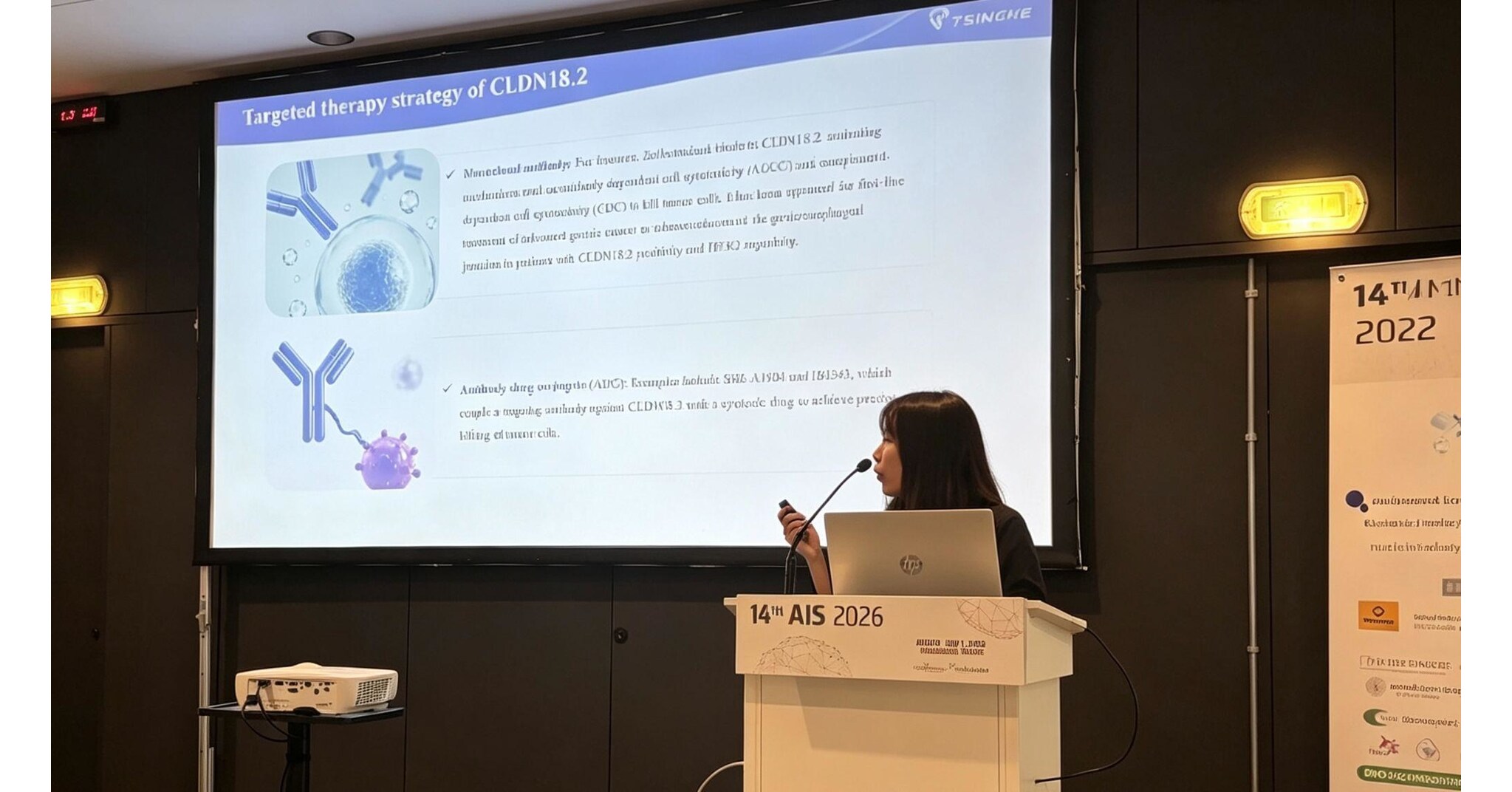
Tsingke highlighted AI-assisted therapeutic antibody discovery at AIS 2026, focusing on highly selective CLDN18.2 antibodies for gastric cancer and solid tumors. The company claims AI-enabled sequence analysis plus a proprietary screening strategy reduces cross-reactivity with CLDN18.1 and yields candidates with strong specificity and favorable developability. It also showcased an end-to-end antibody development platform spanning discovery, engineering, and protein expression across multiple use cases (including ADCs).
This is more signal for the biotech-tools ecosystem than for any near-term therapeutic winner. The economic value of AI here is not “better science” in the abstract; it is fewer failed wet-lab cycles and a higher hit rate on difficult targets, which should modestly expand budgets toward platform vendors that can prove speed-to-candidate and developability. That said, claims at the discovery stage rarely translate into a valuation step-up unless they produce repeatable partner milestones or non-dilutive revenue.
The second-order beneficiaries are likely antibody-discovery and gene-synthesis platforms with differentiated data/workflow integration, while pure software AI names are vulnerable to skepticism because the bottleneck remains biology, not model output. If this workflow actually reduces cross-reactivity attrition on CLDN18.2-like targets, it could improve economics for ADC and bispecific programs in solid tumors by lowering preclinical waste, but the impact is months to years away and depends on downstream clinical success, not conference data.
Contrarian view: the market may be overcrediting “AI-enabled discovery” as a moat when the real moat is proprietary assay data and validation throughput. Without disclosed partner counts, booked revenue, or clinical assets, this is mostly a marketing event. The near-term risk is a fade if investors realize the addressable benefit is incremental productivity rather than a step-change in pipeline value; what would falsify that skepticism is a material licensing deal or multiple independently validated candidates advancing to IND-enabling work within 1-2 quarters.
AI-powered research, real-time alerts, and portfolio analytics for institutional investors.
Overall Sentiment
mildly positive
Sentiment Score
0.15
Ticker Sentiment
