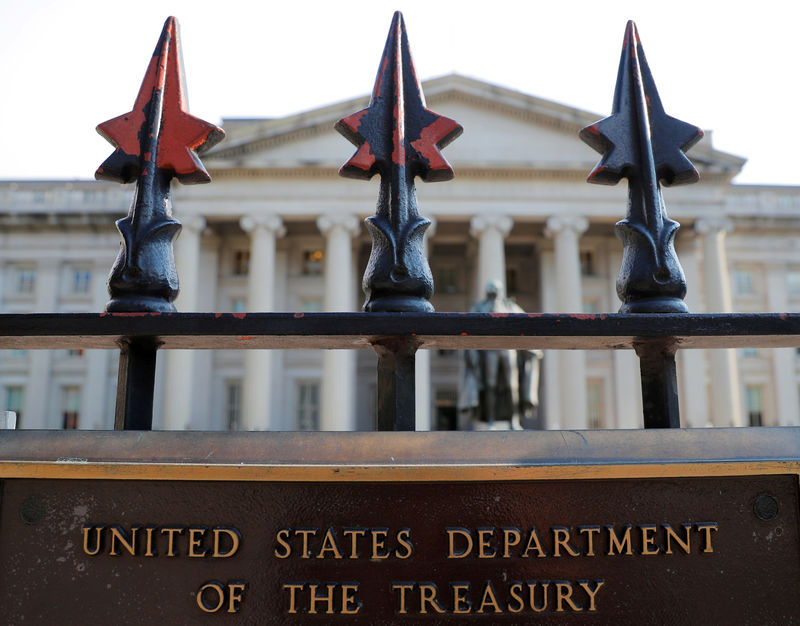
Former Treasury Secretary Henry Paulson warned that a collapse in demand for U.S. Treasuries could be 'vicious,' citing rising yields, higher interest costs, and a widening fiscal deficit averaging roughly 6% of GDP over the past three years. He urged policymakers to prepare an emergency backup plan and to address the deficit through higher revenues, tax-code reforms, and spending changes, including Social Security and health care overhauls. The remarks highlight sovereign debt and rate risks that could pressure bond markets and the broader policy backdrop.
The market implication is less about an imminent sovereign selloff and more about a rising term-premium regime: even a modest repricing of inflation/fiscal risk can keep long-end yields sticky while the front end is still anchored by growth concerns. That matters because the first-order losers are duration-sensitive equities, levered credit, and rate-dependent balance sheets; the second-order winner is private capital and cash-rich cyclicals that can fund growth without relying on cheap refinancing. If this starts to move from headline risk to actual auction indigestion, the transmission will be through higher real rates and tighter financial conditions before any explicit policy response shows up.
The most vulnerable pockets are the long-duration equity complex and the weakest refinancers in HY/levered loans. AI infrastructure names with heavy capex but far-out cash flows can still work if revenue visibility stays strong, but the valuation multiple support gets thinner as the risk-free rate rises 50-75 bps. On the credit side, the danger is not default right away; it is spread widening and refinancing windows shutting for sub-investment-grade issuers over the next 6-18 months.
The contrarian point is that the consensus may be underpricing how little room policymakers have to soften a fiscal shock without crowding out private demand. If Treasury issuance keeps rising while the Fed is not a marginal buyer, the market may start demanding a persistent liquidity premium rather than a one-off spike. That would favor owning volatility and being selective on rate-sensitive equity exposure rather than making a blanket bearish bet on risk assets.
A reversal would likely require either a credible medium-term deficit package or a sharper growth slowdown that pulls yields down faster than the fiscal premium rises. Until then, the asymmetry is for higher-for-longer long-end rates, with policy headlines acting as catalysts rather than cures.
AI-powered research, real-time alerts, and portfolio analytics for institutional investors.
Request DemoOverall Sentiment
mildly negative
Sentiment Score
-0.20
