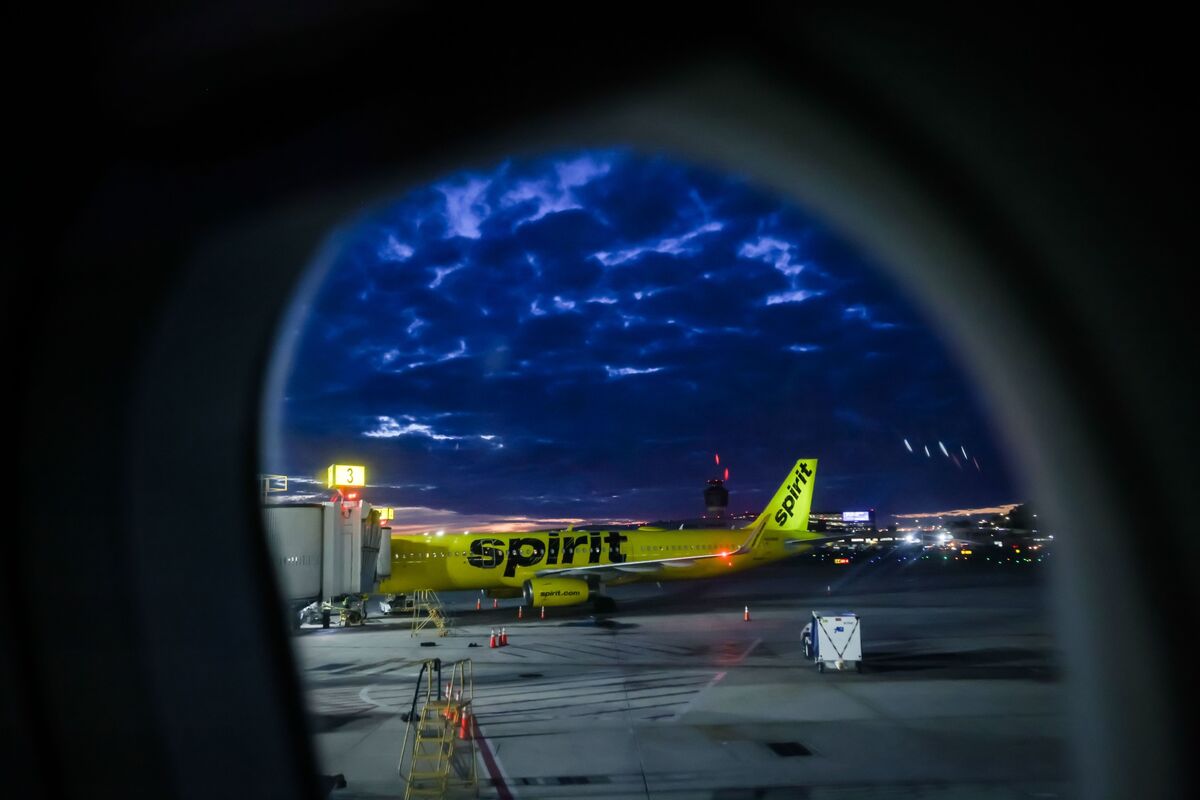
Spirit Aviation Holdings is reportedly considering offering the US government an equity stake to secure cash and avoid potential liquidation amid a spike in jet fuel prices. The proposal underscores severe liquidity pressure at the discount carrier, with the risk profile deteriorating despite no formal bankruptcy filing yet. The news is negative for Spirit and may weigh on airline sentiment, though broader market impact should be limited.
This is less a single-name rescue story than a stress test for how far the government is willing to blur the line between lender of last resort and equity sponsor. If the market starts to believe Washington can be pulled into airline capital structures, it lowers near-term default risk for the weakest operators but also raises the probability of a more punitive capital regime for the sector: higher scrutiny on fares, labor, and use of proceeds. The second-order winner is not the distressed carrier itself; it is likely the stronger balance-sheet incumbents that can take share if a competitor is kept alive but financially constrained, while suppliers and lessors face extended counterparty risk with little upside.
The key catalyst window is weeks, not quarters. A credible government backstop would likely tighten credit spreads and pressure short-interest in the name immediately, but any delay or rejection creates a binary path to restructuring/liquidation that could reprice within days. The risk is that political optics override economic logic, leading to a bridge solution that preserves operations but still leaves equity highly dilutive; in that scenario, common stock may rally on headline support yet remain a poor medium-term instrument because the capital stack gets reset rather than solved.
The broader market implication is that this could become a template for other politically sensitive, domestic-heavy industries facing cost shocks. That is positive for distressed financing providers and select aerospace/leasing counterparties, but negative for equity holders in capital-intensive transport names if investors demand a higher policy risk discount. If fuel remains elevated for another 1-2 quarters, the carrier’s operating leverage works in reverse and the equity stake idea becomes less about rescue and more about managed liquidation avoidance, which is typically worse for existing shareholders than a clean prepack.
AI-powered research, real-time alerts, and portfolio analytics for institutional investors.
Request DemoOverall Sentiment
moderately negative
Sentiment Score
-0.45
