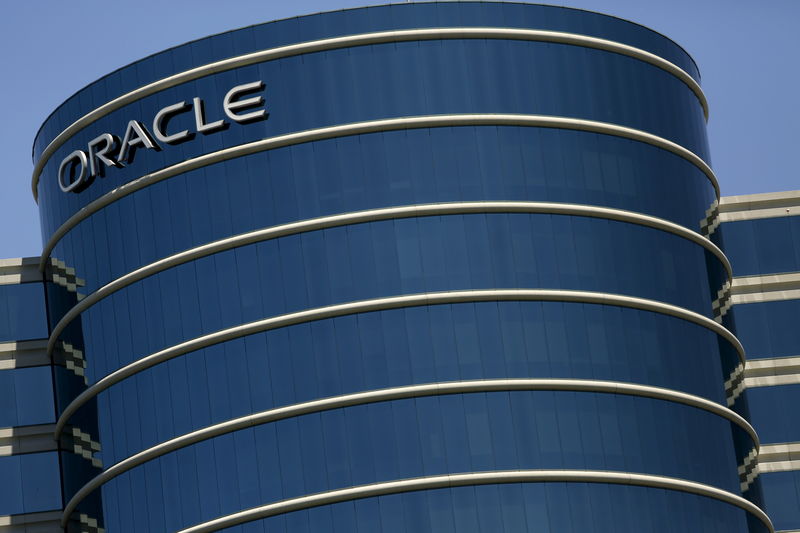
Morgan Stanley cut Oracle’s price target to $207 from $213 while keeping an Equal Weight rating, citing better execution and stronger AI/cloud demand but lingering uncertainty around GPU-as-a-service costs, financing, and margins. The firm raised its FY2030 GPUaaS earnings power estimate to $2.90 from $1.51 and increased core earnings power ex-GPUaaS to $9.07 from $8.51, while also lifting FY2027 and FY2028 cloud database revenue estimates by 3% and 15%. Oracle’s plan to bring 10GW online over three years remains the key debate as non-GAAP gross margins fell short and continued to decline.
Oracle’s AI infrastructure story is transitioning from “is there demand?” to “can the company finance and deliver it without destroying economics?” That shift matters because the market will likely reward visible capacity additions first, then re-rate only if margin durability becomes credible. In the near term, the bigger beneficiary may be the GPU supply chain rather than the platform vendor: any evidence that Oracle is pulling forward large clusters supports power, networking, and thermal-management suppliers, while leaving the burden of execution risk concentrated at the hyperscaler-like layer.
The second-order risk is balance-sheet creep. A 10GW buildout implies a long-dated funding stack that can quietly compress equity value even if reported revenue grows fast, especially if customer-funded structures obscure true returns. If margins keep drifting lower, the market may stop capitalizing GPUaaS on revenue growth and instead treat it like a capital-intensive utility with technology obsolescence risk, which would cap multiple expansion over the next 6-12 months.
The contrarian angle is that the cautious stance may already be partly priced, but not the downside from a funding surprise. If Oracle keeps winning deals while shifting more of the hardware burden to counterparties, headline growth can stay strong even as economic profits lag; that would be positive for the stock only until investors demand proof that “bring your own hardware” isn’t a low-margin substitute for genuine annuity software growth. Conversely, a single quarter of better-than-feared gross margin stabilization could force a sharp squeeze, because positioning is likely leaning toward the narrative that AI demand is strong but monetization is uncertain.
AI-powered research, real-time alerts, and portfolio analytics for institutional investors.
Request TrialOverall Sentiment
neutral
Sentiment Score
0.15
Ticker Sentiment
