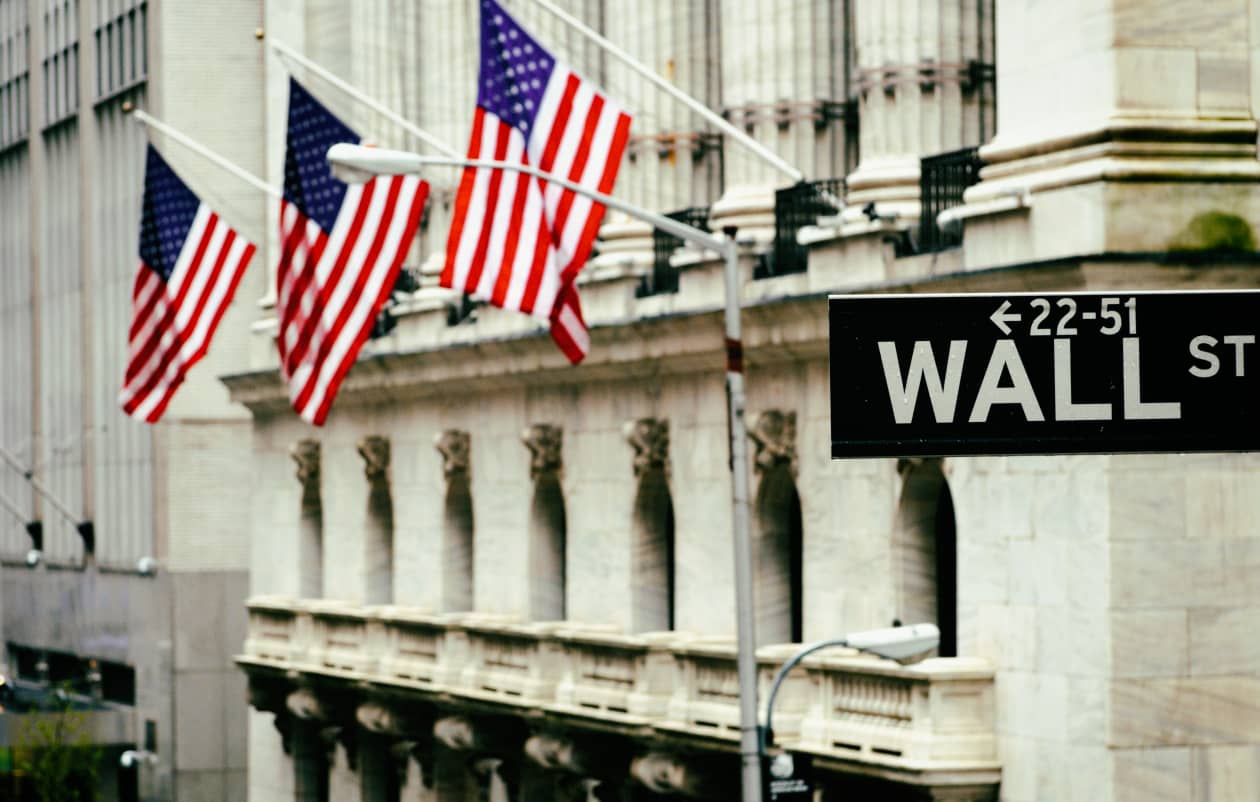
U.S. equity benchmarks staged a sharp rebound during the shortened Thanksgiving week, with the S&P 500 up 3.7% and the Dow Jones Industrial Average up 3.2% — the S&P's best holiday-week performance since 2008. Market optimism has been supported by futures pricing that implied roughly an 87% chance of a December interest-rate cut, and historically when the S&P rises >=2% in Thanksgiving week it continues higher in December more than 80% of the time. The market remains bifurcated by AI themes, with gains in names tied to Google and Broadcom after product and partnership news while Nvidia lagged, and volatility persisted as the Nasdaq fell 1.5% in November even as the Russell 2000 gained 5.5% on the week.
Market structure: The Thanksgiving-week rebound concentrated flows into large-cap tech and small-cap cyclicals — expect continued breadth into December given a historical 83% probability of gains after a >2% holiday-week rise. Rate-sensitive pockets (financials, REITs) should benefit if futures-implied probability (~87%) of a Dec cut holds; conversely, volatility-sensitive growth (NVDA) may underperform near-term as profit-taking and reallocation to software/cloud winners (GOOGL, AVGO) accelerates.
Risk assessment: Key tail risks are a Fed no-cut surprise (yields +25–50bp in days → equity drawdown), an AI regulatory/antitrust shock to platform names, or earnings misses from AI suppliers. Time horizons: immediate (days) favors momentum trades into year-end; short-term (weeks/months) will be decided by Dec policy clarity and December retail/holiday data; long-term (quarters+) depends on durable moats — Google’s model stack vs Nvidia’s hardware leadership.
Trade implications: Favor overweight in GOOGL/GOOG and AVGO over NVDA on relative sentiment and product-cycle newsflow; small-cap exposure (IWM) also merits tactical long through December. Use option structures to express views (defined-risk call spreads on GOOGL/AVGO; put spreads on NVDA) and hedge portfolio convexity with modest SPY downside protection sized to 1–2% NAV.
Contrarian angles: Consensus is priced for a December cut — that’s a crowded trade; if the Fed pauses, a rapid yield re-pricing could compress multiples, especially for stretched AI hardware names. Historical parallels (2003/2008) show holiday-week rallies can precede both year-end melt-ups and mean-reverting Januaries; prioritize volatility-adjusted entry, tight stop-losses and event-driven exits (Fed statement, Nvidia earnings cadence).
AI-powered research, real-time alerts, and portfolio analytics for institutional investors.
Request DemoOverall Sentiment
mildly positive
Sentiment Score
0.28
Ticker Sentiment
