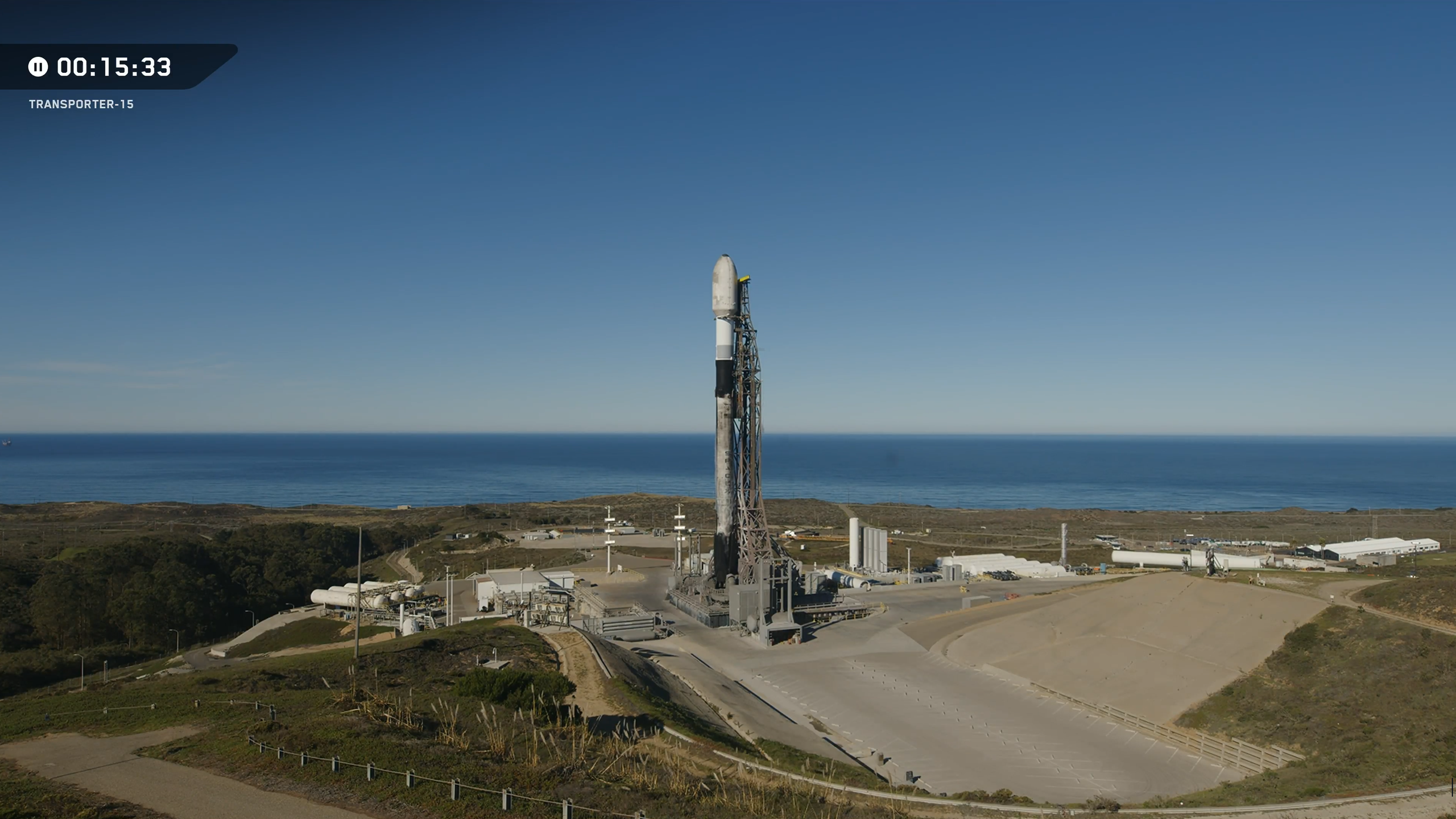
SpaceX scrubbed the Transporter-15 rideshare mission carrying 140 satellites roughly 15 minutes before a planned liftoff from Vandenberg; the next launch opportunity is scheduled for Nov. 28 at 1:19 p.m. EST. Payloads include Planet Labs' 36 SuperDove satellites plus two Pelican imagers, a pair of ESA HydroGNSS satellites, Varda’s W-5 returnable capsule experiment and dozens of commercial smallsats; the Falcon 9 first stage is a booster with 29 prior flights slated to land on the drone ship, and the delay — reason undisclosed — represents an operational risk to smallsat customers but is unlikely to move broader public markets beyond affected suppliers and launch customers.
Market structure: The scrub is a near-term negative for satellite operators (e.g., PL) due to schedule slippage and potential revenue-recognition or ground-ops costs, but it is not systemic — SpaceX remains the dominant low-cost rideshare provider. Repeated scrubs or a high-profile reliability event would shift ~5–15% of small‑sat manifests toward dedicated-launch competitors over 6–12 months, allowing spot pricing for dedicated small-launch slots to rise ~10–25% versus current rideshare rates.
Risk assessment: Tail risks include a catastrophic Falcon 9 failure (industry insurance claims +30–100% for a year), regulatory scrutiny on reused stages, or supply‑chain-induced launch backlogs causing customer churn; these materialize on a months-to-year horizon. Immediate risk is operational (days) — schedule slippage causing short-term revenue & cash-flow timing mismatches for small operators; structural risks (pricing, insurance, contracts) play out over 3–12 months.
Trade implications: Near-term trades should capture volatility around reschedules (days–weeks) and position for a medium-term reallocation of demand (6–12 months). Favor liquid public alternatives to SpaceX: long RKLB (Rocket Lab) to capture diversion of small-sat demand, selective buy-the-dip for PL (Planet Labs) if shares fall >5% on manifest delays, and a 45–90 day options straddle on PL sized to 0.5–1% portfolio to capture event volatility.
Contrarian angles: Consensus treats scrubs as noise; the market undervalues the fragility of manifests and contractual penalty flows — repeated reliability questions will accelerate customers toward dedicated launches and hurt insurers/small operators with thin liquidity. Historical parallels: post-2016 Soyuz and Falcon anomalies show 3+ high-profile failures in 12 months can reallocate 10%+ of launch demand; monitor for that trigger rather than single scrubs.
AI-powered research, real-time alerts, and portfolio analytics for institutional investors.
Request DemoOverall Sentiment
neutral
Sentiment Score
-0.05
Ticker Sentiment
