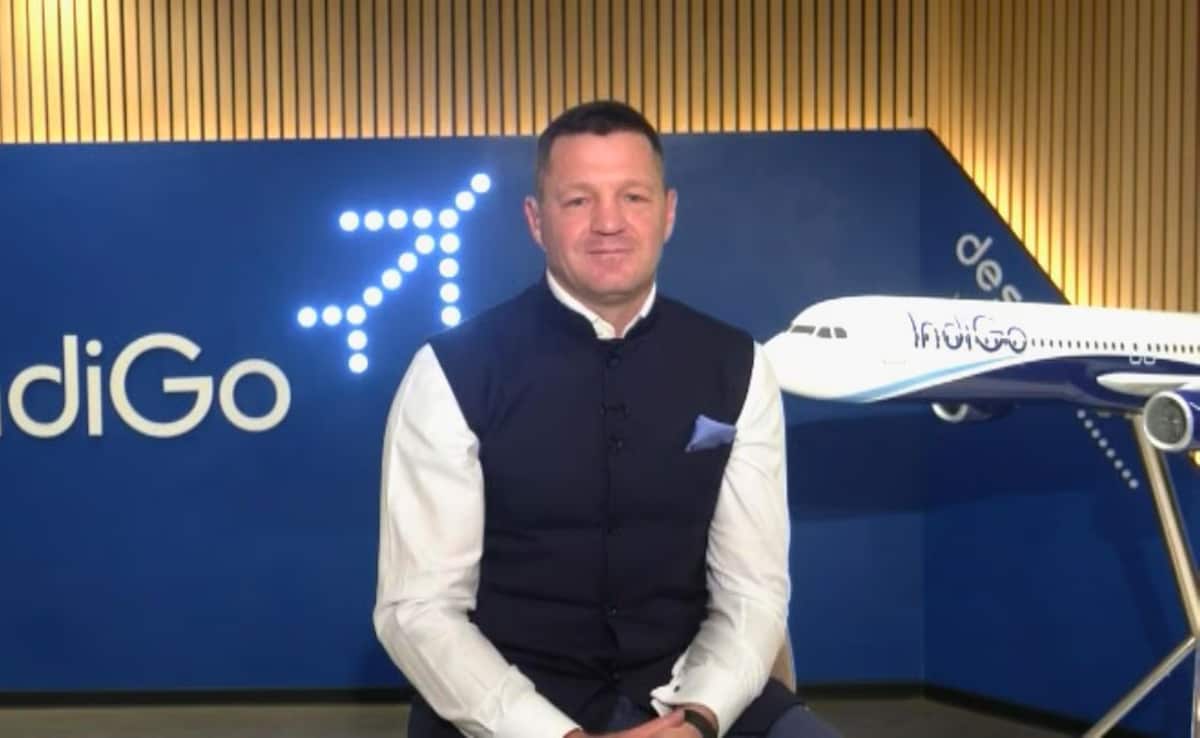
IndiGo miscalculated pilot staffing under new Flight Duty Time Limitations, triggering over a thousand cancellations in one day and stranding tens of thousands of passengers; hundreds more flights were cancelled subsequently. The aviation ministry has launched a high-level inquiry, temporarily put the FDTL order in abeyance, and is weighing heavy fines, cuts to IndiGo's allowed flight operations and seeking the removal of CEO Pieter Elbers — actions that threaten near-term revenue and operational capacity for India's largest carrier (roughly two-thirds domestic market share). Normalisation is expected within a few days if the measures take effect, but the regulatory and governance fallout creates material near-term downside risk to the company's performance and investor outlook.
Market structure: Immediate winners are competing carriers able to pick up short‑notice demand (SpiceJet - NSE: SPICEJET, Tata/AI operations) and online travel agents (MakeMyTrip - NASDAQ: MMYT) that can monetize rebookings; IndiGo (InterGlobe Aviation - NSE: INDIGO) is the direct loser given ~60–65% domestic share and the potential for near‑term capacity curbs. If IndiGo is forced to cut 10–20% of domestic seat capacity for days–weeks, industry yields could rise ~5–15% on remaining seats; that amplifies pricing power for non‑IndiGo carriers and OTAs in the short run.
Risk assessment: Tail risks include CEO removal, prolonged flight caps beyond the ministry’s 2–3 day window, or a punitive fine large enough to force cash conservation — a penalty equal to 1–3% of IndiGo’s market cap or several weeks’ EBITDA would be material. Immediate (days): operational disruption and volatility; short (weeks/months): regulatory inquiry, fines, market‑share shifts of 1–5%; long (quarters): reputational erosion raising pilot hiring/wet‑lease costs and unit cost up 3–7% if roster rebuild is needed.
Trade implications: Tactical action: favor short, volatility‑sensitive positions on INDIGO for 2–8 week plays and chase long exposure to SPICEJET and MMYT to capture diverted demand; consider 1–3 month put spreads on INDIGO to cap premium and 1‑month call purchases on SPICEJET/MMYT. Cross‑asset: expect INDIGO credit spreads to widen and INR‑equity risk premium to tick up marginally; avoid long‑dated leveraged airline exposure until inquiry concludes.
Contrarian angles: The consensus overlooks that the regulator has already put FDTL in abeyance — if fines are modest (<0.5% market cap) the selloff may be overdone and present a 3–12 month accumulation opportunity in INDIGO on any >20% drawdown. Historical parallels (Southwest 2022) show operational crises can cause sharp but temporary equity drawdowns while fundamentals recover; key unintended consequence is a short spike in fares that benefits full‑service carriers and airports more than low‑cost peers over a 1–3 month window.
AI-powered research, real-time alerts, and portfolio analytics for institutional investors.
Request DemoOverall Sentiment
strongly negative
Sentiment Score
-0.60
