

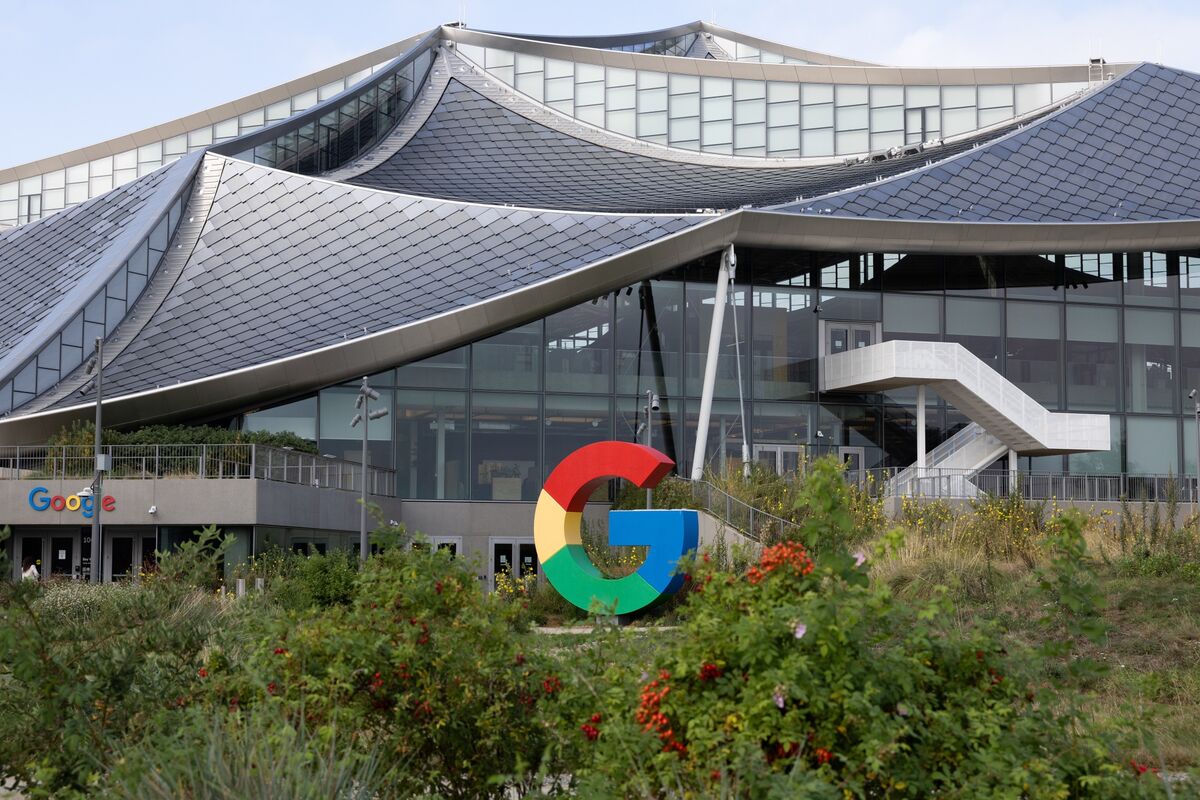
Alphabet is raising $80 billion in equity capital to fund AI spending, including $30 billion in underwritten public offerings, a $40 billion at-the-market sale, and a $10 billion private placement from Berkshire Hathaway. The financing underscores Alphabet’s aggressive push into artificial intelligence while strengthening liquidity for its investment plans. The transaction is constructive for Alphabet’s long-term growth profile, though it may weigh modestly on near-term sentiment due to dilution.
This is less a funding story than a signal that AI capex is moving from discretionary to strategic infrastructure spend. The second-order implication is that the largest platforms are effectively validating a multi-year buildout cycle, which should support the entire compute stack even if near-term monetization remains uneven. The market will likely treat balance-sheet capacity as a competitive moat: firms that can pre-fund inference/training capacity can keep product velocity high while weaker peers face a harsher funding bar.
The clearest beneficiaries are the picks-and-shovels suppliers exposed to incremental data center buildout, especially power, networking, optics, and advanced semicap equipment. A material amount of that $80B will leak into non-AI vendors through electrical gear, cooling, chips, and construction, but the more important effect is on pricing power: when hyperscalers signal urgency, lead times tend to tighten and order visibility improves for 2-4 quarters. The flip side is that this can crowd out capital returns, creating a subtle tension between growth narrative and shareholder yield that matters if the spend ramp persists into 2026.
For GOOGL, the raise is mildly dilutive in the short run but likely positive for multiple expansion if investors conclude management is choosing offensive capex over defensive financial engineering. The risk is execution: if incremental AI spend fails to show monetization or traffic retention benefits within 6-12 months, the market can re-rate the stock from "platform winner" to "capex sink," especially if free cash flow conversion compresses. For BRK.B, the private placement is a high-quality signaling event: Berkshire is effectively underwriting the thesis that the equity is cheap relative to long-duration AI optionality, but the bigger takeaway is that large external capital can improve Alphabet's flexibility without stressing public market sentiment.
Consensus is probably underestimating how this changes the competitive clock. Once a top-tier platform locks in another year of accelerated spend, smaller ad/AI competitors may have to respond with either higher leverage or slower roadmap cadence, which should widen dispersion in digital ad and cloud names over the next 2-3 quarters. The contrarian risk is that the market already expects perpetual capex escalation; if guidance only confirms what is already priced, the announcement becomes a liquidity event rather than a re-rating catalyst.
AI-powered research, real-time alerts, and portfolio analytics for institutional investors.
Request TrialOverall Sentiment
mildly positive
Sentiment Score
0.18
Ticker Sentiment
