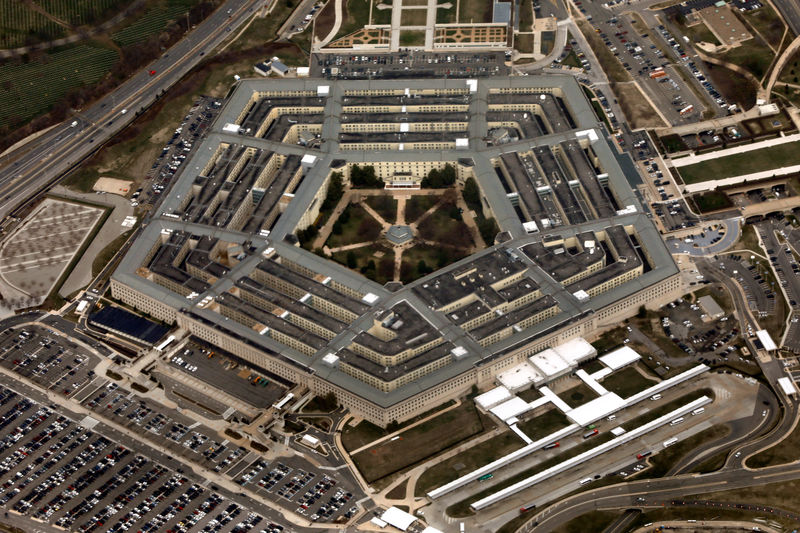
The Pentagon confirmed agreements with four additional technology companies—Nvidia, Microsoft, Reflection AI, and Amazon Web Services—to deploy advanced AI tools on classified military networks. The deals expand a growing coalition that already includes SpaceX, OpenAI, and Google, reinforcing the U.S. military's push toward an AI-first operating model. The news is positive for participating AI and defense-linked names, but the immediate market impact is likely limited to the involved companies and adjacent sector sentiment.
This is less about a single headline and more about the Pentagon formalizing a multi-vendor procurement stack for classified AI. The second-order winner is not just the named platform providers but the entire secure inference and deployment layer: cloud networking, identity/access management, encrypted storage, GPU supply, and system integrators that can operationalize models inside defense air-gapped environments. For GOOGL specifically, the signal is that the market underestimates its ability to win regulated, high-trust workloads even in areas where it is not the incumbent; that improves the durability of its enterprise AI monetization and reduces the probability that AI spending fully consolidates around one cloud or model vendor.
The most important competitive effect is that defense becomes a reference customer for frontier AI vendors, which should compress procurement cycles across other federal agencies and allied governments over the next 6-18 months. That is positive for hyperscalers and select defense primes, but it also raises the bar for smaller AI specialists that lack compliance, distribution, or security credentials; they may be forced into niche roles or get acquired. A subtle loser is any company whose moat depends on being the default model provider in sensitive environments, because the Pentagon is clearly diversifying to avoid single-vendor dependence.
Risk-wise, this is still a headline-driven catalyst in the near term, but the real value accrual depends on contract conversion, not announcements. If integration stalls due to security reviews, model hallucination liability, or inter-agency pushback, the trade can fade within weeks; if procurement scales, the revenue effect is more visible over 2-4 quarters. Geopolitically, this also reinforces an AI arms-race narrative, which can keep defense IT budgets sticky even if broader tech sentiment softens.
The contrarian view is that the market may be too focused on the symbolic win and not enough on pricing pressure: once multiple vendors are competing for classified workloads, the Pentagon has leverage to commoditize model access and push margin capture toward infrastructure rather than software. That means the cleanest exposure may be picks-and-shovels and platforms with switching-cost advantages, not pure-play AI software. If this becomes a template for other agencies, the upside is broader, but the economics per vendor may be thinner than the headline implies.
AI-powered research, real-time alerts, and portfolio analytics for institutional investors.
Request DemoOverall Sentiment
mildly positive
Sentiment Score
0.20
Ticker Sentiment
