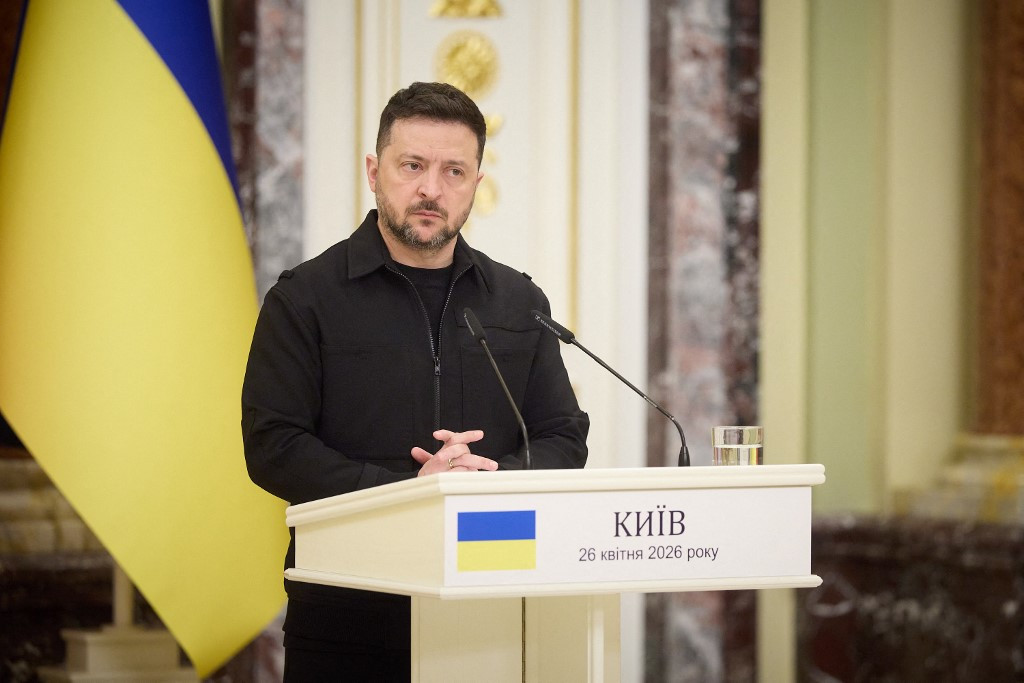
Three additional countries have pledged about €400 million to Ukraine’s PURL program, bringing more immediate funding for US-made weaponry, especially anti-ballistic systems. Zelensky also clarified that the first €45 billion tranche of the EU’s €90 billion 2026 loan will prioritize internal resilience, including domestic miltech, drone production, and energy-grid protection. The update supports Ukraine’s near-term defense and financing needs, though the beneficiaries are primarily sovereign and defense-related rather than listed equities.
This is incrementally bullish for the European defense complex, but the more interesting read-through is not the headline funding itself—it is the shortening of cash-conversion risk for US air defense and missile-defense suppliers. PURL effectively monetizes Europe’s political willingness faster than its production base can deliver, which keeps demand pointed at US-made systems for another 6-18 months and extends the order visibility of the handful of primes with constrained but scalable throughput.
Second-order, the allocation of the EU loan toward resilience, drones, and grid protection shifts marginal capital away from conventional heavy armor and toward lower-cost, high-turnover categories where software, sensors, EW, and power equipment matter more than platform count. That favors suppliers with exposure to C2, counter-UAS, batteries, generators, transformers, secure comms, and integration services, while pressuring legacy land-systems names that depend on large-ticket procurement cycles and are less aligned with the “immediate defense” budget logic.
The sovereign-credit angle is underappreciated: channeling borrowed EU funds into resilience rather than pure fiscal relief can support near-term growth optics, but it also creates a cleaner contingent-liability narrative for investors if Ukraine’s financing remains externally backstopped. That is mildly positive for frontier sovereign spreads and for EU defense issuers, but only if the funding cadence stays steady; any delay into 2H26 would reopen gap-risk in the security umbrella and could pressure the risk premium on European defense procurement chains.
The contrarian risk is that this is a financing bridge, not a demand supercycle. If battlefield intensity eases or the US export queue worsens, the immediate beneficiaries become bottlenecked by production capacity rather than politics, and the market will rotate from order announcements to margin sustainability. Watch for a reversal if Western political fatigue rises, if peace-talk headlines improve, or if EU fiscal constraints force loan-tranche dilution.
AI-powered research, real-time alerts, and portfolio analytics for institutional investors.
Request DemoOverall Sentiment
mildly positive
Sentiment Score
0.25
