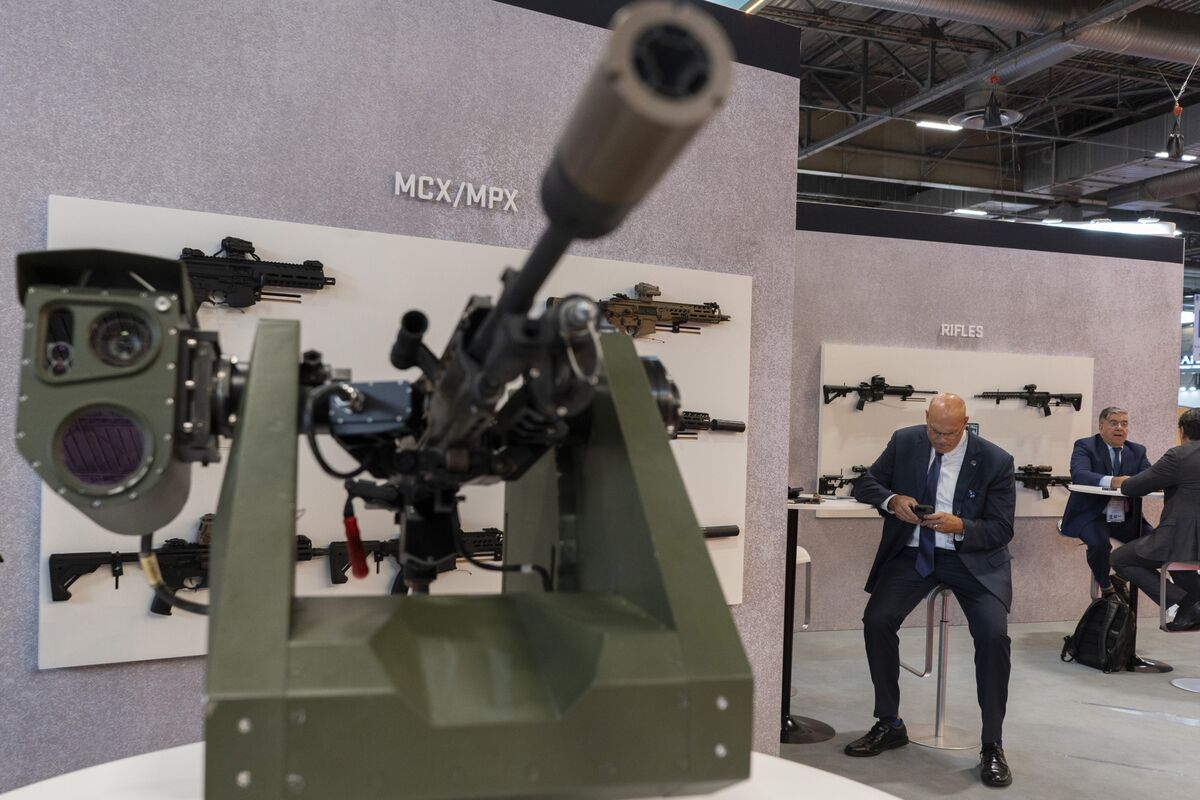
Swiss lawmakers approved a move to relax strict weapons-export rules, allowing firms to ship war material to a defined group of 25 mostly Western countries even if those recipients are involved in ongoing conflicts, and permitting downstream re-exports except to states that systematically violate human rights. The amendment, slated for final parliamentary approval later this month, aims to shore up domestic defense firms that have lost business since Russia’s full-scale invasion of Ukraine by reopening sales and re-export channels to allied markets.
Market structure: The immediate winners are Swiss defense primes and Swiss suppliers of precision components (small-cap revenue pools likely <€500m) plus large European primes that can source Swiss subs; I estimate a realistic revenue tailwind of ~3–10% for exposed Swiss suppliers over 12–24 months and potential EBITDA margin expansion of 50–200bps if contract flow accelerates. Losers: NGOs/brands and firms with high human-rights exposure that may be excluded; non-defense industrials see little direct impact. Risk assessment: Tail risks include a parliamentary reversal (<10% probability before final vote), EU/US reputational restrictions or secondary sanctions (10–25% over 2 years), and accidental re-export scandals that could force new curbs (5–15%). Near-term (days–weeks) reaction will be sentiment-driven around the final parliamentary vote (within ~30 days); medium-term (3–12 months) depends on contract awards; long-term (2–4 years) on sustained policy and export pipeline. Hidden dependency: compliance and KYC costs may rise, shaving 1–3% off margins. Trade implications: Favor defense re-rating and select supplier exposure vs broad industrials. Tactical plays: buy 3–9 month call spreads on large defense primes and defend with small hedges; implement a relative-value long defense ETF (ITA) vs short industrials ETF (XLI) to capture idiosyncratic rerating. Size trades modestly (1–3% NAV) and set stop-losses (15% adverse move or failure of parliamentary approval). Contrarian angles: Consensus underestimates the compliance/cost friction and limited absolute Swiss market size — headline liberalization may not translate to outsized order flow until multiyear procurement cycles complete. Historical parallels (modest gains after past export relaxations) imply upside is real but gradual; watch for unintended consequence of EU coordination tightening, which would reverse gains quickly.
AI-powered research, real-time alerts, and portfolio analytics for institutional investors.
Request DemoOverall Sentiment
mildly positive
Sentiment Score
0.25
