
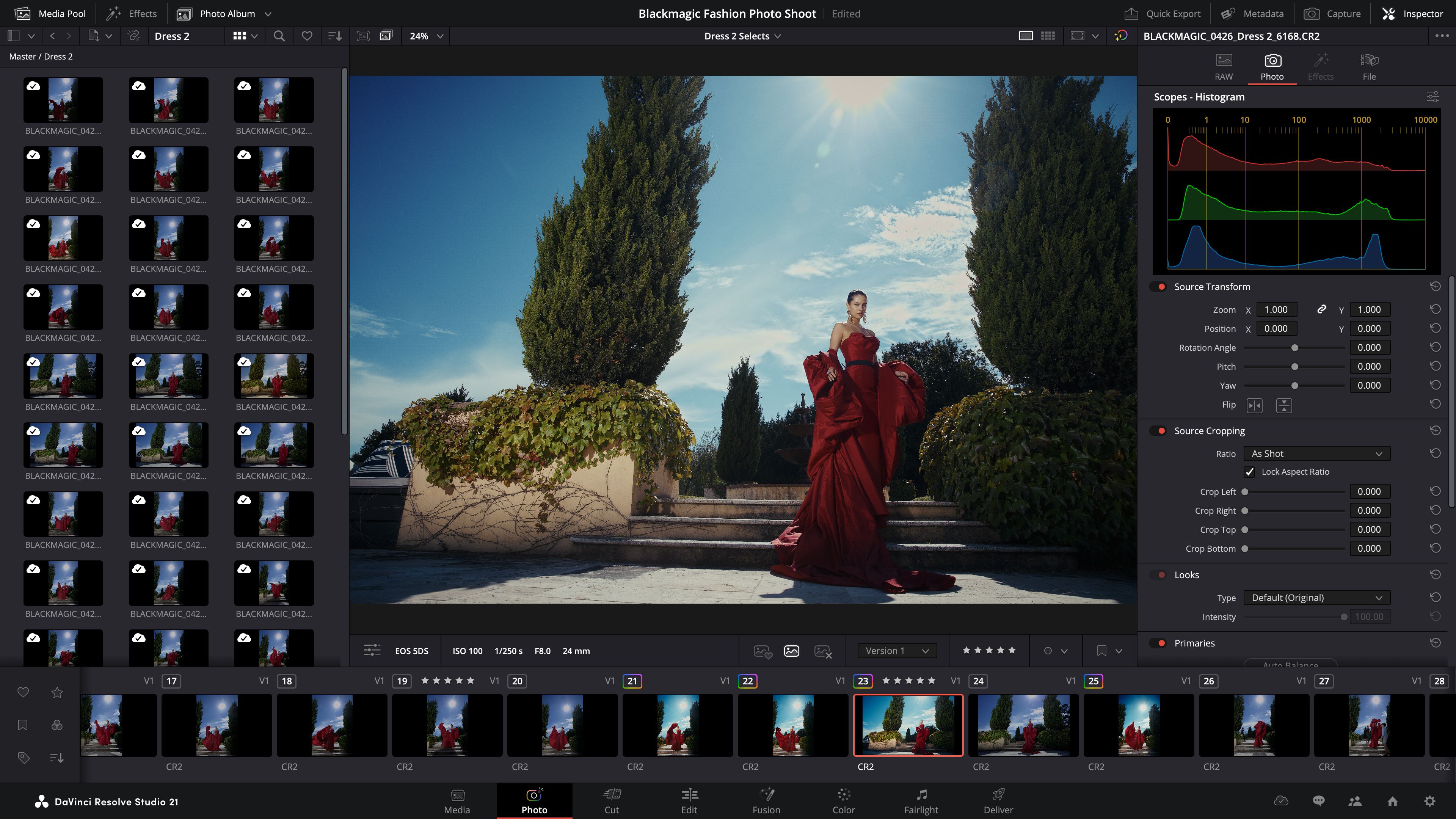
Blackmagic Design launched DaVinci Resolve 21 public beta, adding a new Photo page, AI-powered search and editing tools, and expanded text, graphics, and keyframing features. The update extends color grading capabilities to still photography and adds support for HDR/SDR multi-deliverable workflows, OGraf HTML graphics, and Lottie animations. The release is available now as a free beta, with no general release date yet confirmed.
The strategic read-through is less about software bells and whistles and more about Blackmagic widening the addressable market from pro video into adjacent creator workflows. By adding still-photo grading and camera tethering, Resolve is trying to become a cross-modal creative operating system, which raises switching costs and improves retention once users build LUTs, node trees, and presets across both photo and video pipelines. That creates a subtle but important competitive pressure on point solutions in post-production, especially where Adobe’s bundle advantage relies on workflow inertia rather than unique technical moats.
The AI features matter most as a time-saving layer, not as a standalone monetization lever. Search, object tagging, face tools, and deblurring reduce editing labor minutes on long-tail jobs, which tends to expand usage in smaller studios and solo creators before it materially changes enterprise budgets; the bigger second-order effect is that AI makes legacy archives more monetizable because old footage becomes searchable and salvageable. That dynamic is incremental for hardware ecosystems like SONY’s: better software can pull through more camera usage, more tethered capture, and potentially higher attachment rates to Sony’s imaging stack over time, even if the near-term financial impact is small.
The contrarian point is that this looks more disruptive to incumbent workflow software than to camera OEMs. If Resolve becomes the default end-to-end tool for independent creators, the economic pressure lands on higher-priced editing subscriptions and plugins rather than on camera ASPs, because the software feature set compresses differentiation at the top of the funnel. The risk is that AI features are easy to demo but harder to operationalize at scale; if accuracy, rendering performance, or stability disappoint, adoption could stall after the beta phase and the benefit to the ecosystem will remain mostly narrative for 1-2 quarters.
AI-powered research, real-time alerts, and portfolio analytics for institutional investors.
Request TrialOverall Sentiment
mildly positive
Sentiment Score
0.15
Ticker Sentiment
For SONY, the most interesting setup is a slow-burn positive rather than a catalyst-driven trade: improved tethering and creative tooling can support its higher-end imaging brand and professional camera ecosystem over 6-18 months, but the stock is unlikely to re-rate on this alone. The better trade is a relative one against software incumbents that are more exposed to workflow substitution. In other words, this is a modest bullish signal for capture hardware, but a clearer structural warning for software vendors whose moat depends on being the central editing environment.
