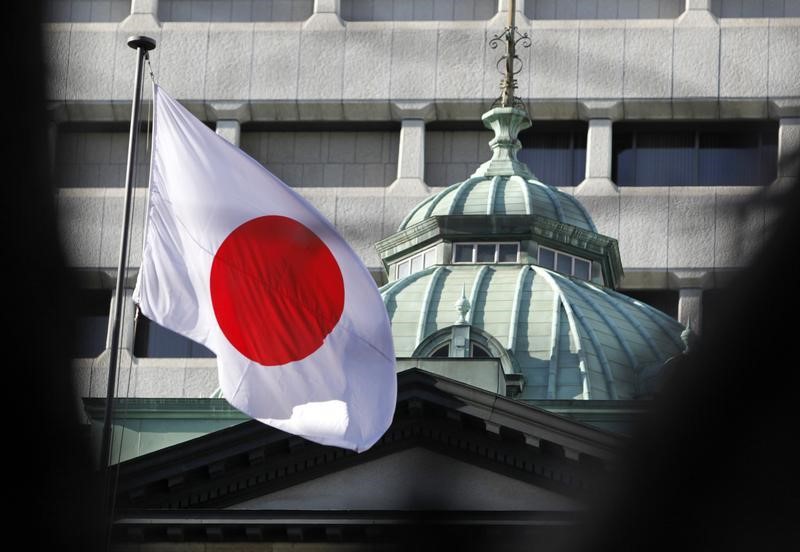
The Bank of Japan left its policy rate unchanged at 0.75% but signaled further tightening, while lifting its 2026 headline CPI forecast to 2.8%-3.0% from 1.9%-2.0% and core CPI to 2.5%-2.7%. It also cut fiscal 2026 real GDP growth expectations to 0.4%-0.7% from 0.8%-1.0% as higher oil prices from Middle East conflict weigh on the outlook. The decision was not unanimous, with 3 of 9 board members favoring higher rates, reinforcing a hawkish bias.
The key second-order effect is not simply higher Japanese rates, but a higher-for-longer JGB path that tightens global duration conditions through repatriation and hedging flows. As domestic yields rise, Japanese institutions have less incentive to reach for foreign duration, which can pressure U.S. Treasuries and European rates at the margin, especially in a market already sensitive to inflation surprises. That matters because gold’s marginal buyer has increasingly been rate-sensitive rather than crisis-sensitive; a firmer Japanese policy stance reduces the appeal of owning non-yielding assets on a hedged basis.
The BOJ’s inflation revision also weakens the “Japan as perpetual deflation exporter” narrative that has supported cheap funding trades for years. If wage growth and pass-through keep inflation sticky, the yen may stop being a reliable funding currency in risk-on episodes, which is a quiet headwind for global carry trades and speculative commodity longs. In that regime, gold can still trade well on geopolitical stress, but the move becomes more tactical and event-driven rather than a clean secular melt-up.
Consensus may be underestimating how much of the gold story is already crowded by macro allocators who are long the debasement narrative. If BOJ tightening helps stabilize the yen and nudges real yields higher globally, the upside to gold likely becomes more limited than headline forecasts imply, while downside accelerates once momentum breaks. The more interesting expression may be relative value: short duration-sensitive precious metals versus long sectors that benefit from a firmer yen and higher domestic Japanese yields, such as Japanese banks and select domestic financials.
Near term, the biggest catalyst is whether the BOJ follows through with another hike over the next 1-3 meetings; that would reinforce a shift in global rate expectations and could pressure gold/miners even if geopolitics stay tense. The tail risk is a sharper oil shock that keeps BOJ inflation elevated while growth slows, which would create a stagflationary mix that is bullish for gold but bearish for Japanese cyclicals. That makes this a regime where timing matters more than conviction: macro carry and duration are at risk first, while hard-asset hedges only outperform if the inflation impulse broadens beyond energy.
AI-powered research, real-time alerts, and portfolio analytics for institutional investors.
Request DemoOverall Sentiment
mildly negative
Sentiment Score
-0.25
