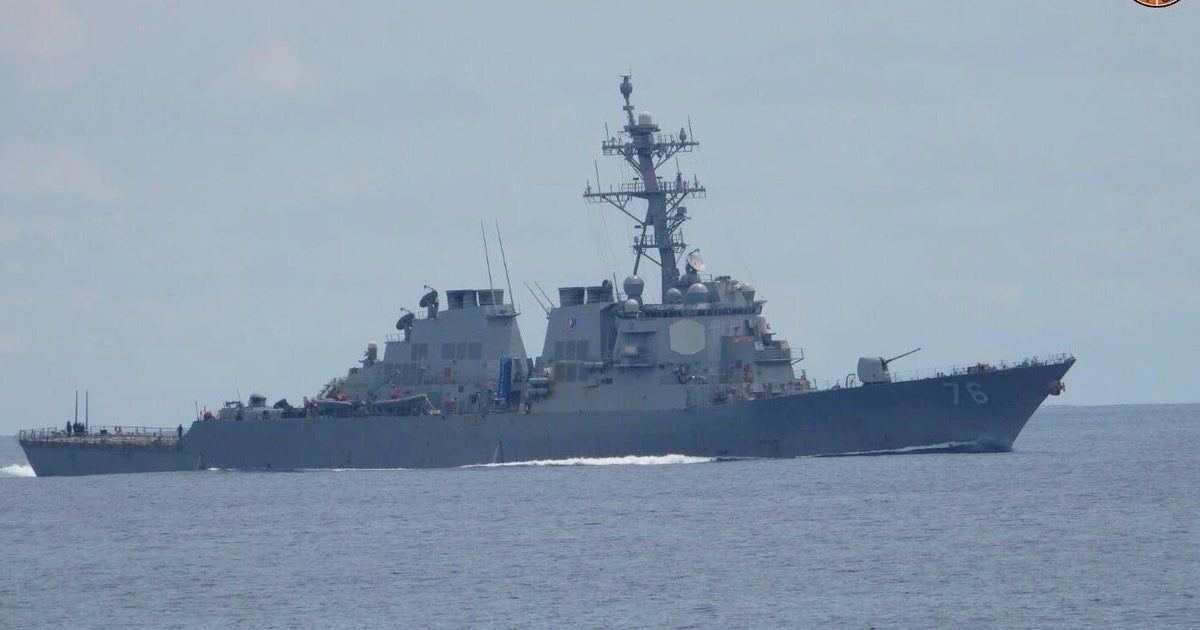
The United States deployed two warships to the disputed Scarborough Shoal in the South China Sea following a collision between Chinese and Philippine vessels, signaling heightened regional tensions. This action, framed as a freedom-of-navigation operation, underscores robust U.S. support for its treaty ally, the Philippines, amidst China's expansive territorial claims. The incident has drawn international concern from allies like Japan and Australia and could lead to further U.S. military deployments to the Philippines, amplifying geopolitical risk in a critical global trade route.
The deployment of two U.S. warships, the USS Higgins and USS Cincinnati, to the South China Sea represents a significant escalation in regional tensions following a collision between Chinese naval and coast guard vessels. This action, framed as a freedom-of-navigation operation, serves as a direct and forceful reaffirmation of U.S. defense commitments to the Philippines, its oldest treaty ally in Asia. The incident's high market impact score of 0.65 and strongly negative sentiment score of -0.6 reflect the perceived risk to stability in a key global trade route. The situation is further compounded by discussions for potential deployment of additional U.S. missile launchers to the Philippines and sharp rebukes of China's actions from regional partners like Japan and Australia, signaling a broadening diplomatic alignment against Beijing's maritime conduct. China's attribution of blame to the Philippines and its own dangerous military maneuvers, including a fighter jet flying within 500 feet of a Philippine aircraft, indicate a high potential for miscalculation and further confrontations.
AI-powered research, real-time alerts, and portfolio analytics for institutional investors.
Request DemoOverall Sentiment
strongly negative
Sentiment Score
-0.60
