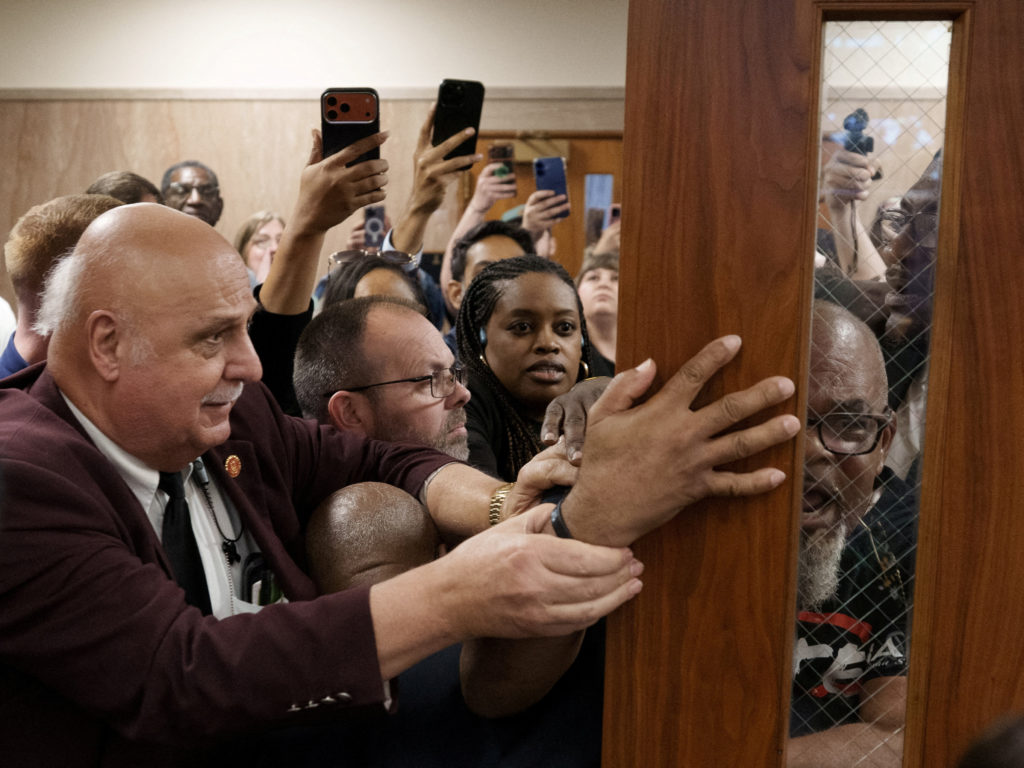
Louisiana is pressing ahead with a new congressional redistricting plan after the Supreme Court struck down the state's map, potentially eliminating one or both majority-Black districts and reshaping the balance of power in the state. The state has suspended House primary elections while lawmakers redraw boundaries, with Republicans potentially targeting a 5-1 or even 6-0 congressional map. The article is politically significant but has limited direct market impact.
This is less a voting-rights story than a sequencing and control story. The key market effect is on congressional seat math: any redrawn map that compresses Black vote share into fewer districts likely improves GOP odds in the House, but the bigger second-order impact is on governance volatility because map fights delay candidate filing, fundraising allocation, and field operations well into the election cycle. That tends to disadvantage incumbents with less cash and weaker national committee support, while rewarding well-capitalized leadership-aligned campaigns that can wait out uncertainty.
The legal backdrop also shifts bargaining power toward state executives and away from lower courts and local election administrators. Over the next 1-3 months, the highest-probability outcome is not a clean resolution but a patchwork of injunctions, special sessions, and emergency scheduling changes, which creates a persistent “headline tax” on any district-level political risk. The more important second-order effect is precedent: if race-conscious maps become harder to defend while party sorting remains lawful, then the practical ceiling on partisan redistricting rises in heavily polarized states, increasing the odds of mid-decade map churn in future cycles.
Consensus is likely underestimating how much procedural chaos itself can change outcomes. In delayed or canceled primaries, the advantage shifts to voters with higher information and faster turnout response, which often skews toward party regulars and ideological activists rather than median general-election voters. That means the eventual map may be only part of the story; the disruption could also alter candidate quality, fundraising efficiency, and intra-party positioning for months, not days.
AI-powered research, real-time alerts, and portfolio analytics for institutional investors.
Request DemoOverall Sentiment
mildly negative
Sentiment Score
-0.15
