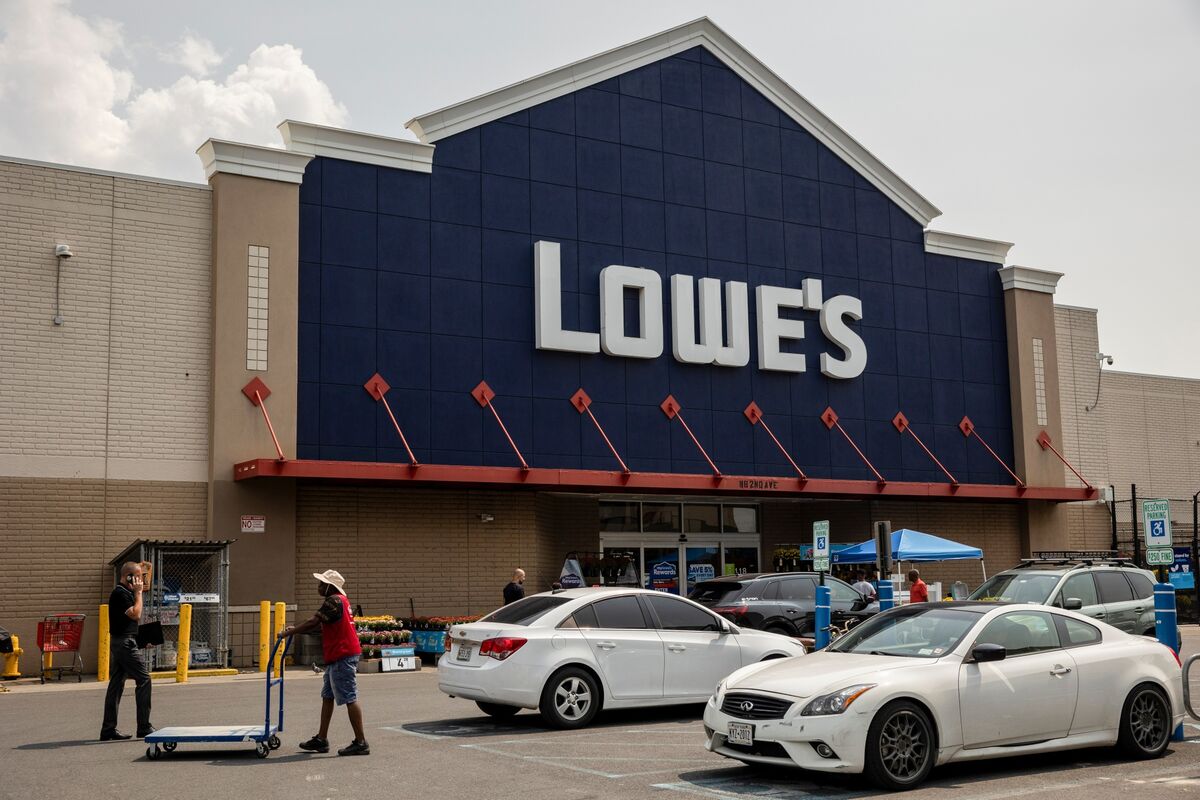
Lowe’s reported Q1 comparable sales growth of 0.6%, slightly below analyst expectations, while adjusted EPS of $3.03 beat Wall Street estimates. The company kept its full-year outlook unchanged despite higher transportation costs, citing productivity gains from artificial intelligence that are helping offset fuel-related pressure. The report is a modest positive for fundamentals, but the sales miss and unchanged guidance keep the tone measured.
The key signal is not the modest sales miss; it is that operating leverage is still being protected despite a cost headwind, which implies the near-term earnings tape for large-ticket home improvement is more resilient than the top-line optics suggest. If AI-driven productivity is offsetting transportation inflation at Lowe’s, the second-order read-through is that big-box retailers with scale, data density, and centralized fulfillment can defend margin while smaller chains absorb the shock more directly. That widens the gap in execution quality and could accelerate vendor rationalization toward the largest players.
The deeper implication is for logistics providers and freight-sensitive inputs: when a major retailer can partially neutralize higher fuel expense internally, it likely has more room to keep pricing disciplined, which pushes the burden back onto carriers and lower-tier suppliers. In practice, that means margin pressure may surface first in contract renegotiations and service levels rather than in retailer gross margin immediately. The market should also treat this as a proof point that AI spend is no longer purely strategic capex; it is beginning to show up as a measurable P&L buffer.
Contrarian takeaway: consensus may be too focused on soft demand and too slow to price in operating efficiency compounding. A flat-to-slightly-positive demand backdrop plus cost absorption can create upside to full-year earnings revisions even without meaningful same-store acceleration. The risk is that this is a one-quarter benefit from timing or temporary freight normalization; if transportation inflation persists into the next two quarters and productivity gains do not scale, the margin cushion can disappear quickly.
From a timing perspective, the catalyst window is the next 1-2 earnings prints, when investors will learn whether AI-related savings are repeatable or just a bridge. If management continues to hold guidance while comps remain low single-digit, the market may re-rate the name on earnings quality rather than sales growth, while peers with weaker labor or logistics leverage look more vulnerable.
AI-powered research, real-time alerts, and portfolio analytics for institutional investors.
Request DemoOverall Sentiment
mildly positive
Sentiment Score
0.15
