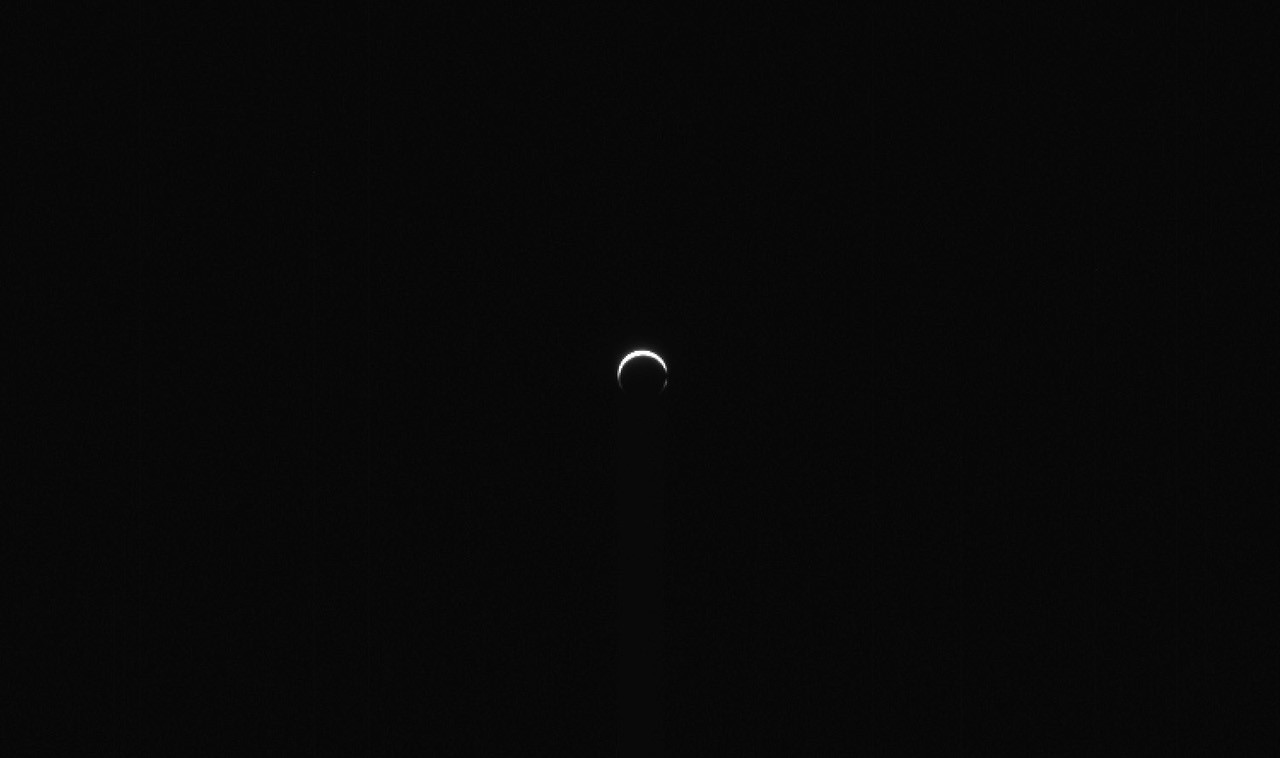
NASA’s Psyche spacecraft will make a Mars gravity assist on Friday, May 15, passing within 2,800 miles of the planet at about 12,333 mph to save propellant and refine its trajectory toward asteroid Psyche. The flyby will also be used to calibrate science instruments, including the multispectral imager, magnetometer, and gamma-ray/neutron spectrometer, with the mission targeting orbital arrival at Psyche in late 2029. This is a mission-operations update with no direct market-sensitive financial implications.
This is less a space-news event than a reminder that deep-space missions are increasingly a software-and-navigation product with a hardware wrapper. The real economic significance is in validation: every successful gravity-assist, autonomous attitude update, and instrument calibration reduces the variance around future mission execution, which is what large aerospace primes and mission-service contractors monetize over time. The second-order winner is the ecosystem around precision guidance, flight software, deep-space comms, and science-instrument subsystems, where demonstrated reliability supports higher win rates on follow-on NASA and commercial planetary contracts.
The key near-term catalyst is not scientific output but the de-risking of a 2029 arrival profile. A clean flyby improves confidence in cruise operations, and that matters because schedule slips on long-duration missions are expensive: they consume contingency fuel, tie up DSN capacity, and can force redesigns of later mission phases. If anything goes wrong, the downside is mostly reputational at first, but repeated navigation or calibration issues would eventually compress margins on fixed-price development work and make agencies more conservative on award structure.
The contrarian angle is that investors often underappreciate how much value sits in “boring” infrastructure around exploration rather than in the headline mission itself. The market tends to chase launch providers and ignore the higher-quality, recurring revenue embedded in telemetry, flight software, and mission operations support. If deep-space exploration remains funded through the decade, the compounding effect should accrue to companies selling picks-and-shovels rather than rocket equity beta.
AI-powered research, real-time alerts, and portfolio analytics for institutional investors.
Request DemoOverall Sentiment
neutral
Sentiment Score
0.10
