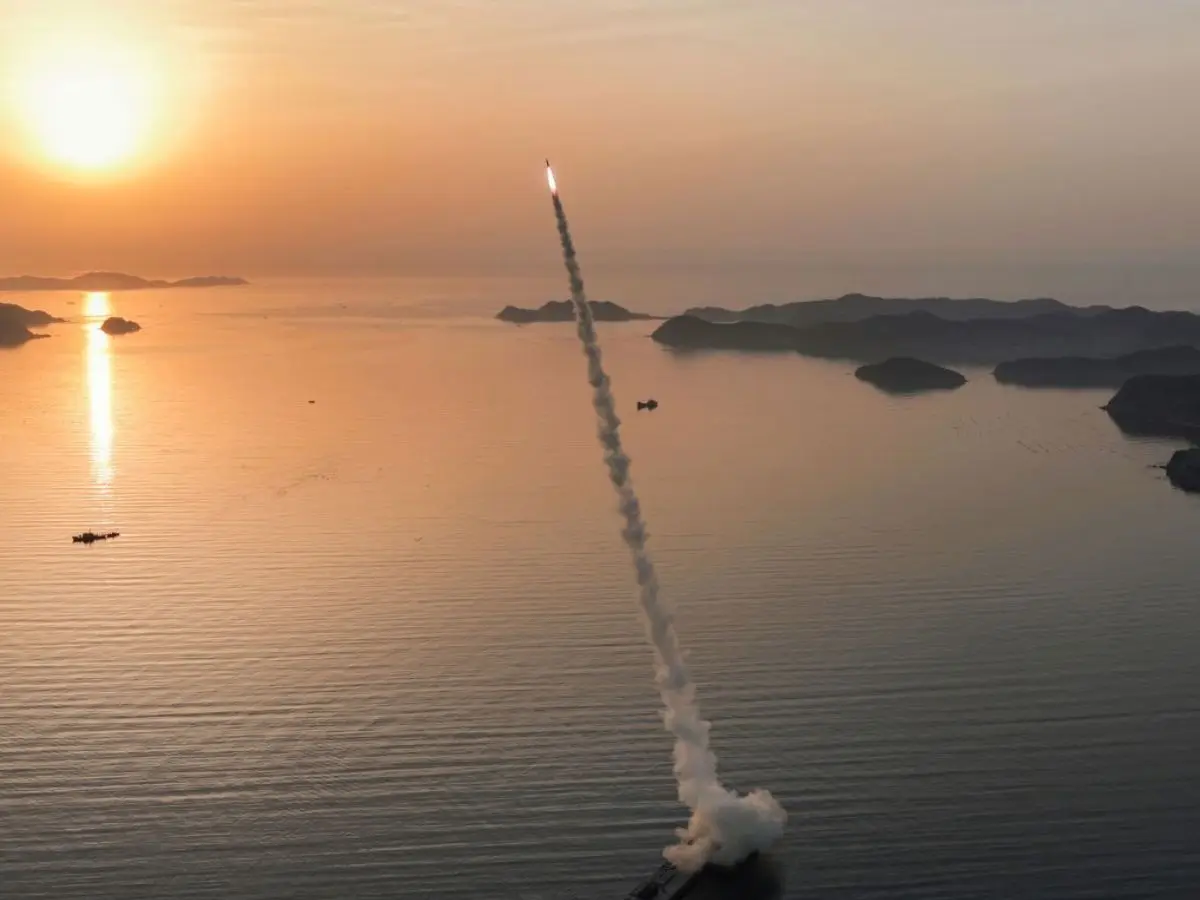
North Korea test-fired multiple short-range ballistic missiles on Apr 20 under Kim Jong Un’s supervision, using cluster munitions and a Hwasongpho-11 Ra tactical ballistic missile warhead. South Korea condemned the launches, held an emergency security meeting, and said it would respond overwhelmingly, while tensions also remain elevated amid reported North Korean support for Russia’s war effort. The episode adds to regional security risk and underscores ongoing military escalation on the Korean peninsula.
This is less about an immediate regional equities shock and more about a durable increase in geopolitical option value across East Asian defense and hard-security assets. Repeated short-range missile drills with cluster payloads raise the perceived probability of an inadvertent cross-border incident, which tends to steepen local risk premia in Korea even when macro data are unchanged. The market usually underprices the second-order effect: higher readiness spending, faster procurement cycles, and a wider gap between beneficiaries of deterrence spending and cyclical Korea exposure.
The near-term loser is Korean duration and beta via sentiment, FX hedging demand, and delayed inbound flows. Even if the direct military risk stays contained, the combination of launch cadence and rhetoric keeps the won vulnerable to episodic de-risking, especially if US rates remain sticky and local equity funds already have low tolerance for headline risk. Over the next 1-3 months, this should support relative outperformance in defense electronics, missile-defense, and C4ISR suppliers versus exporters tied to domestic sentiment.
The less obvious angle is that North Korea’s visible weapons validation strengthens the budget case for Japan, South Korea, and the US force posture in the region, which is structurally supportive for firms selling sensors, interceptors, radars, electronic warfare, and secure comms. A second-order beneficiary is the shipbuilding/naval modernization ecosystem if Seoul and Tokyo respond by accelerating blue-water and anti-submarine procurement. The contrarian risk is that the market may overreact on the headline and underweight the historical pattern: unless there is an actual casualty event or a test into waters near allied assets, the selloff in Korea can mean-revert within days, while defense beneficiaries grind higher over months.
AI-powered research, real-time alerts, and portfolio analytics for institutional investors.
Request DemoOverall Sentiment
strongly negative
Sentiment Score
-0.70
