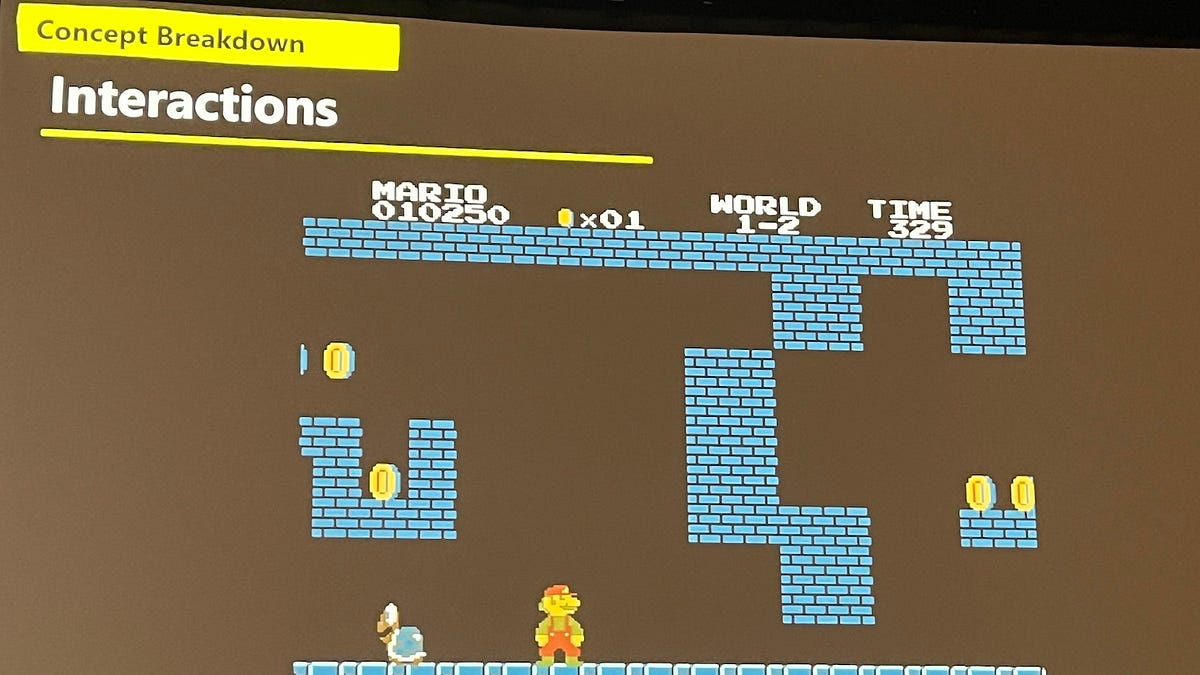
Donkey Kong Bananza, a critically acclaimed Switch 2 title, was profiled at GDC where Nintendo detailed how design inspiration from Super Mario Bros. world 1-2 and technical work from Super Mario Odyssey enabled its terrain-destruction mechanics. The presentation underscores Nintendo’s continued capability to translate legacy IP and engineering advances into distinctive product features that could support Switch 2 engagement and software sales, though no financial metrics were disclosed.
The technical choices behind this hit title create a non-linear demand vector: games that meaningfully increase per-frame physics and destructibility raise the marginal compute requirement for a comfortable experience. If average CPU/GPU work per frame rises 20–40% for a new class of “destructible-world” games, console makers can justify a hardware step-up cycle and higher ASPs within 6–18 months as first-party content becomes a hardware sales driver.
Beyond hardware, middleware and tools that reduce the cost of building large destructible environments become strategic bottlenecks. Expect outsized revenue upside for engine vendors, physics middleware, and cloud playtesting/QA services over the next 12–36 months as third-party studios prioritize pipelines that reproduce the same affordances at scale; this drives predictable RFPs and services spend before new hardware orders materialize.
Key fragilities: the thesis is front-loaded on player retention and sell-through metrics. Negative review cycles, technical regressions post-launch, or a weak holiday supply cadence can flip the narrative inside weeks and compress the implied attach-rate premium. Watch near-term sell-through, digital engagement retention (30/60/90-day DAU/MAU), and supplier lead-times as the three highest-probability catalysts that will validate or reverse the hardware-driven upside within quarters.
AI-powered research, real-time alerts, and portfolio analytics for institutional investors.
Overall Sentiment
mildly positive
Sentiment Score
0.25
