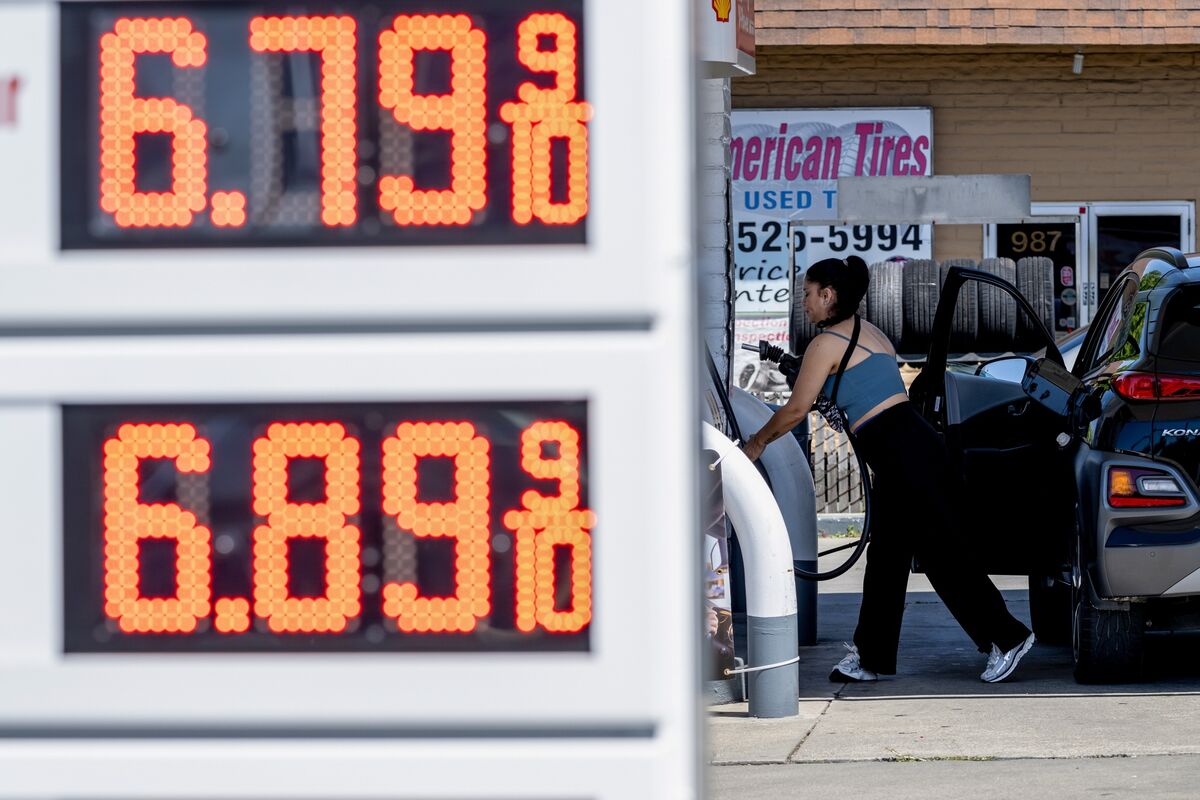
US consumers are facing renewed inflation pressure as rising gas bills and war-driven fuel costs threaten to push up prices across retail shelves. Consumer sentiment has hit a record low, while retailers such as Walmart and Lowe’s are warning that higher energy costs may filter through to product pricing. The article points to a broad negative read-through for consumer spending, retail margins, and inflation expectations.
The near-term loser is not just discretionary retail; it is the entire consumer-freight complex. Higher fuel spend acts like a regressive tax, so lower-income households pull back first on baskets with the highest variable margin to retailers, then trade down into private label and away from big-ticket home goods. That creates a second-order squeeze for suppliers with weak pricing power: they take a volume hit before they can fully reprice, which is more damaging than headline inflation because it compresses gross margin and inventory turns simultaneously.
WMT is relatively insulated versus peers because it can absorb part of the shock through scale and mix, but that insulation is not free. If fuel-related cost pass-through becomes visible at shelf level, Walmart risks a temporary traffic benefit from trade-down while still facing basket-size deterioration; that is a classic “more visits, less profit” setup. The more vulnerable group is mid-tier discretionary retail and import-heavy chains, where freight inflation lands with a lag and inventory was already planned under a softer-demand assumption, increasing markdown risk into the next 1-2 quarters.
From a market standpoint, this is more of a margin and sentiment event than a clean earnings revision today. The catalyst path is a sequence: gasoline stays elevated for several weeks, consumer confidence weakens further, then management teams start cutting guidance on Q2/Q3 comp and gross margin assumptions. What could reverse it is either a quick energy drawdown or evidence that wage growth and fiscal transfers are offsetting the hit; absent that, the pain compounds because consumers defer purchases, which then forces retailers to discount into weaker traffic.
The contrarian miss is that the market may be overestimating how much of this becomes permanent demand destruction versus timing shift. Some spending is simply being delayed, not eliminated, so names with strong balance sheets and value positioning can emerge with share gains once the shock passes. That argues for being selective: avoid extrapolating the macro into every retailer equally, and focus on who can defend traffic without destroying unit economics.
AI-powered research, real-time alerts, and portfolio analytics for institutional investors.
Request DemoOverall Sentiment
strongly negative
Sentiment Score
-0.55
Ticker Sentiment
