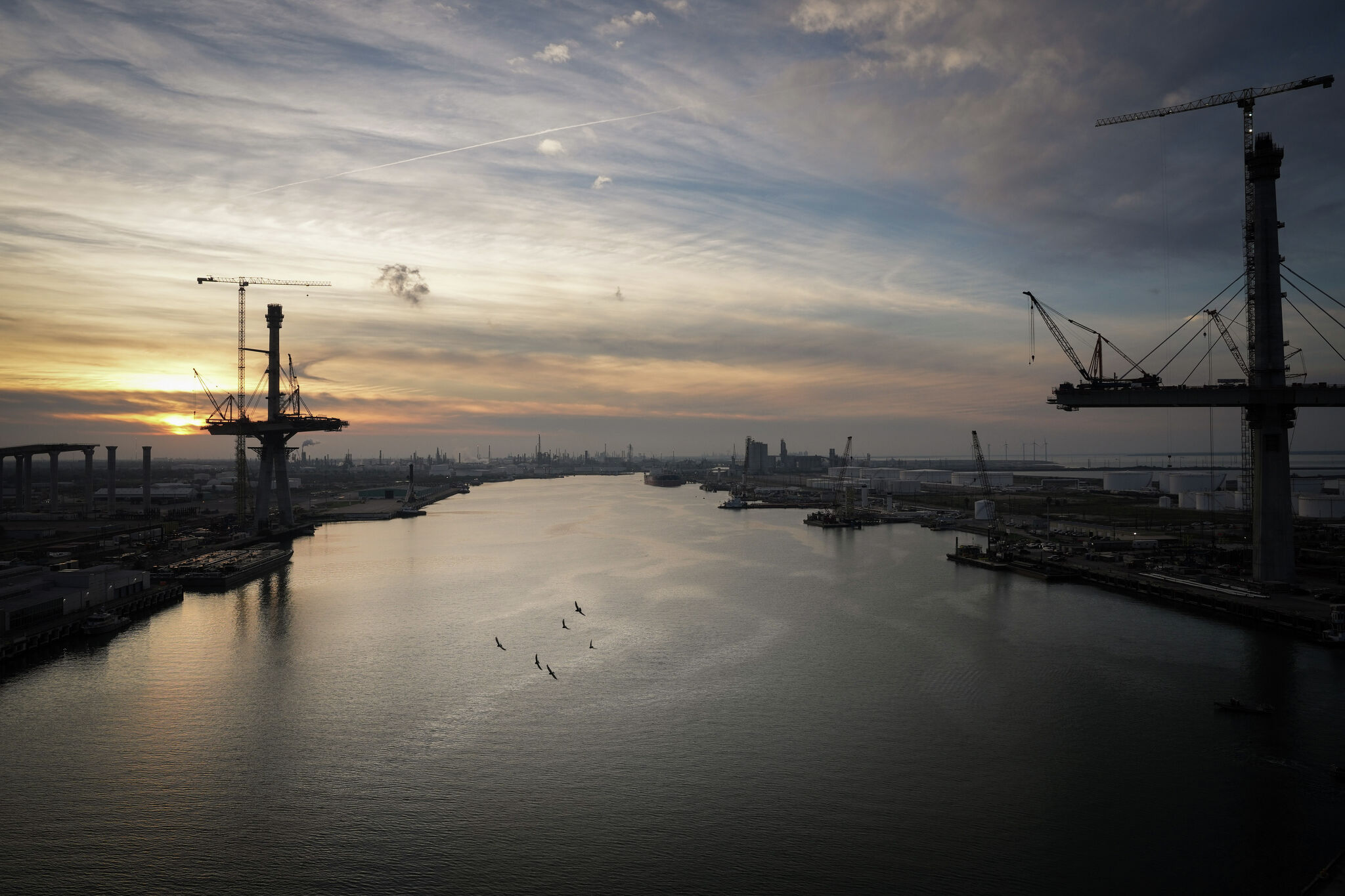
Corpus Christi's severe water crisis, driven by drought and industrial demand, has intensified following the city council's halt of the $1.2 billion Inner Harbor desalination plant due to ballooning costs and environmental concerns. This decision triggered a Moody's review of the city's bond rating, citing "unexpected acceleration of water depletion risk," and leaves the city responsible for $231 million in state loans plus interest, burdening ratepayers. The situation highlights the escalating financial and operational challenges of water scarcity in Texas, the high capital expenditure required for solutions like desalination, and the increasing potential for private sector investment in water infrastructure, signaling water as a critical and potentially lucrative asset.
Corpus Christi faces a severe and immediate water crisis, with key reservoirs operating at critically low levels (11-15% capacity), driven by prolonged drought and substantial industrial demand. The city council's decision to halt the $1.2 billion Inner Harbor desalination plant project, citing ballooning costs and environmental concerns, has exacerbated this situation. This abrupt cancellation immediately triggered a Moody's bond rating review, highlighting an "unexpected acceleration of water depletion risk" for the city.
The city remains financially liable for $231 million in state loans plus $136 million in interest for the abandoned project, a cost slated to be passed to residential ratepayers via an $8 monthly charge. Notably, industrial users, who consume roughly half of the city's water and were primary beneficiaries of surface water sales, will largely avoid this cost as they are outside city limits, creating a significant fiscal and equity challenge.
This scenario underscores the escalating capital expenditure and operational complexities of water scarcity solutions, with desalination costs estimated at roughly double existing sources. While state leaders have allocated $1 billion annually for water projects, this is considered insufficient, prompting increased private sector interest in water infrastructure, viewing "water as the new oil and gas." However, this shift raises concerns regarding transparency and accountability compared to public projects.
The cancellation also creates significant uncertainty for the region's petrochemical industry, which relies heavily on the city's water supply, potentially impacting operational continuity. The delay in alternative water sources until 2029, coupled with local opposition, suggests a prolonged period of water insecurity, which could deter future industrial growth and investment in the region despite broader state economic development goals.
AI-powered research, real-time alerts, and portfolio analytics for institutional investors.
Request DemoOverall Sentiment
strongly negative
Sentiment Score
-0.70
Ticker Sentiment
