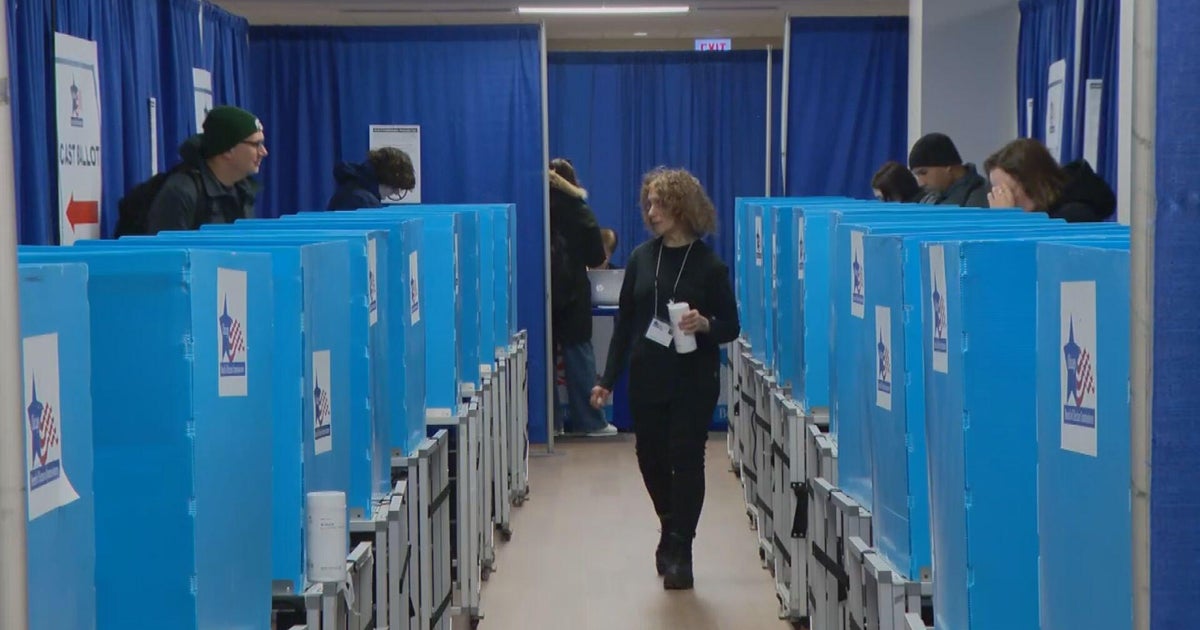
CBS News projects Lt. Gov. Juliana Stratton is leading the Democratic U.S. Senate primary with 39.1% (68% reporting) and Rep. Raja Krishnamoorthi at 33.4%; Don Tracy is projected to win the GOP Senate primary. CBS projects Darren Bailey to win the Republican governor primary with 49.6% (40% reporting), setting up a likely rematch with unopposed Gov. JB Pritzker. Chicago turnout is strong — 21.84% (339,427 ballots) as of 5 p.m. — and several competitive House primaries (notably the 9th, 7th and 2nd districts) remain closely contested and could affect November general-election dynamics.
High early turnout and heavy outside spending are amplifying volatility in close primaries; winners are likely to be those who convert online small-dollar enthusiasm into precinct-level votes rather than simply outspend rivals. That dynamic raises the probability of plurality winners with sub-30% shares in crowded House primaries, increasing the odds that November nominees will be less ideologically median and more sensitive to activist donor cohorts over the next 6–18 months.
State-level continuity (incumbent-friendly governance) is the marginal market risk here: a Pritzker-aligned outcome reduces policy uncertainty around tax, infrastructure and Medicaid funding, compressing relative spreads for Illinois muni credit versus other large-posture states. Conversely, a closer-than-expected GOP edge in the governor’s race or a fractious Democratic Senate primary could widen spreads and accelerate outflows from long-duration, lower-quality muni paper within weeks of final certification.
Ad market and local media are a direct but underpriced beneficiary: concentrated, competitive primaries and high turnout increase local broadcast and digital political ad CPMs materially through October; this is a predictable, time-boxed revenue pump for local broadcasters and major digital platforms. Finally, logistics innovations like Election Lens lower precinct-level noise and reduce the probability of operational disruption that historically has spooked local markets, but tight margins in multiple races keep legal challenge tail-risks alive for days–weeks post-election.
AI-powered research, real-time alerts, and portfolio analytics for institutional investors.
Request DemoOverall Sentiment
neutral
Sentiment Score
0.00
