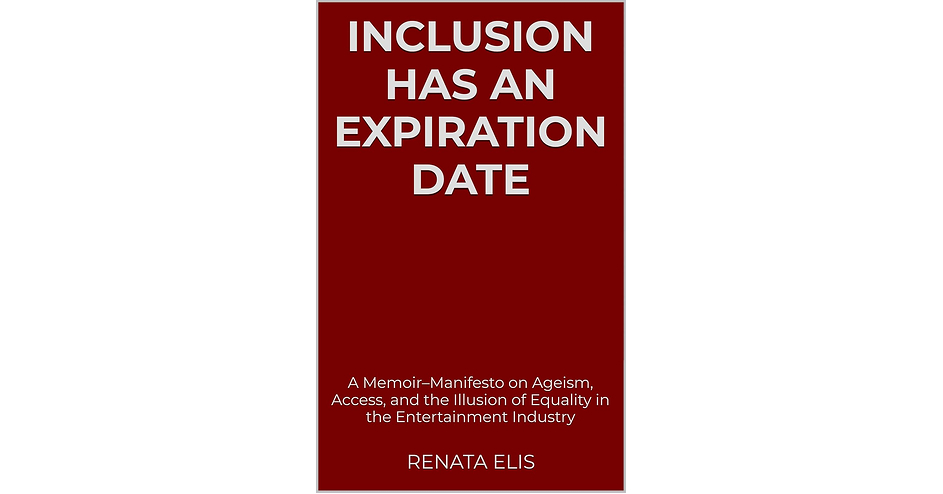
A PRNewswire release announces the publication of Renata Elis’s book, “Inclusion Has an Expiration Date,” a satirical manifesto-memoir alleging ageism, nepotism, and pay-to-play access mechanisms in the entertainment industry. The article argues that inclusion promises often function as marketing while keeping real industry access limited, especially for middle-aged women, and claims mature women remain underrepresented behind and in front of the camera. This is primarily cultural/industry commentary with limited direct financial or market implications.
This reads as a cultural critique, not a financial catalyst. The only investable mechanism is whether the market is materially underestimating the 50+ female audience, but that is a slow-burn data story: it requires sustained proof in subscription churn, ad CPMs, or content ROI over multiple quarters, not a single memoir launch. In the near term, any impact on large-cap media names is likely noise; the book’s distribution channel is too small to matter for AMZN’s earnings, and the reputational angle is too diffuse to move multiples.
If the thesis is directionally right, the more interesting second-order effect is competitive rather than company-specific: legacy studios, agencies, and prestige-driven talent systems may continue allocating capital to familiar networks while missing a monetizable segment that direct-to-consumer platforms can target more precisely. That would modestly favor streamers and digital platforms that can prove audience reach with data, while keeping pressure on incumbents whose greenlight decisions are driven by gatekeeping rather than measured demand. But that only becomes tradable if we see corroboration in audience analytics or commissioning shifts.
Contrarian view: the market may already be pricing in this exclusion narrative through existing ESG/DEI skepticism, so there is no obvious mispricing to exploit here. The bigger risk is overfitting a broad industry criticism into a stock thesis without hard evidence. The thesis would be falsified if entertainment firms demonstrate that older female-skewing content is driving higher retention, lower CAC, or better ad fill over the next 1-3 quarters; absent that, this is a watch item, not a trade.
AI-powered research, real-time alerts, and portfolio analytics for institutional investors.
Request DemoOverall Sentiment
neutral
Sentiment Score
-0.10
Ticker Sentiment
