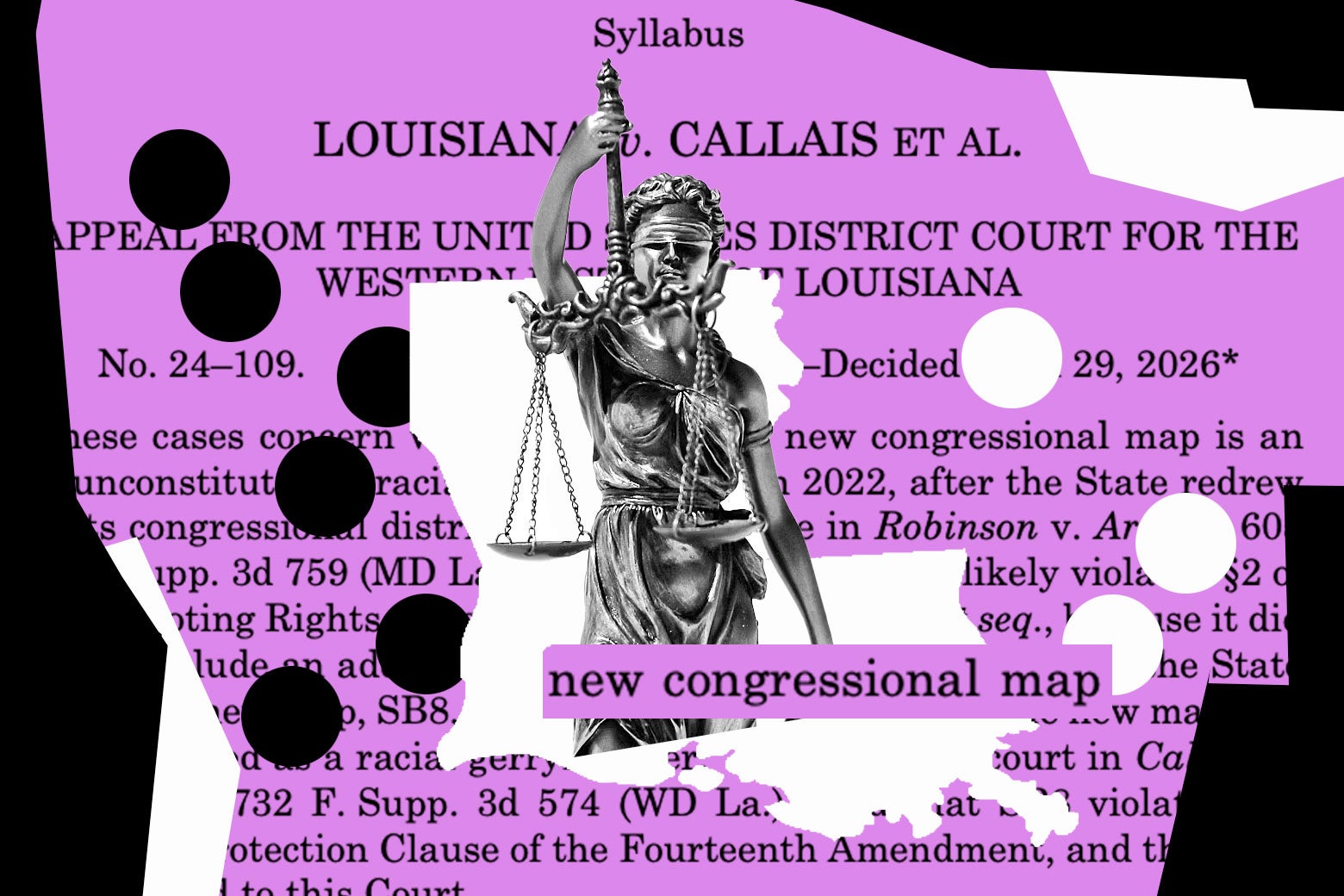
The Supreme Court’s 6–3 Louisiana v. Callais decision is described as gutting Section 2 of the Voting Rights Act, effectively weakening protections for minority voters in redistricting and making discriminatory-intent claims much harder to win. The article argues this could affect the 2026 elections, especially in states still redistricting such as Florida, and may spill into state and local races. It also raises the prospect of new voting legislation and possible Supreme Court reform if Democrats regain power.
The immediate market read is not about constitutional theory; it is about a slower but very real re-pricing of political durability in states where district maps, school boards, and municipal power structures determine budget priorities and procurement flows. Over the next 1-3 election cycles, this tilts local governance further toward incumbents and higher-turnout coalitions, which typically means less policy volatility in red states but more long-horizon legal spend, grassroots organizing spend, and redistricting litigation. The beneficiaries are election-law firms, political consultants, data vendors, and media platforms that monetize prolonged campaign conflict; the losers are minority-targeted turnout operations and any issuer whose permit, zoning, or labor posture depends on diverse local coalitions.
Second-order, the ruling increases the odds that red-state legislatures front-load map changes before 2026, creating a short window where state-level political risk spikes even if federal control remains unchanged. That raises tail risk for public companies with heavy revenue exposure to school-board, municipal, or state contracting in the South because contract renewal and site approval can become more partisan and less procedural. The bigger macro effect is that judicial hostility to voting rights can accelerate political reform pressure, including court-expansion or term-limit proposals if power changes hands in 2026-2028.
The contrarian angle is that markets may overprice the near-term electoral impact. Re-mapping is slow, litigation is even slower, and many 2026 ballots are effectively locked, so the first-order equity impact is likely limited to a handful of contested states and local races. The real tradeable edge is not broad “democracy risk” beta but event-driven volatility in states with active redistricting, where outcomes can swing turnout vendors, ballot-access platforms, and local-advertising demand by double digits.
AI-powered research, real-time alerts, and portfolio analytics for institutional investors.
Request DemoOverall Sentiment
extremely negative
Sentiment Score
-0.92
If the decision triggers retaliatory federal legislation or a credible court-reform push, the narrative can reverse quickly because the ruling itself strengthens the political case for institutional overreaction. That makes this a tactical-volatility story with a 6-18 month horizon, not an immediate all-market de-risking event.
