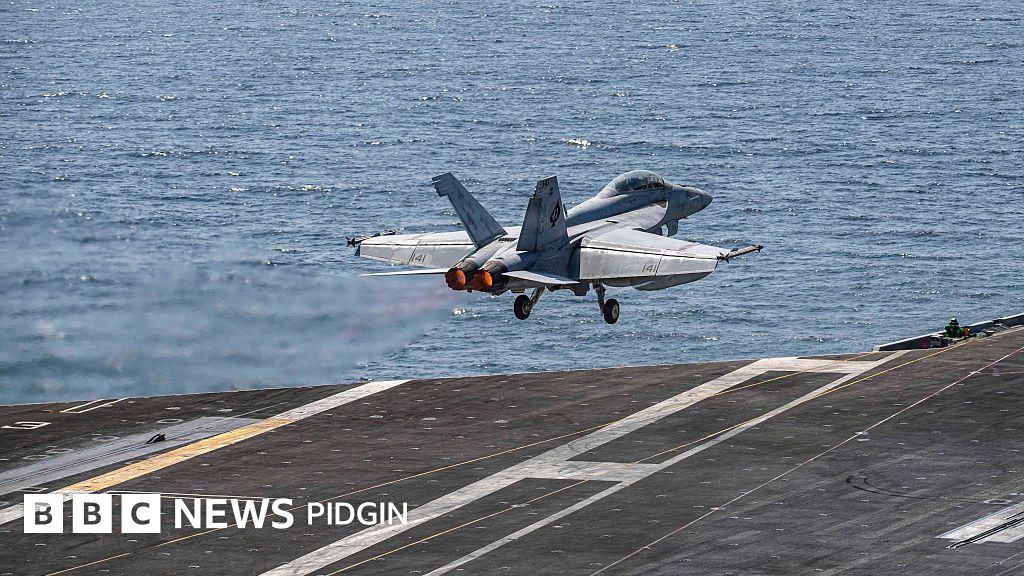
The US and Iran have exchanged fresh strikes, with Centcom saying it hit a military site near Bandar Abbas and shot down four Iranian drones over the Strait of Hormuz, while Iran said it targeted an American air base in the region. The confrontation threatens an already fragile ceasefire and keeps pressure on the Strait of Hormuz, through which about one-fifth of global LNG and oil flows, raising the risk of further energy price disruption. Washington also expanded sanctions on Iran-linked maritime payments, adding to broader market and shipping stress.
The market should treat this less as a one-off headline and more as a rolling supply-chain stress test centered on Hormuz. The immediate beneficiaries are not just oil producers but also freight, insurance, and U.S. defense contractors: every additional day of heightened missile/drone risk raises war-risk premia, reroutes tonnage, and tightens vessel availability, which can persist for weeks even if shooting pauses. The bigger second-order effect is on Asia-facing growth assets and EM FX, where higher imported energy costs and shipping delays typically show up first in margins, then in currency weakness, then in slower industrial activity.
The asymmetry is in the tail: physical flow disruption does not need a formal closure to matter. If tanker traffic slows materially or insurers pull back, the market can reprice LNG and refined products far faster than crude, because Europe and Asia are more exposed to delivered molecules than headline Brent. That makes downstream winners more nuanced than upstream: integrateds with trading arms and low-cost LNG exposure can outperform pure upstream if the disruption raises time-spreads and basis differentials rather than just outright crude.
The main contrarian miss is that a partial de-escalation may not normalize logistics quickly. Even if talks resume, shipping and insurance markets often keep a risk premium for 2-6 weeks after the last strike, and sanctions around maritime payments can keep friction embedded in the system. The reversal catalyst is not diplomacy alone; it is verifiable reduction in drone/missile launches plus explicit guidance from marine underwriters that war-risk surcharges are rolling off. Until then, the trade is to own volatility and hard-asset insulation, not to fade the geopolitical premium too early.
AI-powered research, real-time alerts, and portfolio analytics for institutional investors.
Request TrialOverall Sentiment
strongly negative
Sentiment Score
-0.78
