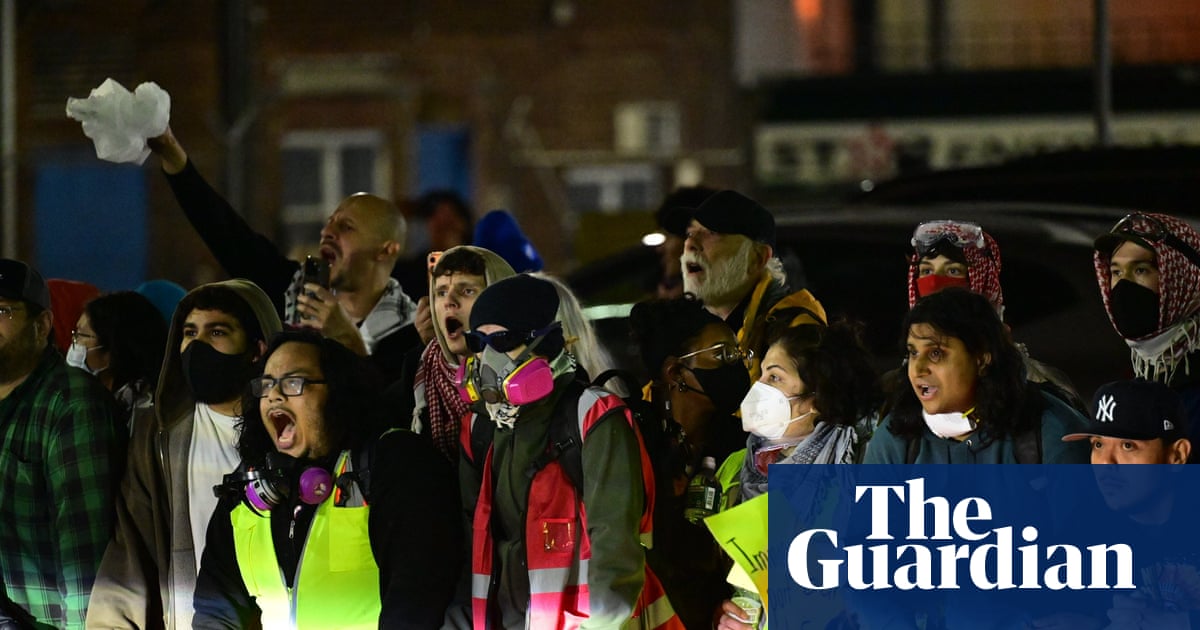
Protests erupted outside Delaney Hall in Newark after ICE attempted to transfer detainee Martin Alonso Soto Hernandez, with demonstrators alleging pepper spray, batons, and other force were used against them. DHS said roughly 125 agitators blocked entrances and that ICE ultimately transferred Soto Hernandez to the Elizabeth Contract Detention Facility despite the disruption. The incident highlights escalating legal and political scrutiny over detention conditions, hunger-strike demands, and ICE operations in New Jersey.
This is less a one-day protest headline than an operational stress test for the detention-services stack. The immediate loser is the operator: public scrutiny increases the probability of temporary visitation limits, incremental compliance costs, and forced process changes that can impair throughput even if the facility remains open. The second-order issue is political contagion: a localized use-of-force event can rapidly convert a facility-specific issue into a broader symbol for state-level Democrats, raising the odds of hearings, subpoenas, and contract reviews.
For ICE-contracted operators, the near-term risk is not just litigation but utilization volatility. If transfers slow or courts extend injunctions, detainee flow can get kinked across adjacent facilities, increasing transportation costs and creating bottlenecks at sister sites; that can pressure GEO-style margin assumptions even if headline occupancy stays high. The more important medium-term catalyst is political: New Jersey leadership is already on-record, and this kind of episode can harden local opposition to new capacity, renewals, and permit actions over the next 1-3 quarters.
The market may be underpricing the asymmetry between legal headline risk and cash-flow durability. Cash generation is usually resilient unless there is a contract termination or a material injunction, so the right expression is not a structural short but a volatility trade around event risk. The contrarian view is that the actual economic damage may be modest if ICE reroutes detainees and the facility normalizes quickly; in that case, the headline fades while the political premium remains embedded for months.
The broader winner may be local advocacy and plaintiff-side legal firms, not because they monetize the event directly, but because discovery, injunctions, and public pressure increase the odds of enforceable operational constraints. If similar incidents repeat, the administration may also push for tighter standards on contractors, which would be a slow-burn negative for margin expansion across the sector.
AI-powered research, real-time alerts, and portfolio analytics for institutional investors.
Request DemoOverall Sentiment
moderately negative
Sentiment Score
-0.35
Ticker Sentiment
