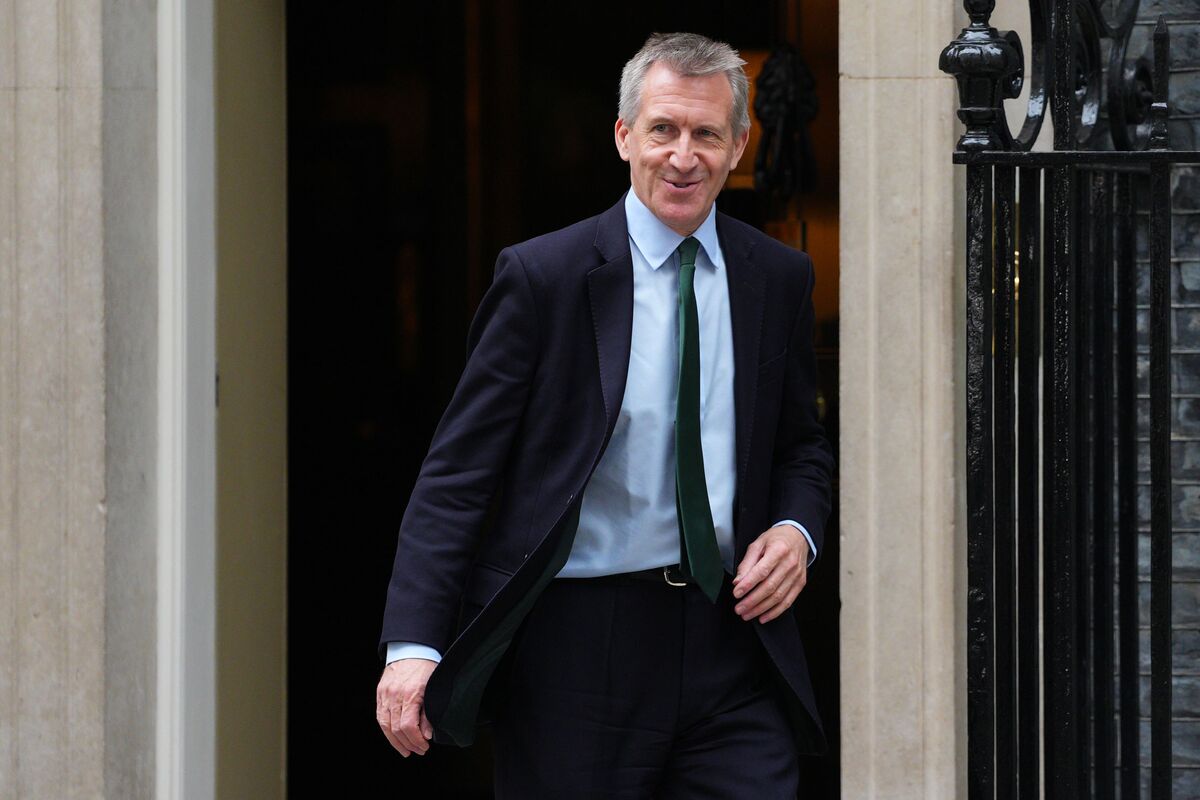
The article portrays a worsening political crisis for UK Prime Minister Starmer, with the Defence Secretary and Armed Forces minister resigning and accusing him of failing to keep the country safe. It also notes that the economy is contracting again, adding macro pressure to the political backdrop. The tone is sharply negative for the government, though the immediate market impact is likely limited unless it escalates into broader policy instability.
This is less a single-event political shock than a credibility degradation process, and markets usually price that through a wider UK policy risk premium before it shows up in the polling headline. The near-term winner is volatility: any asset exposed to UK fiscal discretion, defense procurement timing, or public-capex execution should trade with a heavier discount until there is evidence of cabinet stabilization. The bigger second-order effect is that a weakened PM has less room to protect tax receipts or soften spending cuts, which increases the odds that growth-negative fiscal tightening gets delayed into a weaker macro backdrop.
Defense is the obvious read-through, but the more interesting angle is execution risk rather than budget size. A ministerial shakeout can slow contract awards, push slippage in procurement, and delay order visibility for primes and service providers; that tends to matter more for smaller UK domestic names and project-heavy infrastructure businesses than for globally diversified contractors. If political pressure forces a security-focused policy pivot, the beneficiaries are companies with existing framework agreements and minimal dependence on new discretionary approvals.
The economic contraction matters because it constrains the government's ability to buy time with stimulus. In a weak-growth, weak-authority setup, sterling can underperform not on recession alone but on the prospect of policy paralysis and lower foreign capital confidence. The contrarian view is that markets may already be assuming a large governance break and the actual transmission to earnings could be slower; if leadership is replaced cleanly and fiscal guidance remains orthodox, the risk premium can compress faster than headlines suggest.
The key catalyst window is days to weeks, not years: any further resignation, leadership challenge, or visible procurement delay should widen UK-specific spreads quickly. If the government regains discipline and avoids a full-blown confidence crisis, the move should retrace because the macro damage is still mostly prospective, not yet realized in cash flows.
AI-powered research, real-time alerts, and portfolio analytics for institutional investors.
Request DemoOverall Sentiment
strongly negative
Sentiment Score
-0.50
