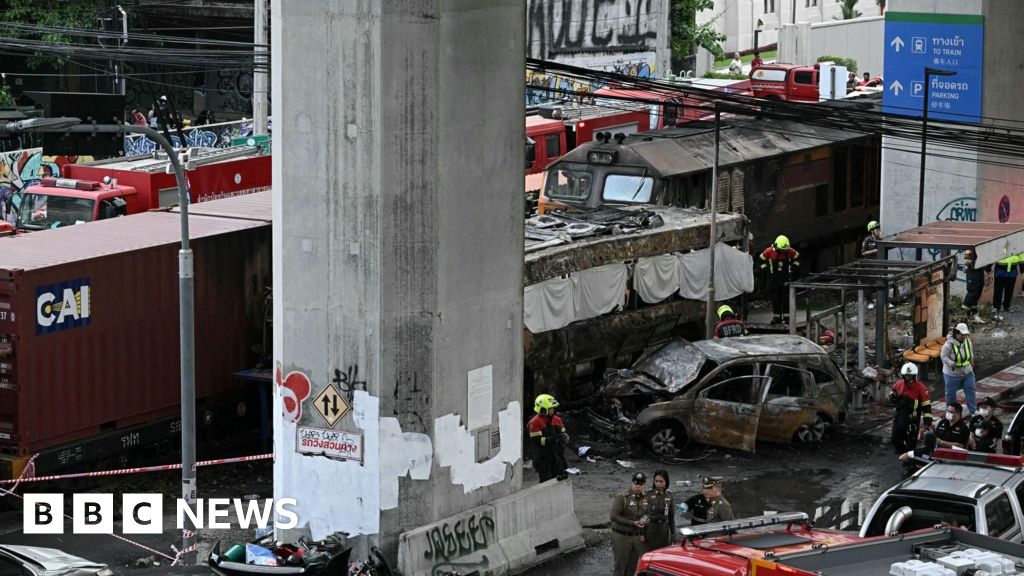
At least eight people were killed and dozens injured when a freight train collided with a public bus in Bangkok near Makkasan train station, triggering a fire that engulfed the bus. Officials said the bus may have stopped on the tracks amid heavy traffic, preventing barriers from closing, while the freight train could not stop in time. The full cause remains under investigation, but the incident is a severe transportation accident with limited direct market impact.
This is a micro-shock with limited direct market beta, but the second-order effect is reputational and operational pressure on urban mobility operators across emerging markets. Even when the incident is local, insurers, municipal authorities, and private operators tend to reprice perceived crossing and fleet safety risk almost immediately, which can tighten underwriting and raise compliance costs for bus, rail-adjacent freight, and toll-road concessionaires over the next 1-3 quarters.
The bigger implication is for logistics reliability in congested Asian metros: one high-profile accident tends to accelerate enforcement around grade crossings, driver behavior, and dispatch discipline. That usually creates near-term friction rather than structural benefit — slower throughput, more inspection delays, and temporary route diversions — which can modestly raise last-mile costs and increase schedule variance for regional transport providers. If similar incidents cluster, the risk expands from reputation to capex, with operators forced to spend on barrier automation, telematics, and route redesign.
Consensus will likely treat this as an isolated tragedy, but the underappreciated issue is how quickly policymakers in emerging markets overreact after headline fatalities. That can be bullish for companies selling safety systems, signaling, and fleet-management software, while being mildly negative for operators exposed to old infrastructure and thin margins. The trade is not on the accident itself; it is on the probability of a 6-12 month regulatory cycle that shifts spend toward automation and compliance.
From a risk standpoint, the move is probably overdone if one tries to short broad transportation equities on this event alone. The better approach is to express the thesis through winners from safety spend and avoid direct exposure to passenger operators until there is clarity on whether this becomes a national enforcement campaign rather than a one-off. If follow-up investigations show barrier or signaling failure, the catalyst window extends from days to months and the budget implications become materially larger.
AI-powered research, real-time alerts, and portfolio analytics for institutional investors.
Request DemoOverall Sentiment
strongly negative
Sentiment Score
-0.75
